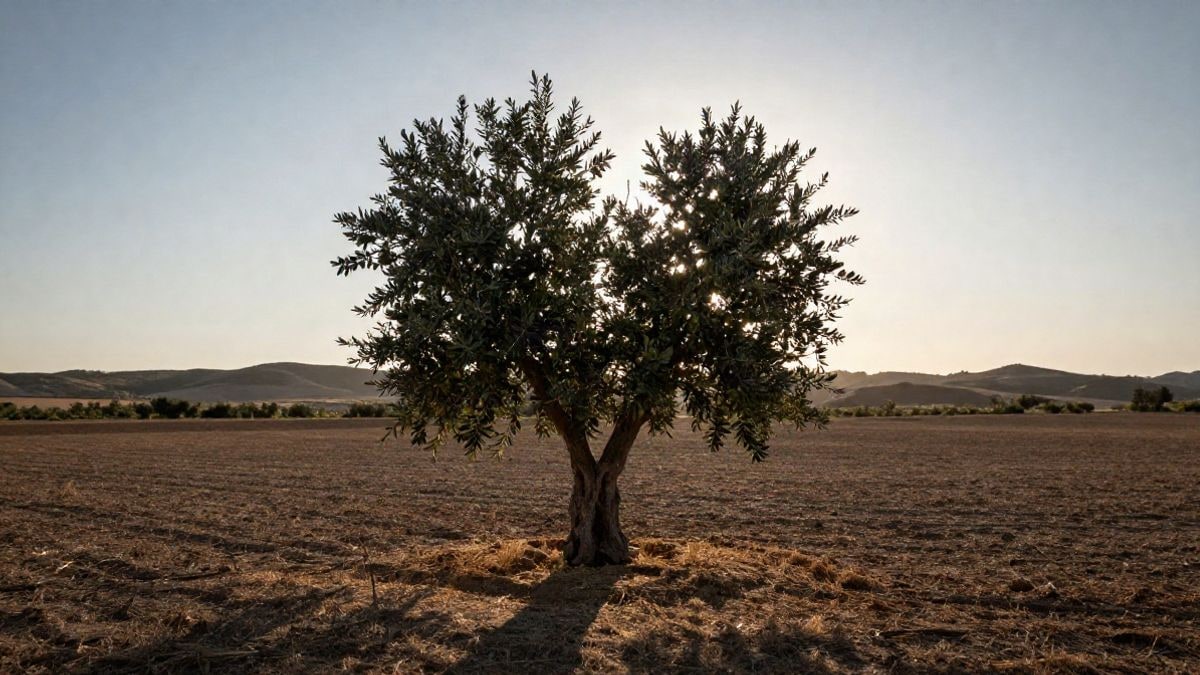
The table olive harvest begins in the province with recovery forecasts following the drought. The lack of rain and the heat of September threaten the size of the fruit.
The table olive harvest campaign has started in the province of Málaga with a more favourable outlook than in recent years. According to Diario Sur, the agricultural sector faces the harvest with moderate optimism after several seasons hindered by drought, thanks to the water accumulated during winter and spring.
In Alozaina, considered the capital of the harvest, the local holiday following the traditional olive fair has marked the start of the work. The Aloreña de Málaga variety is already being harvested with forecasts pointing to a yield of between 2.5 and 3 million kilos, with good fruit quality and appropriate sizes in the first fields.
The Hojiblanca, which accounts for between 90% and 92% of the provincial volume, shows an abundant load on the olive trees. Its harvest for table olives will begin next week, but only in those areas where quality allows. The heat accumulated in summer and the high temperatures of September have caused significant wrinkling of the fruit in dryland areas, such as the Antequera region, where there is no supplementary irrigation.
To put the province's potential into context, last season's official estimate placed the total production of table olives at 56,813 tonnes. The contribution from the Hojiblanca exceeded 51,000 tonnes. The latest forecast published by Interaceituna anticipates that national production of this variety will grow by 12.5% compared to the previous year and 15.6% over the average of the last four years. If this trend were to be reflected in the Málaga fields, the province could see an increase of between 10% and 13% over last season's figures.
From the sector, they insist on taking these figures with caution. The industry demands a minimum commercial size for olives to be suitable for table use. If the rains do not arrive in time before the fruit becomes unsuitable for table use, a substantial part of the harvest will end up being diverted to mills for olive oil extraction.
“The final evolution of the harvest will be closely linked to the weather in the coming weeks,” sources from the sector consulted, including Dcoop, point out.
About 4,000 families in the province of Málaga depend on the harvest, according to data from the Junta de Andalucía. The Aloreña olive has a protected area of 17,800 hectares of olive groves under the Regulatory Council in 19 municipalities of the natural region of Guadalhorce (Sierra de las Nieves and Valle del Guadalhorce): Alhaurín de la Torre, Alhaurín el Grande, Almogía, Álora, Alozaina, Ardales, El Burgo, Carratraca, Casarabonela, Cártama, Coín, Guaro, Málaga, Monda, Pizarra, Tolox, Valle de Abdalajís, Ronda and Yunquera.
The harvesting, known as the milking technique, is also very particular. After the harvest, the olives are placed in baskets designed to prevent bruising or damaging the product.
The good forecasts for the harvest contrast with the pessimism expressed by olive farmers in other parts of the province, where the harvest is dedicated to oil production, and associations are already warning of very difficult months ahead.
The procession of the Dulce Nombre de María will be held on Monday, October 12 as a conclusion to the fair in Alozaina. On October 14, leaving a day in between, the teams will head to the fields.

You may also like