The Mijas Town Hall has allocated over 210,000 euros since January to repair, replant, and maintain green areas damaged by wild boars. Sixteen gardeners work daily, with weekend shifts, to replace what the animals destroy each night.
The Department of Parks and Gardens of the Mijas Town Hall has spent more than 210,000 euros since the beginning of the year on repairs, replanting, and labour in the urban green spaces of the municipality. The cause is the proliferation of wild boars, which devastate gardens in search of food and necessitate daily action with materials and human resources.
The councillor responsible for the area, Daniel Gómez, explained that there are 16 workers who check for damage each day and work on restoring the gardens. This work also has an environmental component, as the voracity of these animals damages irrigation systems, and it is necessary to replace them to ensure the plants' survival.
“Four gardeners in Mijas Pueblo, another four in La Cala, and eight in Las Lagunas are responsible daily for repairing what the wild boar herds destroy each night in numerous places across the municipality.”
Additionally, there are weekend shifts. Plants, substrates, components of irrigation systems, water usage, and labour are the main concepts that support this expenditure of 210,000 euros since January.
According to data provided by Gómez and the director of the Parks and Gardens area, Diego González, the impact is similar in all three municipal centres, particularly affecting urban areas such as the surroundings of the cultural centre of La Cala, Calazul, Doña Ermita, the gardens of the San Manuel church, El Compás, or La Muralla, among many others.
The councillor pointed out circumstances that exacerbate the problem: it is a highly prolific species, with short gestation periods (four months) and multiple births; it has no natural predators; and Mijas has over one million square metres of public gardens.
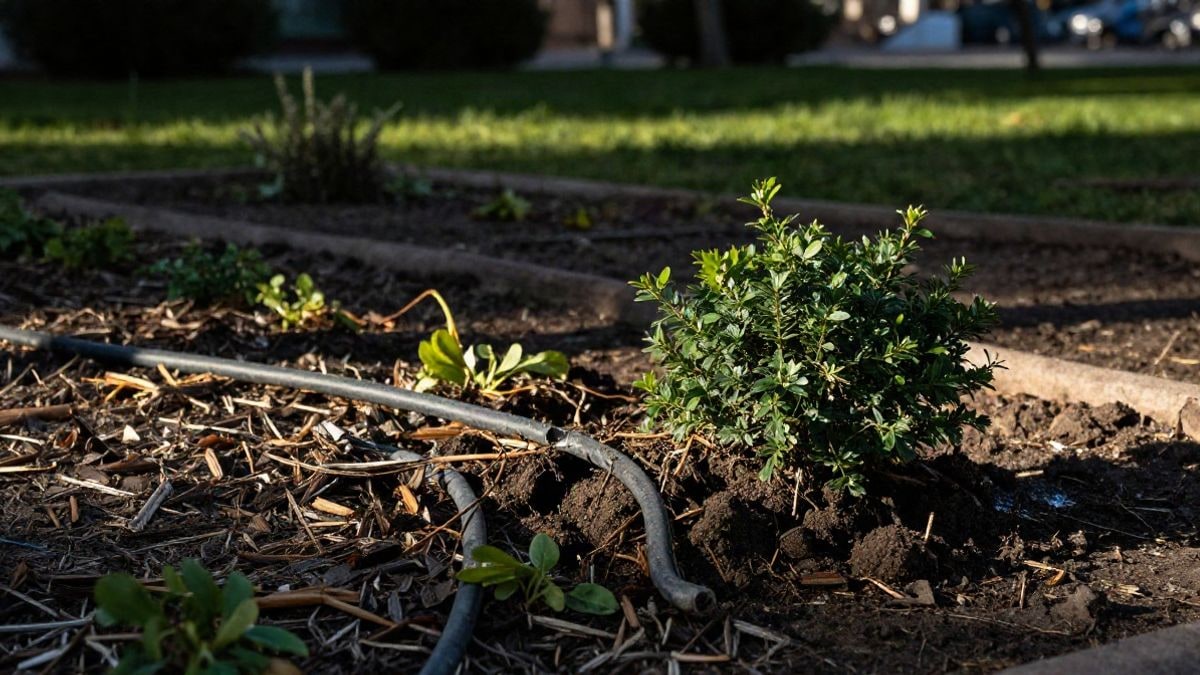
Wild boars show a preference for the moved and moist soil of newly arranged ornamental plant beds. They also dig in lawns, which they destroy in search of irrigation systems that they break to access the water contained within, causing flooding, water damage, the destruction of entire plantings, and material damage.
Another of their objectives is to create earth movements that generate large cavities filled with water from irrigation pipes, “and these are so frequent that they are barely repaired before they have been destroyed again,” Gómez reported.
The General Directorate of Forestry Policy and Biodiversity of the Junta de Andalucía declared a temporary hunting emergency area in the community last June due to damage, health risks, environmental issues, and road safety concerns caused by wild boars and feral pigs. In that declaration, the Junta warned that both species are the main predators of the mountains and natural areas of Andalucía due to their density, feeding ecology, gregarious behaviour, and great mobility.

You may also like