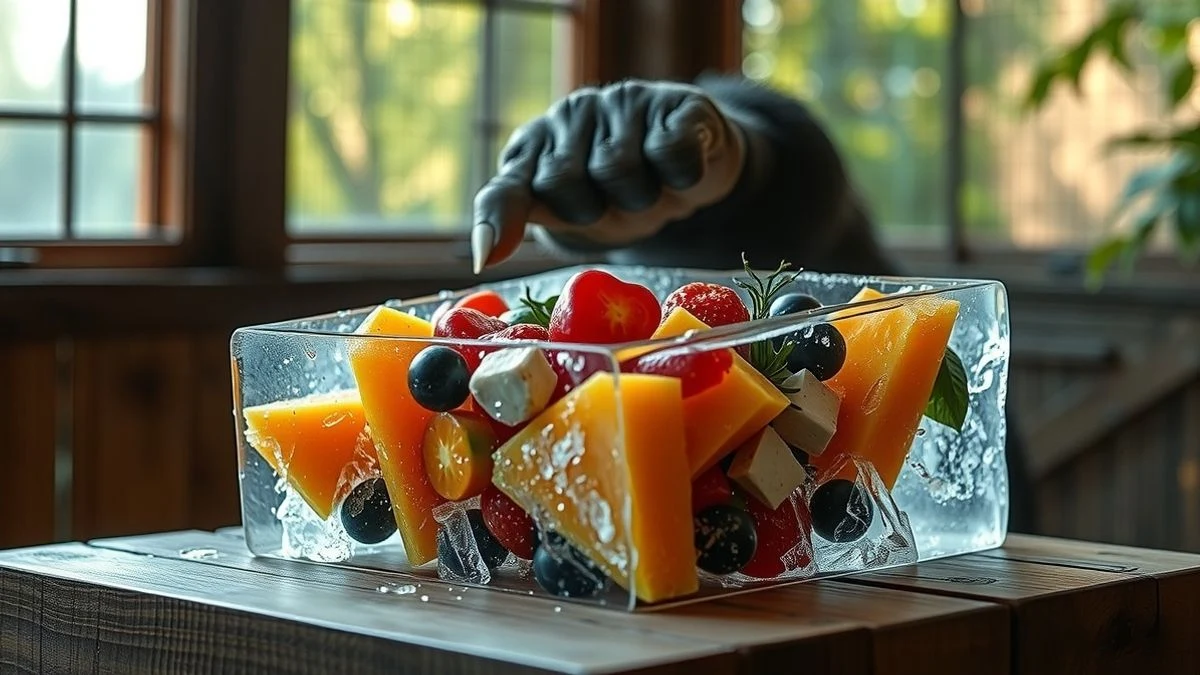
In the face of a heatwave exceeding 40 degrees, the Málaga park activates its summer protocol with personalised ice blocks for species such as gorillas, tigers, and pygmy hippos.
The thermometer is soaring again in the province of Málaga, with temperatures exceeding 40 degrees. While humans seek shade and air conditioning, Bioparc Fuengirola has found a refreshing and stimulating formula for its animals: 'wild ice creams'. These are huge blocks of ice made with fruits, vegetables, insects, seeds, or natural broths, which have become a key tool for the wellbeing of species such as western gorillas, Sumatran tigers, or pygmy hippos.
With the arrival of this new episode of high temperatures, the Málaga park has reinforced its special summer protocol. The Zoology and Veterinary team adapts management routines to respond to the most extreme weather conditions, maintaining the animals' activity levels and encouraging behaviours typical of their biology.
These frozen blocks not only relieve the heat but also form part of the park's environmental enrichment programme. Each ice pole is made to order according to the species, with ingredients commonly found in their diet: fresh fruits, vegetables, leaves, seeds, insects, or meat broths. They are frozen in different formats to prolong interaction and turn access to food into a stimulating activity that encourages exploration, manipulation, and solving small challenges.
The family of western lowland gorillas receives ice blocks that mimic the search for food in the wild, where locating food requires constant exploration of the territory. Sumatran tigers, on the other hand, must manipulate and explore the poles before accessing the reward, making feeding more dynamic. Pygmy hippos and potamochoerus also participate, increasing their activity during the hottest hours of the day.
The aim is not only to cool down but also to stimulate the animals physically and mentally, replicating situations they would encounter in their natural habitat. These measures are part of the daily work of the park's team, which designs specific actions for each species. Bioparc Fuengirola, celebrating its 25th anniversary this year, has established itself as a conservation centre that goes beyond mere entertainment, focusing on animal welfare and environmental education.
The heatwave, which affects all of Andalusia, has led to the intensive activation of these protocols. While visitors can cool off with cold drinks, the animals have their own 'ice creams' tailored to their needs. A way to combat high temperatures that demonstrates how innovation and knowledge of each species' biology can make a difference in their quality of life.

You may also like