Málaga City Council has approved a moratorium that halts the construction of hotels and tourist apartments in residential areas, as well as the conversion of commercial premises into housing on main streets. The measure, which may last up to three years, aims to tackle a phenomenon that has surged in recent years.
Málaga City Council has taken a firm step to contain the uncontrolled expansion of tourist accommodations and the conversion of commercial premises into housing. The council, governed by the PP, has approved a moratorium that affects both the construction of new hotels, hostels, and tourist apartments in residential areas and the changes of use of premises to housing on first and second-order streets and squares.
The measure, which could be extended for a maximum of three years, comes at a time when the phenomenon of tourist apartments and the transformation of premises has exploded in the capital. According to BIG Data de la Costa del Sol, in June 2026, Málaga capital recorded 369 tourist apartment establishments, with 9,644 places, 38 more than in 2025 and 72 more than in 2024.
An incessant flow of licenses
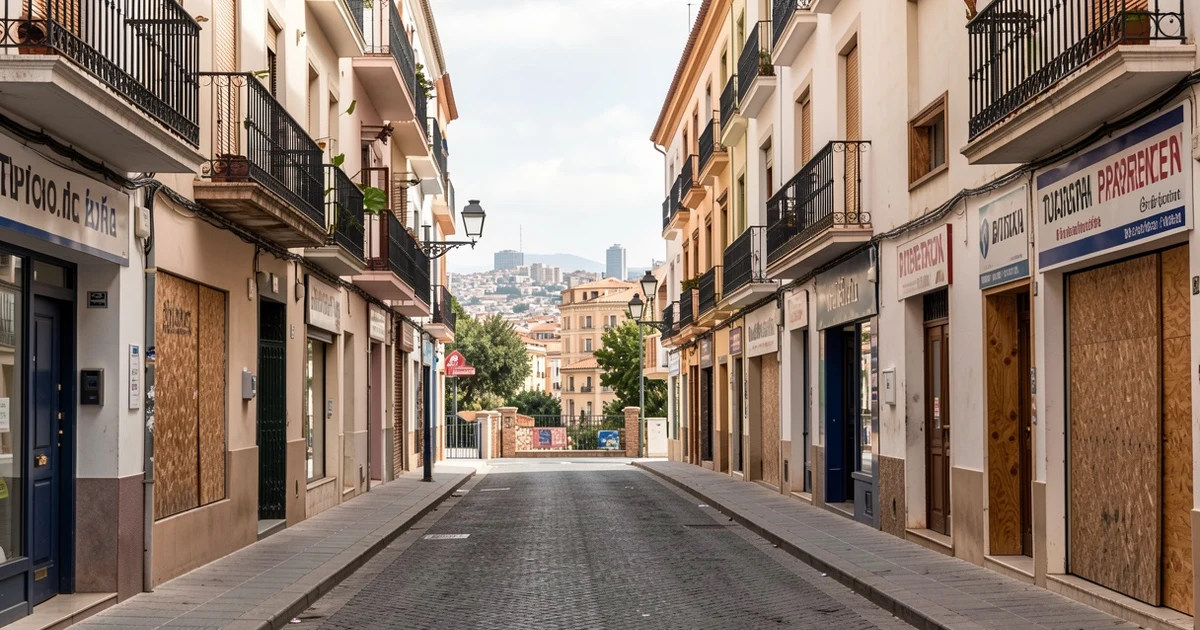
The change of use from commercial premises to housing has also been unstoppable. In 2025 alone, the City Council authorized the conversion of around 320 premises, generating more than 430 housing units. In 2024, there were 460 premises, with over 670 housing units. In the first months of 2026, the pace has not slowed down, according to the council's data.
In light of this situation, the governing team has decided to tighten the requirements. From now on, changes of use will not be allowed on main streets or in premises facing squares. Additionally, the properties must meet new conditions for habitability, lighting, and ventilation. For example, the depth of the premises cannot exceed twice the width of the façade to ensure the entry of natural light.
Stricter requirements for lofts and mezzanines
The moratorium also regulates lofts and mezzanines more precisely. They must have a minimum free height of 2.30 meters at the top and 2.50 meters at the bottom, as well as a minimum area of 8.75 square meters if designated for housing. These requirements aim to prevent the proliferation of unhealthy spaces and ensure decent conditions for future residents.
For the residents of Málaga, the measure represents a respite in neighborhoods where touristification and the loss of local businesses had accelerated. Areas such as the Centre, Trinidad, or Malagueta will see the conversion of long-standing shops into tourist flats slowed down, although the measure does not affect projects already underway.
The City Council reminds that the moratorium is temporary and that the objective is to buy time to modify the General Urban Planning Plan (PGOU), which has been in processing for almost a year. If the modification comes into effect sooner, the moratorium will lapse.
Meanwhile, tourism developers will still be able to continue building on hotel land, but not on residential land. And owners of commercial premises wishing to convert them into housing will have to wait or look for locations on secondary streets, provided they meet the new requirements.

You may also like