The verdiales groups have paraded down Marqués de Larios Street during the Málaga Fair 2026, featuring musicians, singers, and dancers. The programme, which runs from August 15 to 22, brings together the three styles of this Málaga tradition.
Marqués de Larios Street has transformed into a sound stage for the towns of Málaga these days. The verdiales groups, with their violins, guitars, tambourines, and cymbals, have traversed the city centre during the Málaga Fair 2026, attracting locals and visitors in one of the most recognisable cultural scenes of the week.
This activity is part of a festive programme that distributes nearly 200 performances throughout the city. On August 20, the groups returned to Larios, and among the audience were women from Almogía, including the mother of one of the dancers, who closely followed the group's performance in one of the busiest areas of the city centre.
The presence of the verdiales is not limited to a single day. On August 18, there was an event featuring verdiales, horses, and concerts, and on August 19, the agenda included bullfighting, verdiales, and music at the Real. Thus, the groups are part of a programme that brings various manifestations of the Fair to stages and streets of Málaga.
The verdiales do not conform to a single musical model. In the province, three styles are recognised: that of Almogía, that of the Montes, and that of Comares. Each style comprises different groups and presents its own nuances in interpretation, repertoire, and the personality of its members, while retaining the features that identify this tradition.
A group typically consists of one violin, two guitars, one tambourine, and two pairs of cymbals, occasionally accompanied by a lute. The ensemble combines the melodic weight of the strings with percussion and rhythm, maintaining a recognisable identity even as the style or origin of the group changes.
Within the group, the mayor directs the performance. He uses a decorated stick with coloured ribbons to indicate which singer is performing and to signal the start and end of each act. His role adds internal structure to a performance that combines music, movement, and shared gestures.
Alongside the mayor is the standard-bearer, who carries a flag of Spain, Andalucía, or the town's patron saint. The moving flag, combined with the ribbons of the stick and the attire of the participants, creates an easily recognisable image for the audience gathered on either side of Larios.
The exact origin of this representation is not determined, although its development is linked to rural spaces in the province such as paths, inns, and wine presses, where music and socialising were part of everyday life. From this environment, the groups have made their way to the heart of Málaga these days.
The lyrics typically fall within the realm of Andalusian folklore, with references to love, life, and agricultural work. The repertoire connects the festive celebration with everyday matters, without disconnecting from the memory of the towns and the tasks associated with the rural world.
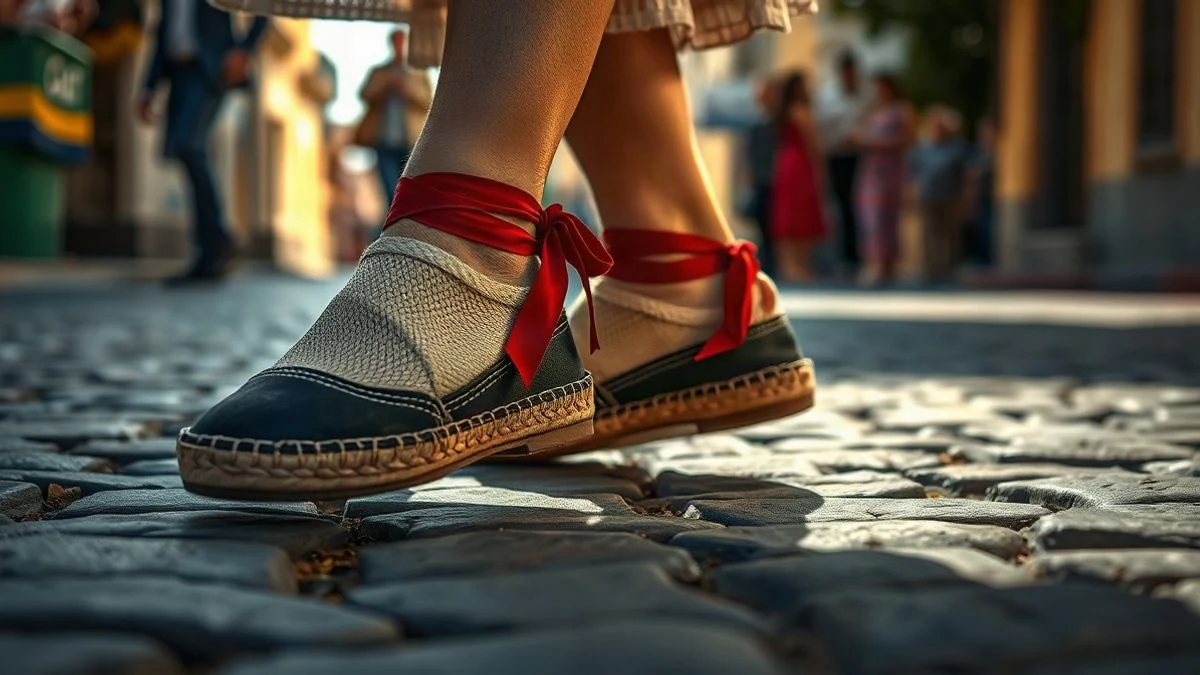
The visual component is inseparable from the music. The coloured ribbons, flags, and espadrilles accompany the playing and singing, while the dancers add movement to the procession. The performance unfolds as the group walks, stops, and starts again before the eyes of those on the street.
The Málaga Fair 2026 continues its programme until August 22, with the verdiales as one of the central elements of the city's cultural offerings.

You may also like