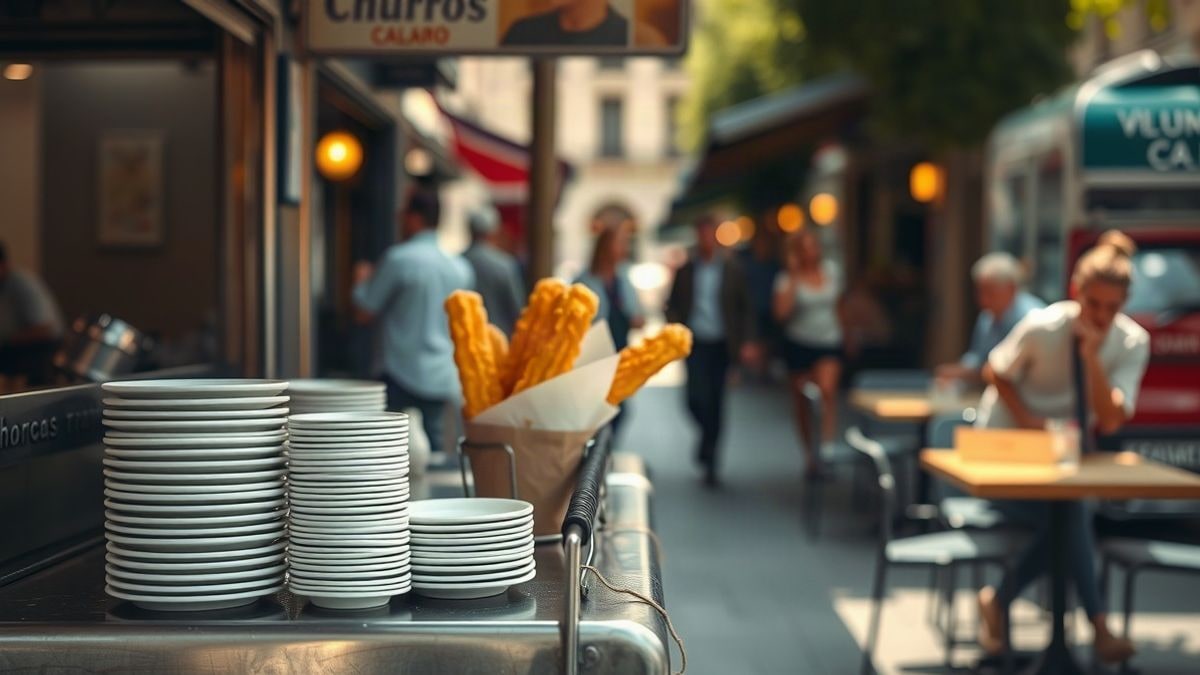
Antonio Llorente, manager of La Malagueña, has been at the helm of the churrería in central Málaga for 13 years, where in winter they exceed a thousand churros daily and queues start at eight in the morning.
Antonio Llorente is not made to watch life pass by behind a bar. Approaching 60, this local from Málaga has spent over 13 years running the churrería La Malagueña, a place in central Málaga where queues begin at eight in the morning and stretch until nearly noon.
In his black shirt, which distinguishes him from the other waiters, Antonio moves between the tables with trays full of tejeringos, pitufos, or sombras doble, the names by which churros, sandwiches, and café con leche are known here. “I try to keep a close eye on the business, sometimes a bit too much. I’m a very active guy,” he confesses.
The sales figures vary by season. In summer, they drop slightly, but in winter they reach over a thousand daily, and at Christmas “it’s madness”: there are days when they serve more than 1,300. Even so, Antonio assures that he hardly tries them: “Only sometimes, to see if everything is in order with the dough,” he jokes.
“Me eat churros? No, then I have to kill myself at the gym.”
The secret of the formula, he explains, has no tricks: flour, water, salt, and yeast, with the oil very hot and kneaded by hand. “Everything is manual and artisanal,” he emphasizes. But what truly makes the difference is the speed of service, something he considers key to preventing the queues from getting out of control.
The leap to churros was almost a last-minute decision. Antonio dedicated 27 years to the world of wine until he grew tired of constant travel. His initial plan was to open a tasting room with ham cuts, but in five minutes he changed his mind and ordered two churro makers. “I rushed to call the company that supplied my appliances and said, ‘The cold tap stays put, you’re bringing me two churro makers,’” he recalls.
With no prior experience in the sector, he received help from an expert who worked with him for a year and a half. Later, his son took over in the kitchen, where he now maintains the identity of the dough. “Everyone gives it their own identity, and my son has done very well,” he highlights.
Behind the bar, there are ten workers, most of whom have been there for years. Antonio admits that the responsibility weighs on him: “When the end of the month comes, I get a knot in my stomach because until everyone has been paid, I can’t sleep.” Taxes also stress him out, but he assures that the business is doing well.
For Antonio, chocolate with churros is both tradition and trend. He holds a special memory from his childhood when his mother took him and his siblings to eat tejeringos that “used to be served on a rush.” Now, when he leaves the establishment, he goes to the gym for an hour and a half: “Functional workout, going all out.”
You may also like