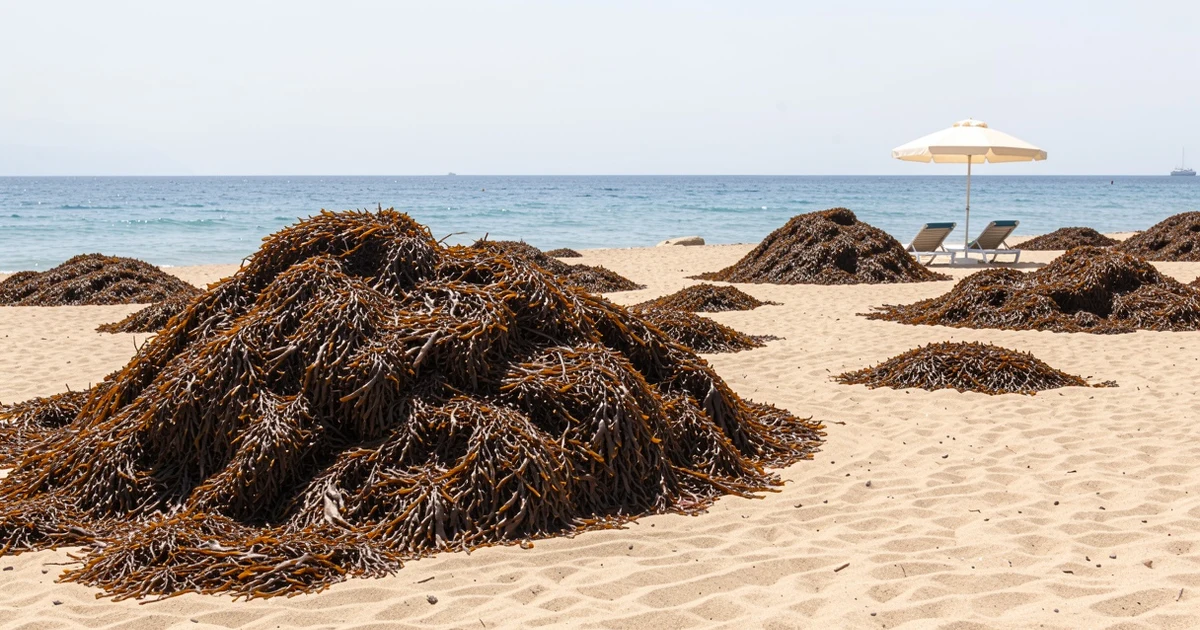
Marbella has removed more than 10,000 tonnes of invasive Asian algae from its beaches so far in 2026, double the amount collected in all of 2025, prompting urgent calls for state funding.
The Costa del Sol's most famous resort town is facing an unprecedented environmental crisis. Marbella's beaches have been invaded by a fast-growing Asian seaweed that has already forced the removal of over 10,000 tonnes in the first half of 2026 alone. Last year, the total was 5,300 tonnes. The situation has been described as 'critical' by local authorities.
'We have never seen anything like this,' said Diego López, Marbella's councillor for beaches, in a statement to the local plenary session. 'The accumulation is so severe that it is affecting tourism and the daily life of residents.' López has tabled a motion demanding that the Andalusian regional government and the national government cover the costs of removal, which have skyrocketed due to the sheer volume of algae.
The species, known as Rugulopteryx okamurae, is native to the waters of Japan and Korea. Scientists believe it arrived in the Mediterranean via ballast water from cargo ships or attached to the hulls of vessels transiting the Strait of Gibraltar. Once established, it spreads rapidly because it has few natural predators in the Atlantic and Mediterranean. It tolerates a wide range of temperatures and water conditions, making it extremely difficult to control.
The problem is not limited to Marbella. Neighbouring municipalities such as Fuengirola, Mijas, and Estepona have also reported increasing amounts of the algae. However, Marbella's long coastline and high tourist occupancy make it the most visible hotspot. The town's beaches are a major draw for visitors, and the sight of rotting seaweed piled up at the high-tide line has become a common complaint on social media.
Environmental groups have warned that the algae outcompetes native species and can smother seagrass beds, disrupting the marine ecosystem. When it decomposes, it releases hydrogen sulfide, which smells like rotten eggs and can cause respiratory irritation in people with asthma or other conditions. 'This is not just an aesthetic problem; it is a public health and environmental emergency,' said a spokesperson for the local branch of Ecologistas en Acción.
In response, the Marbella city council has increased the frequency of mechanical cleaning operations on the sand. Specialised trucks rake and collect the algae, which is then taken to a treatment plant for disposal. The cost of these operations has exceeded €1.5 million so far this year, according to municipal sources. The motion approved in plenary calls for a state subsidy to cover these expenses, arguing that the invasion is a consequence of global maritime traffic and climate change, not local mismanagement.
Scientists from the University of Malaga are studying biological control methods, such as introducing a parasite or a grazing organism that could keep the algae in check. But they caution that any solution will take years to develop and implement. Meanwhile, the algae continues to spread along the Andalusian coast, from Huelva to Almería, with Cádiz also severely affected.
For now, Marbella's beaches remain open. The council advises bathers to avoid direct contact with large accumulations of the algae and to rinse off after swimming. The next plenary session will debate a detailed plan for the summer season, including the possibility of deploying floating barriers to intercept the algae before it reaches the shore. 'We are doing everything we can,' López said. 'But we cannot fight this battle alone.'

You may also like