The Superior Court of Justice of Andalusia has ruled that a beach bar is a removable establishment and must be taken down at the end of summer, even if it has an annual licence. The ruling affects 25 venues in Cádiz and sets a precedent for the 60 fixed beach bars awaiting regularisation in Málaga.
The Superior Court of Justice of Andalusia (TSJA) has made it clear what many holidaymakers already suspected: a beach bar, no matter how much it has a licence for the whole year, must be dismantled when the cold arrives. The ruling, which comes via the Ministry of Ecological Transition, answers the same question that linguist Fernando Lázaro Carreter asked in 1983: what exactly is a beach bar?
The case that prompted the ruling is that of the beach bar Los Galápagos, in Rota (Cádiz). This establishment, which today operates as a restaurant with reservations and gin and tonic afternoons, argued that, being removable, it did not have to be taken down at the end of summer because it had a licence to operate all year round. The TSJA did not see it that way: the annual licence does not exempt the obligation to dismantle the beach bar outside the summer season, according to the legal definition of these establishments.
A ruling that looks to Europe
The TSJA's decision is not arbitrary. Behind it is the pressure from the European Union, which has pointed out that the concession system for beach bars in Spain is not very transparent. In fact, one in three establishments along the Andalusian coast operates in a situation of legal uncertainty, according to sector sources. The ruling seeks to bring order: beach bars must be ephemeral constructions, made of wood and metal sheeting, and not permanent restaurants by the sea.
On the coast of Málaga, the news has come as a cold shower. There are 60 fixed beach bars awaiting regularisation, many of which are built with permanent materials that could only be dismantled with a wrecking ball. Their owners fear that the TSJA's ruling will set a precedent that forces them to tear them down, as has already happened in Valencia, where the PP has applied the wrecking ball to a dozen rice restaurants on Malvarrosa beach dating back to the 1970s.
From Georgie Dann's beach bar to luxury restaurant
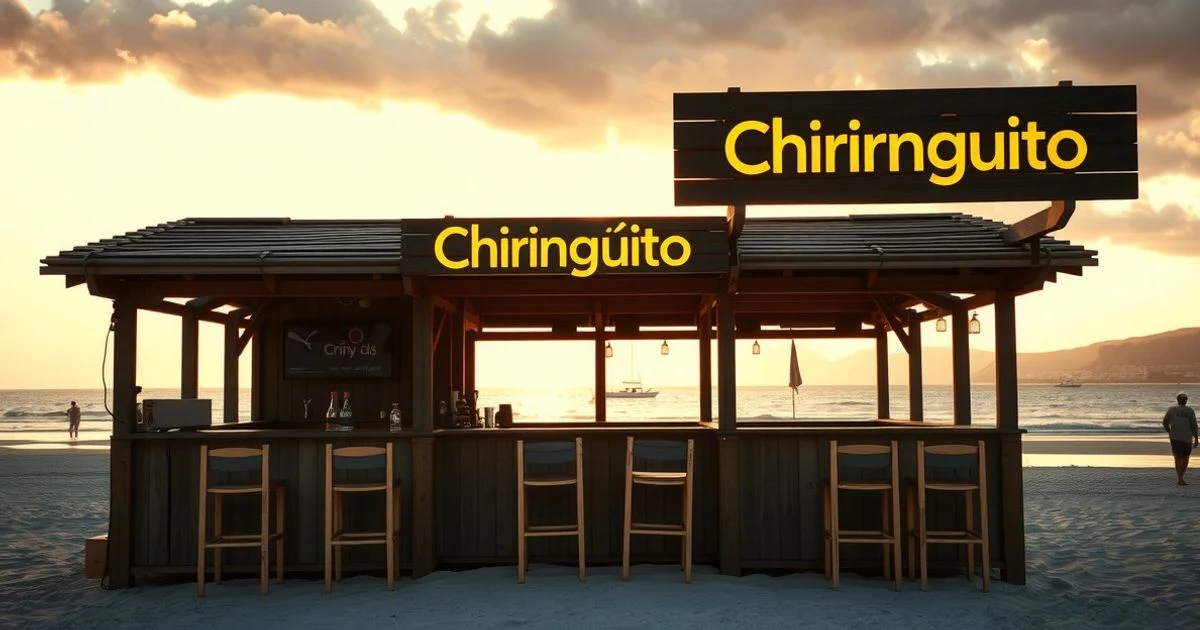
The TSJA's definition clashes with the reality of many establishments. What was once a wooden hut with cold beers and grilled sardines, where people went in flip-flops and with sand stuck to them, has turned into restaurants with terraces, gin and tonic menus, and online reservations. Los Galápagos, for example, even hosts Christmas zambombas, something unthinkable in the classic beach bar. Its own manager admits it: "The beach bar is no longer a beach bar; it is a restaurant by the sea."
For business owners, legal uncertainty is the main problem. They argue that while some beach bars are forced to dismantle, others in Málaga have been unregulated for years and no one says anything to them. The TSJA, however, has been clear: the law is the law, and a beach bar, by definition, is removable and must be dismantled at the end of summer. The ruling affects 25 establishments along the Cádiz coastline, mostly between Rota and Tarifa, but its impact will be felt across the entire Andalusian coast.
And what about the neighbour in Málaga? For now, they can continue enjoying their favourite beach bars this summer, but with the uncertainty that, if the City Council applies the same standards, some may not reopen next year. Next season, it’s better not to get too attached to that seemingly permanent beach bar that looks as fixed as the lighthouse.

You may also like