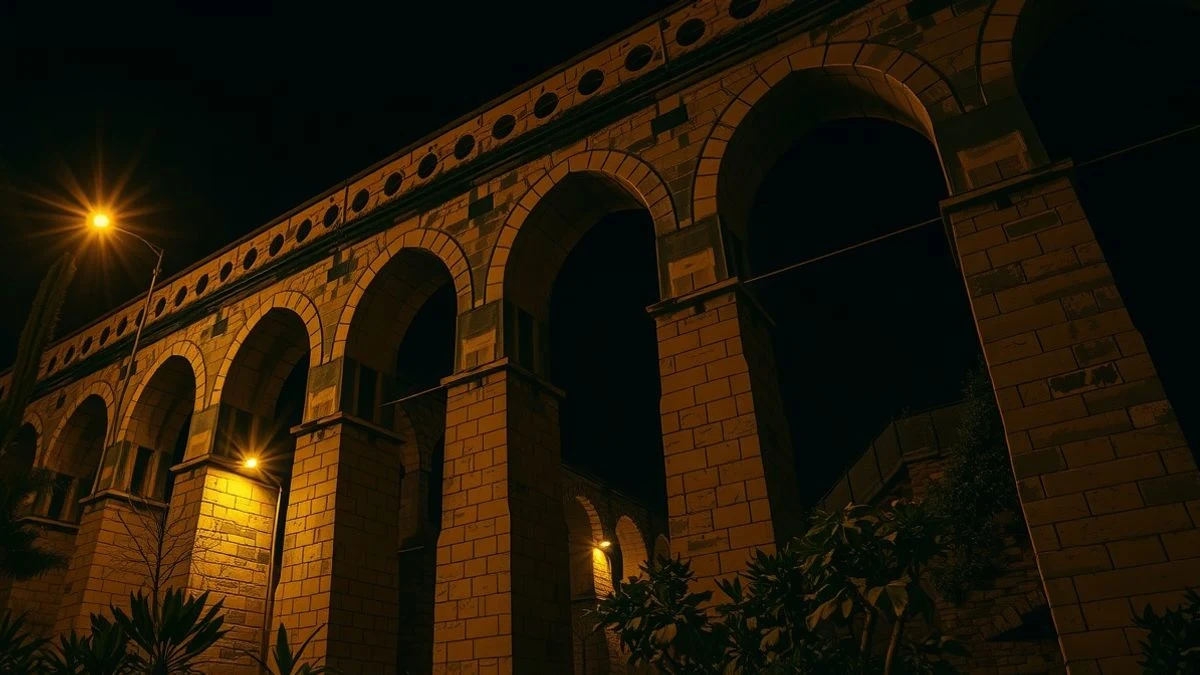
Hispania Nostra warns of the advanced deterioration of this 19th-century waterway, key to the industrial archaeology of Axarquía.
The association Hispania Nostra has included the aqueduct Agua de Hierro de Nerja, known as El Tablazo, in its Red List of endangered heritage. The structure, approximately 100 metres long and featuring 25 semi-circular arches, shows signs of material detachment and lacks specific legal protection, according to the entity's statement.
A 19th-Century Engineering Work in Critical Condition
Built in the late 19th century at the initiative of the VI Marquis of Tous, Rafael de Chaves y Manso, the aqueduct was used to transport water to the sugar cane fields of the San Joaquín factory. The waterway, made of rendered masonry and brick, overcomes the uneven terrain in the area of Las Mercedes, a zone experiencing significant urban pressure.
Hispania Nostra warns that neglect and lack of maintenance have caused material detachments that threaten the stability of the structure. Furthermore, the absence of a legal protection status prevents swift action for its consolidation. The association reminds that its disappearance would mean losing a key testimony of the historical irrigation systems of the Málaga coastline.
The Red List: A Conservation Alert
The Red List is a social denunciation tool promoted by Hispania Nostra, a non-profit entity declared of public utility. Its aim is to highlight those historical, archaeological, or natural heritage assets that are at risk of disappearance or essential alteration. The inclusion of the Nerja aqueduct raises the number of Málaga sites on this register to 17.
Among the monuments in the province already listed are the San Telmo Aqueduct (Málaga city), the ruins of the Roman city of Singilia Barba (Antequera), and the archaeological site of Torrealquería (Alhaurín de la Torre). The association calls on the authorities to act before it is too late.
The Industrial Legacy of Axarquía at Risk
The Agua de Hierro aqueduct is, alongside the restored Aquila Aqueduct, one of the main traditional irrigation engineering works in Nerja. Its construction enabled the development of sugar production, which was the economic engine of the region for decades. Local residents have expressed their concern over the deterioration of an element that is part of their local history.
Hispania Nostra insists that the urban pressure in the vicinity of Las Mercedes could irreversibly alter both the monument and the historical landscape. Therefore, they urge municipal and regional authorities to declare the aqueduct a Cultural Asset of Interest and to undertake the necessary consolidation works.
Meanwhile, the aqueduct remains standing, but each rain and each season of neglect brings it closer to collapse. Heritage lovers hope that this alert will help save a piece of Axarquía's history.

You may also like