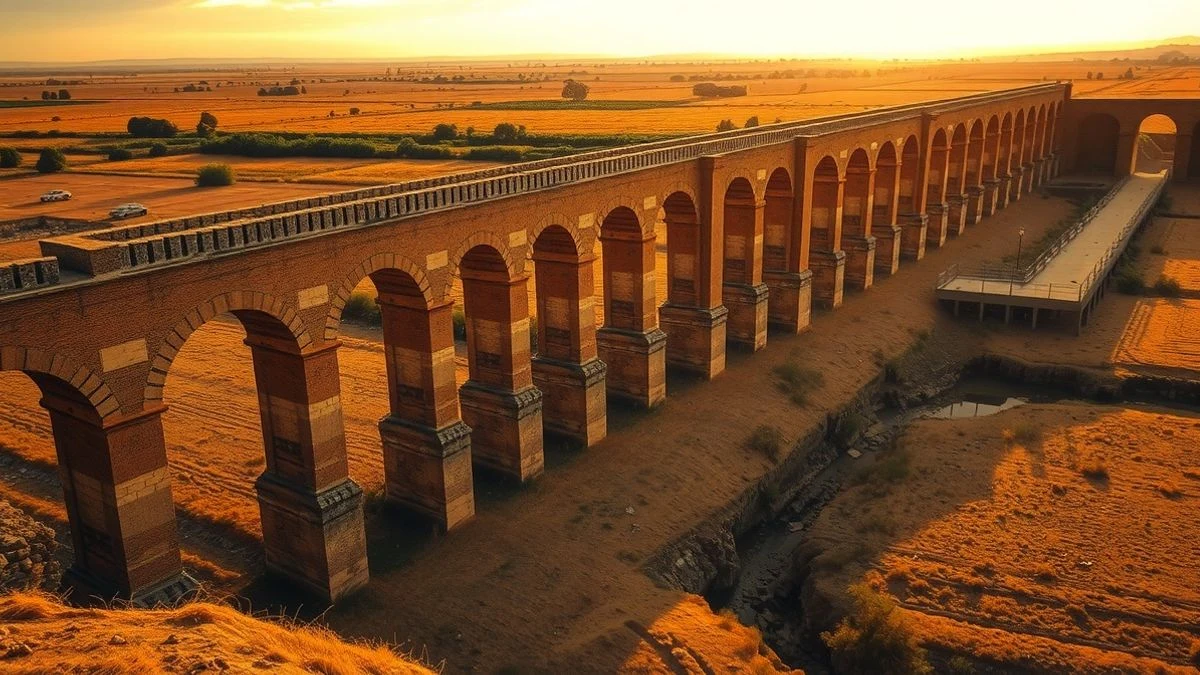
Hispania Nostra has included the Agua de Hierro aqueduct in Nerja in its Red List of heritage due to the progressive deterioration of the structure and the lack of legal protection.
The Hispania Nostra association has included the Agua de Hierro aqueduct, also known as El Tablazo, in its Red List of heritage. This hydraulic construction from the 19th century, located in Nerja, is a remnant of the old sugar industry in the region. The group warns that the progressive deterioration and lack of protection threaten its conservation.
The aqueduct, approximately 100 meters long and composed of 25 semi-circular arches, currently shows signs of brick detachment. Hispania Nostra warns that urban pressure in the area could irreversibly alter both the monument and the historic landscape surrounding it.
A Legacy of Sugar Cane in Danger
Presumably built in the last decade of the 19th century, the aqueduct is linked to the old San Joaquín factory and the cultivation of sugar cane. The association recalls that, alongside the Águila aqueduct, it is one of the main engineering works for irrigation in the municipality of Nerja.
"The aqueduct lacks a specific figure of legal protection," points out Hispania Nostra. "Despite its relevance for understanding traditional irrigation systems and the sugar industry, deterioration continues to advance without any measures being taken."
For the residents of Nerja, this aqueduct is not just a historical work, but a testament to their agricultural and industrial past. The possible urban transformation of the surroundings, the association warns, "threatens to decontextualise it and alter its relationship with the ravine, paths, and ditches."
Who Built It?
Although there is no precise documentation, it is believed that the aqueduct may have been the work of Rafael de Chaves y Manso, the 6th Marquis of Tous, during the peak of sugar activity. The structure, made of plastered masonry and brick, is an example of the water architecture characteristic of the area.
Hispania Nostra recently included the Ribera del Caminito del Rey bridge in Malaga in the Red List as well. The list includes elements of Spanish heritage at risk of disappearing.
For now, the Agua de Hierro aqueduct remains standing, but shows clear signs of neglect. Heritage lovers hope that this alert will prompt the authorities to act before it is too late.

You may also like