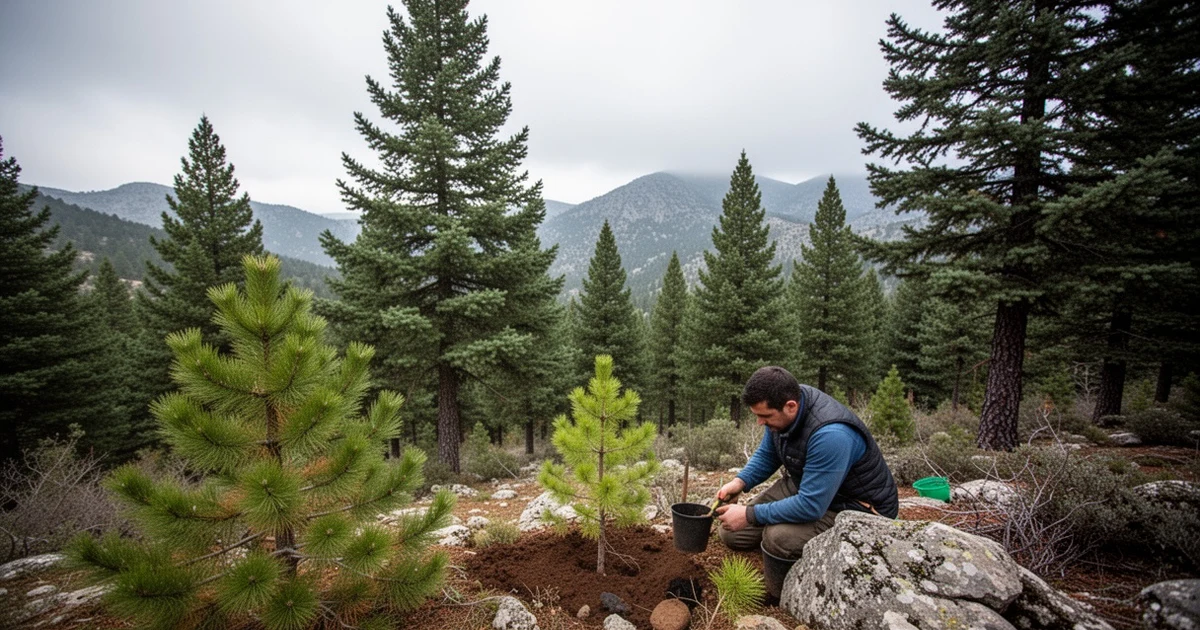
The Ministry of Sustainability and Environment has launched a pioneering project for the repopulation of pinsapo in five Andalusian locations, including Cortes de la Frontera, to ensure the survival of this endangered species in the face of climate change.
The Junta of Andalucía has implemented an experimental reforestation plan for the pinsapo (Abies pinsapo), a species classified as endangered, with the aim of adapting it to climate change. The initiative, published on the contracting profile, includes actions in five climate refuges in the community, notably Cortes de la Frontera, in the Serranía de Ronda.
The project, described as pioneering by the Andalusian government, aims to increase the range of the pinsapo in areas where it can better adapt to future conditions. For this purpose, locations have been selected based on ecological and scientific criteria, using data from the Environmental Network of Andalucía (Rediam) and projected climate scenarios.
The repopulations will take place in areas with conditions similar to those of Sierra de las Nieves or Los Alcornocales, where the largest population of this tree in Europe is concentrated. The idea is that, when the effects of climate change occur, the species will already be established and able to survive.
In addition to conservation, the Junta aims to promote specialised employment in forestry, logistics, and monitoring. The initiative will generate information applicable to future forest restorations and contribute to the sustainable management of the territory.
The pinsapo is an endemic fir tree of southern Iberia, considered a symbol of Andalusian biodiversity. Its main threat is climate change, which reduces its natural habitat. With this intervention, the Junta hopes to ensure its long-term survival.
Actions will begin once the contracts are awarded, expected in the spring of 2026. It is anticipated that work in Cortes de la Frontera and the other locations will be completed by the end of the year.

You may also like