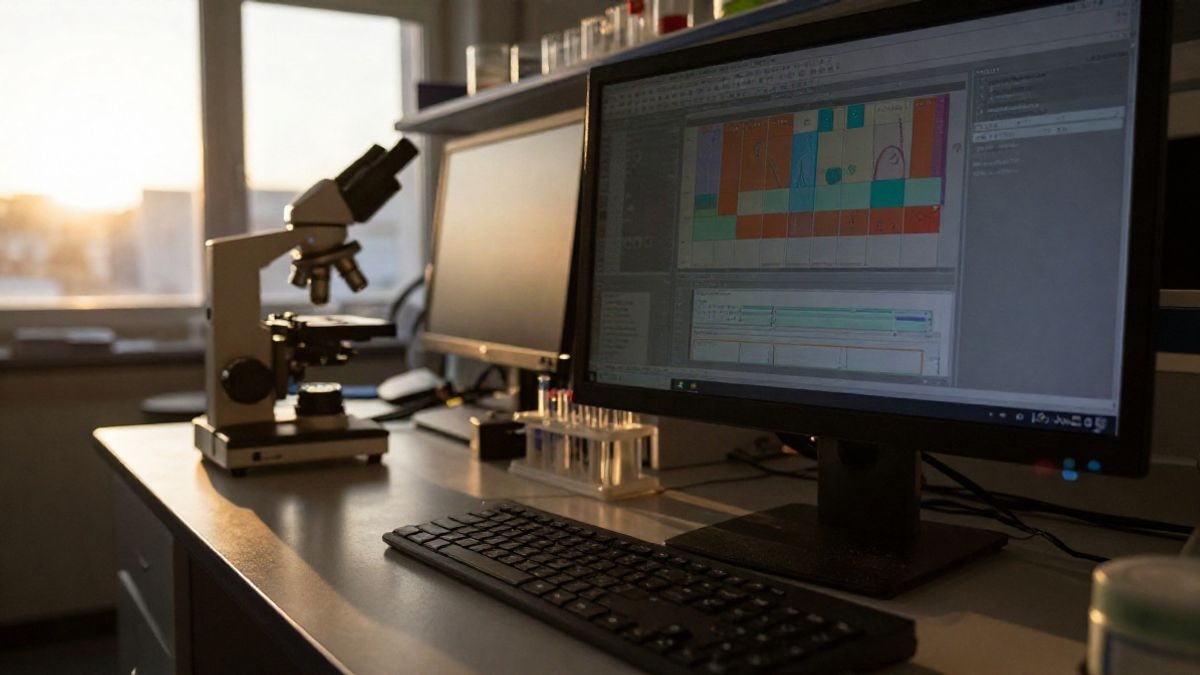
The University of Málaga participates in the European project EURAS, which seeks personalised treatments for rare diseases such as SYNGAP1 syndrome through bioinformatics. The initiative, driven by the mother of an affected individual, already includes 500 patients.
The University of Málaga (UMA) is part of the European project EURAS, a research initiative aimed at advancing personalised treatments for rare diseases caused by mutations in genes from the RAS family, including SYNGAP1 syndrome. According to Diario Sur, the impetus for the Málaga institution to join this initiative came from Encarnación Postigo, a professor of Translation and Interpretation at UMA and mother of Celia, a 26-year-old diagnosed with this disorder.
SYNGAP1 syndrome is caused by a mutation in the SYNGAP1 gene, located on chromosome six. This gene provides instructions for producing the SynGAP protein, which is essential for the development of the nervous system and the connection between neurons. When the protein is absent or altered, it leads to intellectual disability, epilepsy, psychomotor delay, and severe language difficulties. "There is no cure," states Encarnación Postigo.
Currently, there are 1,500 diagnosed cases worldwide, although it is estimated that thousands more remain unidentified because symptoms can be confused with other conditions and genetic testing is not always accessible. In Málaga, there are only four individuals with this disease.
The EURAS project, which involves researchers from Germany, Austria, France, and the United Kingdom, is working on phenotyping patients: characterising their symptoms in an international registry that already includes 500 patients across Europe. The Málaga group, coordinated by Juan Antonio García Ranea, a professor in the Department of Molecular Biology and Biochemistry at UMA and scientific coordinator of the Bioinformatics Unit at IBIMA Plataforma BIONAND, is developing bioinformatics tools to compare clinical and genetic profiles, group patients according to their characteristics, and identify which treatments might work best for each group.
"We have developed tools that compare symptom profiles, look for similar patient groups, and classify them to integrate all that information later," explains García Ranea.
The researcher notes that this approach is key to advancing personalised medicine. "This is very important for finding the physiological bases and seeing the differential mechanisms; it is the path to personalised medicine," he adds. Once patients are classified, specific studies are opened by groups that are complemented with cellular models, organoids, or animals to test treatments.
This Thursday and Friday, the Rectorate of UMA is hosting a working group on RASopathies (IWRAS 2026) attended by Professor Robert A. Levy from the Allen Institute for Brain Science in Seattle (USA). Levy has managed, through an adenovirus that crosses the blood-brain barrier, to introduce a correct copy of the altered gene; the technique has worked in mouse models and has improved issues arising from epilepsy.
Celia's journey reflects the harshness of the disease. In her early years, she suffered constant hospital admissions and attended public schools, where she faced a lack of understanding regarding her condition. When severe epilepsy problems arose, she could no longer continue her education. "Since she was 18, the epileptic seizures worsened exponentially, and she lost physical mobility drastically; now her life is very limited," her mother recounts. The young woman requires constant supervision and care and is very sensitive to stimuli.
The diagnosis came by chance. The family learned that Dr. Elizabet Gabau, a geneticist from Sabadell, had a project to determine the cause of the disease. They traveled to the Catalan city, underwent testing, and a year later, they discovered the origin of her condition. Celia's mutation was not inherited and did not affect her siblings.
Postigo denounces the lack of resources to care for these patients. "It is not possible for her to attend any centre due to her circumstances, as she needs constant help, and let's be realistic, there are no resources, budgets, planning, or specialisation to care for this type of patient," she emphasises. Moreover, many medications are not funded. "Our hope lies in research," she concludes.
You may also like