The 15th-century watchtower, a Cultural Heritage Site, shows cracks and loss of masonry at its crown. Formal complaints began in 2017, and the Vélez-Málaga council approved an urgent project in 2020 that has not been executed.
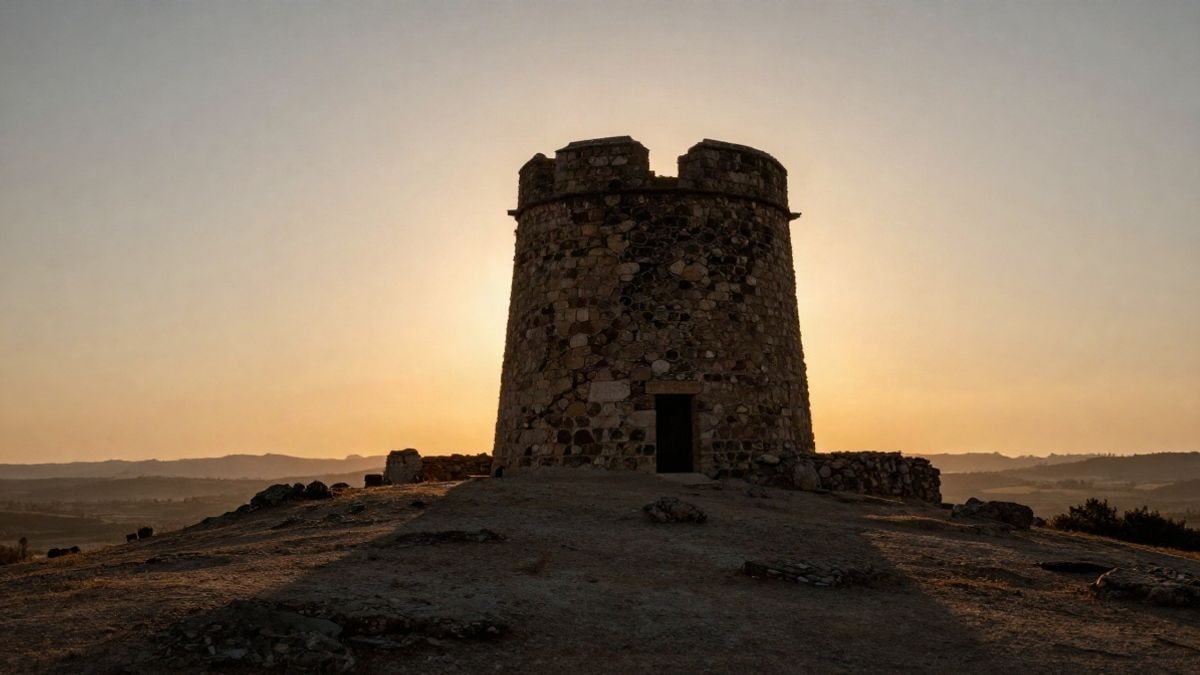
The Atalaya Tower, located in the municipality of La Viñuela, has accumulated nearly a decade of complaints without any intervention to halt its deterioration. The structure, declared a Cultural Heritage Site in the municipality's Catalogue of Cultural Assets, shows loss of masonry at the crown and visible cracks in its walls, according to Diario Sur.
The head of the 'Triana, Heart of Axarquía' platform, Francisco Javier Medina, places the start of formal complaints in 2017. That year, they submitted registered letters to the town halls of La Viñuela and Vélez-Málaga. Three years later, in January 2020, the Vélez-Málaga council unanimously approved urging the urgent drafting of a project for the consolidation, restoration, and enhancement of the tower, with the possibility of accessing European EDUSI funds if ownership belonged to the Vélez municipality.
The location of the watchtower, on a hill along the boundary between La Viñuela and Vélez-Málaga, has caused confusion over its affiliation for years. The planning of La Viñuela describes how the historic Vereda de Vélez runs along the boundary between both municipalities next to the tower. From the nearby Vélez village of Triana, there is a sentimental connection to the structure.
“It is also a symbol of Triana,” summarises Medina.
The tower was built during the last stage of Al-Ándalus in the 15th century as a watchtower to alert against incursions from the coast and as a communication point in the Nasrid defensive network. It stands around ten metres tall and has a circular base, with a solid body in its lower two-thirds. Its intermediate position between the coast and the Boquete de Zafarraya allowed it to control one of the historic corridors between Granada and Vélez-Málaga, establishing visual connection with the Zalia castle, opposite Alcaucín.
Specialised documentation, collected by 'Viajeros en Corto Málaga' from a study by Mariano Martín García and Luis Miguel Aguilera Peragalo, indicates that the watchtower continued to be used after the Christian conquest, a uniqueness among the interior towers of the province. It had a sister tower on Cerro Agudo, which was completely destroyed and has not survived to this day.
The cracks are not a recent problem. In December 2018, 'Viajeros en Corto Málaga' already described the chipping of the upper part and fissures in the walls, considering urgent intervention necessary. Medina claims he has requested safety measures in the surrounding area when organising routes from Triana, fearing that a landslide could affect participants.
“We have been demanding this many times on social media, on the internet, and I am already super bored,” laments Francisco Javier Medina.
Six years after the plenary agreement and nine since the first complaints, the external appearance of the tower continues to show significant losses in the upper area and visible fissures. The Atalaya is part of the landscape visible from numerous points in the region and is one of the landmarks on routes that traverse the interior of Axarquía.

You may also like