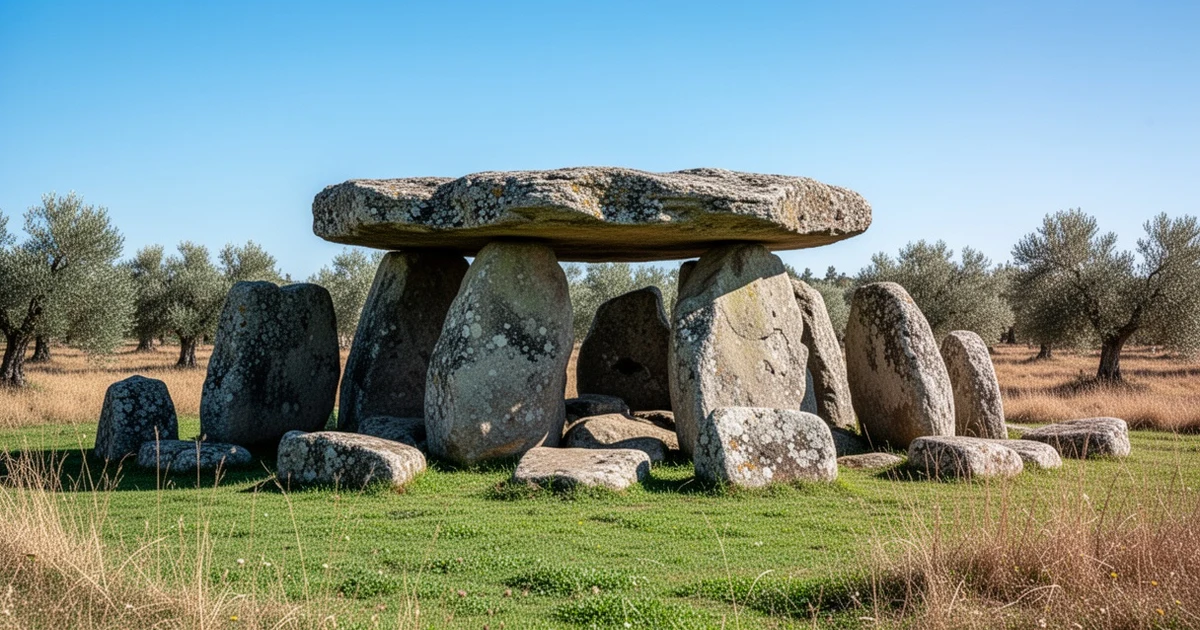
A team from the University of Cádiz has unearthed a 5,000-year-old dolmen in Teba (Málaga), measuring 13 meters long with exceptional conservation. The monument, part of the La Lentejuela necropolis, contains prestige goods including ivory, amber, and sea shells.
The Dolmen I of the La Lentejuela necropolis, with its 13-meter length and complex internal chambers, offers a unique window into funerary practices and long-distance exchange networks in southern Iberia during the third millennium BC. The structure, located in Teba (Málaga), has been described by its excavators as one of the most monumental and best-preserved megalithic tombs in Andalusia.
Led by Dr. Eduardo Vijande and Dr. Serafín Becerra of the University of Cádiz's Thalassa research group (HUM-1127), the project Monumentalidad, tiempo y sociedad. El fenómeno megalítico en la necrópolis de La Lentejuela has received authorization from the Andalusian Regional Government's Ministry of Culture and Historical Heritage. Over four excavation campaigns, the team documented multiple ossuaries and high-status grave goods crafted from exotic raw materials, including ivory, amber, marine shells, and sophisticated flint pieces such as arrowheads, large blades, and an exceptional halberd.
“We could be talking about one of the most monumental and complete dolmens in all of Andalusia,” said Serafín Becerra, also director of the Museum of Teba. Co-director Eduardo Vijande emphasized the structure's preservation: “The real potential of this structure is its extraordinary state of conservation, which will allow us to know in great detail the ways of life and beliefs of these communities.”
The symbolic value of the finds was highlighted by Dr. Juan Jesús Cantillo of the University of Cádiz: “The presence of marine shells in an inland territory reflects the importance of the sea as an element of prestige and the existence of long-distance exchange networks.”
The project is funded by the Teba Town Hall, with logistical support from the University of Cádiz and collaboration from the Palarq Foundation for archaeometric analyses. The permanent team includes members of the Thalassa group: Eduardo Vijande, Serafín Becerra, Juan Jesús Cantillo, Dr. Leticia Gómez, and doctoral students Alejandro Muñoz and Jesús Corrales. Dr. Adolfo Moreno of the University of Almería also participated. The excavation serves as a training ground for students of the University of Cádiz's History degree, with collaborators Pablo Aguilar, Ana Ruíz, María del Carmen López, Laura Guilloto, Isabel Muñoz, Paula Luque, Manuel López, Pilar Martínez, and Nieves Suplet.
This discovery reinforces the University of Cádiz's role in European megalithism research and the valorization of Andalusian archaeological heritage. The excavation is ongoing, with further analysis of the artifacts and human remains expected to shed light on the social structure and beliefs of the communities that built this monumental tomb.

You may also like