Eduardo Strauch, one of the 16 survivors of the Andes plane crash in 1972, gave a talk in Moclinejo to over a hundred locals. The visit was arranged due to his friendship with Marta Shaw, a resident of the municipality who lost two cousins in the tragedy.
The Uruguayan architect and speaker Eduardo Strauch, one of the 16 survivors of the Andes plane crash that occurred on October 13, 1972, visited the Málaga municipality of Moclinejo this Sunday to give a talk to more than a hundred locals. The exhibition hall Antonio Segovia Lobillo was too small to accommodate those eager to hear his firsthand testimony, according to Diario Sur.
Strauch's presence in this village of Axarquía, which has 1,229 inhabitants, is linked to a personal story. The connection was facilitated by Marta Shaw, a 78-year-old Uruguayan who has lived in Moclinejo since 1998 and has been his friend since childhood. Shaw lost two cousins in that tragedy: Gustavo Nicolich and Daniel Shaw. Nicolich initially survived the impact but died at the age of 20 in the avalanche that buried the fuselage on October 29. Daniel Shaw, 24 years old, died on the same day as the accident and was also Eduardo Strauch's cousin.
Strauch, born in Montevideo on August 13, 1947, and who just turned 79, was only 25 when Uruguayan Air Force Flight 571, a Fairchild FH-227D carrying members of the Old Christians rugby team and their companions, crashed in the mountains. There were 45 people on board; only 16 survived after being isolated for 72 days.
“It gives me great satisfaction to continue contributing to the lives of others, to be in contact with people and to share my experiences,” Strauch explained before starting the talk.
The survivor acknowledged that those days remain “very present” in his life and that he is still surprised by the interest they generate more than five decades later: “I am still impressed by how people are interested, ask me questions, and want to take photos with me.”
For Strauch, one reason the story continues to fascinate, even for generations born long after the accident, is what it reveals about human capacity in extreme situations. “What we lived through shows the good essence of human beings in such a crazy world as the one we live in. I believe we are better people than we think,” he reflected. The success of the film 'La sociedad de la nieve', by Juan Antonio Bayona, has also brought the tragedy closer to a younger audience.
Strauch prefers to view those 72 days from the perspective of what they taught him rather than solely from the horror. “It changed me and brought me everything positive,” he asserted. Among the main lessons, he highlights the awareness of “the potential of humans” and, above all, love. “If it hadn’t been for the love for our families, we wouldn’t have endured,” he maintained. From that experience, he also extracted a maxim that he holds onto at 79: “You shouldn’t waste a minute of life, because people think we are going to be eternal.”
One of the topics that arose during the conversation was the decision to feed on the bodies of those who had died, due to the absolute lack of food. Strauch addresses the episode without evasion. “It was the easiest decision of my life, but I had no regrets at any moment about what we did,” he stated. What was truly complex, he recalled, was “overcoming the cultural taboo.” “I had to make a very strong mental effort and I am satisfied that I did it, because that’s how we survived,” he added.
Another decisive moment came when they heard through a small radio that official search efforts had been suspended. “We heard that the world had abandoned us,” he remembers. The news, far from ending their hopes, forced them to accept that they depended on themselves. Ultimately, Fernando 'Nando' Parrado and Roberto Canessa walked for ten days through the mountains until they found the Chilean muleteer Sergio Catalán, whose alert allowed the rescue of the rest of the group to be initiated.
At nearly 4,000 meters above sea level, without proper equipment and subjected to extreme temperatures, the group survived until late December. Strauch even recalls that, after the rescue, some doctors predicted serious physical consequences and premature aging for them. “The doctors were wrong, and here I am,” he joked this Sunday. He went even further amidst the laughter of the attendees: “I’m going to live to 104 years old.”
Bayona's film inevitably occupies part of his current conversations. Strauch does not hide his admiration for the film and once again described it in Moclinejo as “a wonderful film,” highlighting “the fidelity, quality, and respect” with which the events are portrayed.
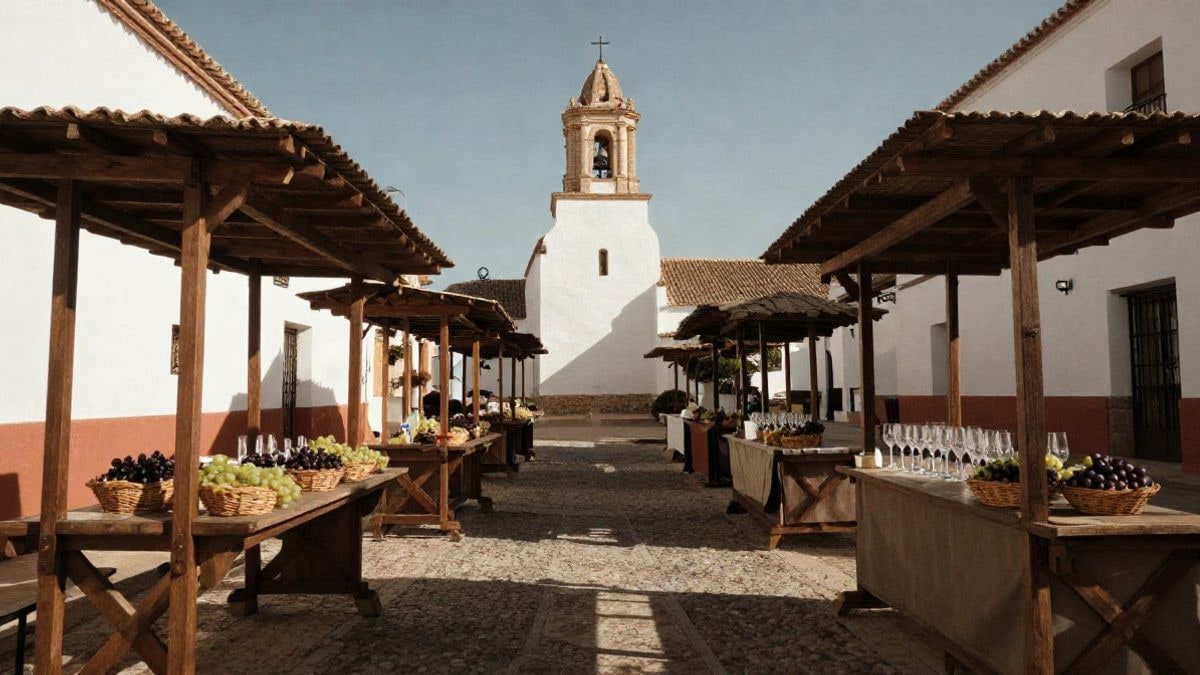
Strauch had wanted to visit the village where his friend lives for years and took the opportunity to also get closer to another of Moclinejo's great symbols: the muscatel grape and wine. He tasted local products and visited Bodegas Dimobe, a family business founded in 1927 and linked for generations to the production of wines with Muscat of Alexandria and Pedro Ximénez. The company has been managed by the Muñoz Anaya brothers since the late nineties; Antonio Muñoz Anaya is also the current mayor of Moclinejo for the PP.
The talk, promoted with the collaboration of the Club de Lectura El Pilarillo, coordinated by Elena, exceeded expectations and led to a lengthy discussion. Strauch spoke to the media before starting and signed copies of his book 'Desd' at the end of the event.

You may also like