The Malaga city is betting on attracting tech entrepreneurs and digital nomads with coworking spaces and branded residences, leaving behind its image as a luxury destination. The goal: to become the new innovation hub of southern Europe.
Marbella wants to shift its economic model. The Costa del Sol city, globally known for its yachts, Ferraris, and luxury boutiques, now aspires to become the Silicon Valley of Europe. The plan involves attracting a new generation of digital professionals, startup founders, and global investors looking for a sunny place with a high quality of life to live and work.
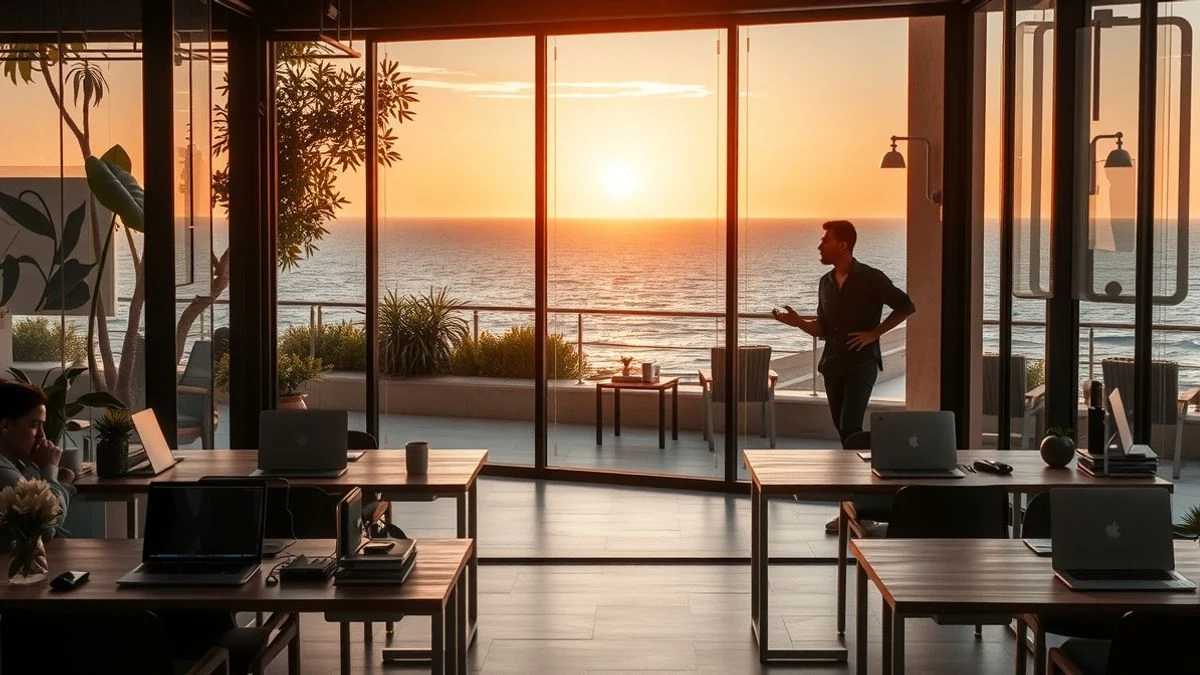
Coworking spaces and offices are flourishing alongside high-end restaurants and gated communities. One of the clearest examples is The Pool, a business centre located on the Golden Mile, the coastal strip connecting Marbella with Puerto Banús. Its CEO, Christian Rasmussen, explains that they are helping to change the perception of Marbella, shifting from a leisure destination to a hub for modern professionals.
The profile of the new investor: younger and global
The real estate market in Marbella is undergoing a transformation. Previously, buyers were middle-aged Europeans looking for a second home, but now young entrepreneurs are arriving who want a residence to live and work year-round. According to the Marbella market report for 2025 by Pure Living Properties, the predominant nationalities remain British, Scandinavian, German, and Dutch, but interest from buyers from the United States, Canada, Poland, and Gulf countries has increased.
Artur Loginov, CEO of the real estate agency Drumelia, asserts that new types of people and investors, as well as hotels, have arrived post-pandemic, raising the quality of the area.
“It used to be just a pretty village. Now it is also a city,”says Loginov. In the last four or five years, new gyms, restaurants, and globally renowned brands have opened, which, according to him, reach the level of New York or Monaco.
Real estate developers want to transform Marbella into a permanent base for globally connected founders and investors: a foothold in Europe that offers sun and affordable luxury, similar to the United Arab Emirates. A recent trend is the rise of branded residences, where developers partner with athletes or fashion brands. For example, Rafael Nadal has teamed up with Giorgio Armani to develop 33 super-luxury mansions, and Dolce & Gabbana, Fendi, and Karl Lagerfeld have also launched residential promotions.
Infrastructure for talent: international schools and dining
To accommodate this new resident profile, the educational offerings have skyrocketed. Richard Sutcliffe, director of the English International College in Marbella, notes that about 40 years ago there were around eleven international schools, and now there are over 50. Among the families enrolling their children are ultra-wealthy individuals who, although they do not reside permanently, have nannies and chauffeurs to manage their daily routines. Sutcliffe highlights a notable increase in families from the United States, Dubai, Russia, and China.
In the dining sector, demand is so high that finding a good location is challenging. Mary Dunne, founder of the real estate agency MPDunne Properties, states that there is a “queue” of high-end restaurants waiting to open. Her company collaborates with a Dubai chain to find locations, but space is limited.
“We are far from being a large city in terms of size, and space is limited,”notes Dunne.
For the residents of Marbella, this transformation means a change in daily life. The city now offers more options for leisure, work, and education, but it also drives up land and housing costs. Coworking spaces like The Pool, where Finnish entrepreneurs debate in glass-walled rooms while others work at shared tables, reflect the new Marbella. Rasmussen sums it up:
“Instead of attracting people who are about to retire, talent has been attracted. I don’t think there are many places on the planet that have this talent. I think it’s a goldmine.”
The future of Marbella, according to its promoters, will be very different from what it is now. The city aims to be a tech and innovation hub, looking towards 2026 and beyond. For the local reader, the question is whether this bet will manage to balance economic development with the quality of life that has always characterized the Costa del Sol.

You may also like