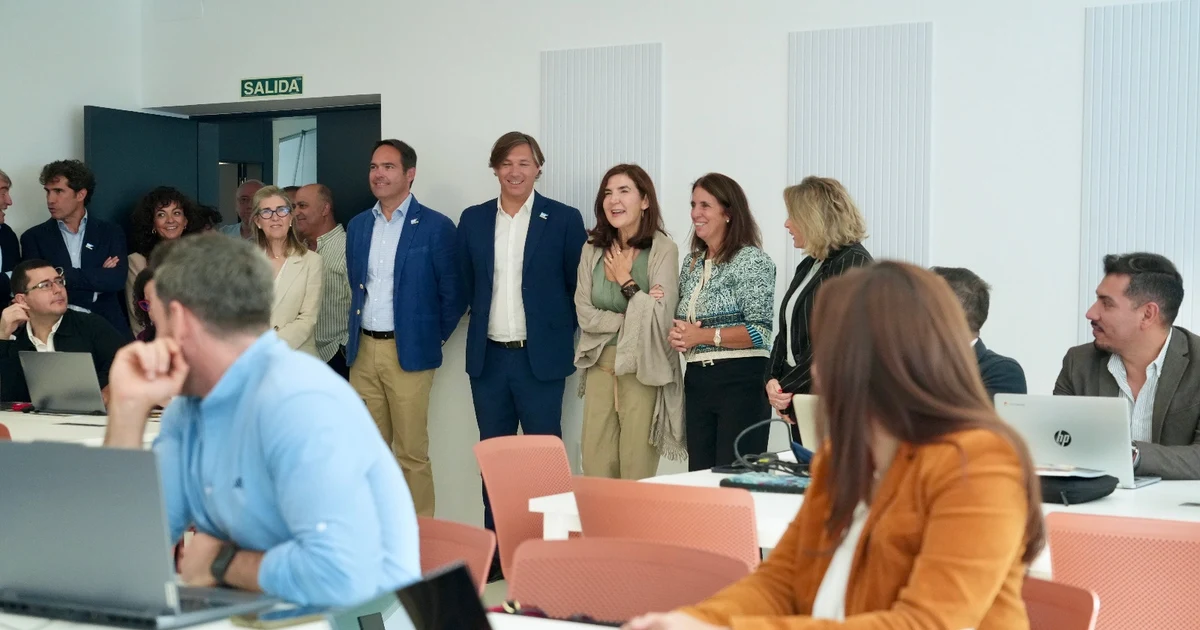
The municipal company Promálaga will take over the operation of the future Auditorium of Málaga, which will prioritise conference activities. The musical programming, such as that of the Philharmonic Orchestra, will be placed in a secondary role.
The project for the Auditorium of Málaga, which for over twenty years was presented as the city's great cultural leap, has taken an unexpected turn. Promálaga, the municipal company dedicated to economic promotion, will assume its management and conference activities will become the main use of the building. Concerts, the seasons of the Málaga Philharmonic Orchestra, and opera performances will be relegated to a secondary use, according to the new exploitation plan that has emerged.
The decision, which has not surprised critics of the project, confirms what many suspected: the Auditorium was never a cultural project, but rather an urban image operation. The building, which has an investment of around 210 million euros, was conceived as an architectural icon by the sea, but is now being transformed into a conference centre, a function for which Málaga already has the Palace of Fairs and Congresses, which is also planning an expansion.
The change in model implies that music, which was supposed to be the soul of the auditorium, will now have to compete for a space designed for it. The programming of the Philharmonic Orchestra and major opera productions will have to adapt to the logic of conferences, which will be the main source of income. The debate about the cultural viability of the project has been present since its inception, but now it materialises with a decision that many consider a confession of intentions.
The paradox is evident: an auditorium for music is being built whose main activity will be conferences, in a city that already has a fairground and plans to expand it. For the residents of Málaga, this means that the anticipated cultural facility will not meet initial expectations. The stable musical programming, which was supposed to place the city in the European classical music circuit, is now in doubt.
From the Málaga City Council, municipal sources have indicated that the management model seeks to ensure the economic sustainability of the building. However, they have not detailed how the artistic seasons will be financed or what the budget for culture will be. The lack of clear answers regarding the management model has been a constant throughout the two decades of the project's gestation.
The case of the Málaga Auditorium is not isolated. It responds to a dynamic that has been repeated in other major urban projects in the city, where culture is used as a tourist attraction and economic engine, but ultimately ends up subordinated to profitability. In this scheme, music matters as long as it helps project a brand, attract visitors, or feed the narrative of success. When it comes time to allocate resources, the logic changes.
The decision to entrust the operation to Promálaga, an economic promotion company, reinforces this view. Conference activities, which are more predictable and profitable, take precedence over a cultural programming that requires continuous investment and accepting deficits. Critics of the project believe that the real mistake was not modifying the management model, but rather presenting for twenty years what was essentially a major urban image operation as a cultural project.
For the people of Málaga, the auditorium is shaping up to be a space that prioritises business tourism over cultural offerings. The question that remains is whether the city, which has strongly invested in culture with initiatives such as the Picasso Museum or the Pompidou Centre, will be able to maintain a coherent cultural discourse when its major musical infrastructure becomes a conference centre. Time will tell if the focus on short-term profitability does not end up blurring Málaga's cultural identity.

You may also like