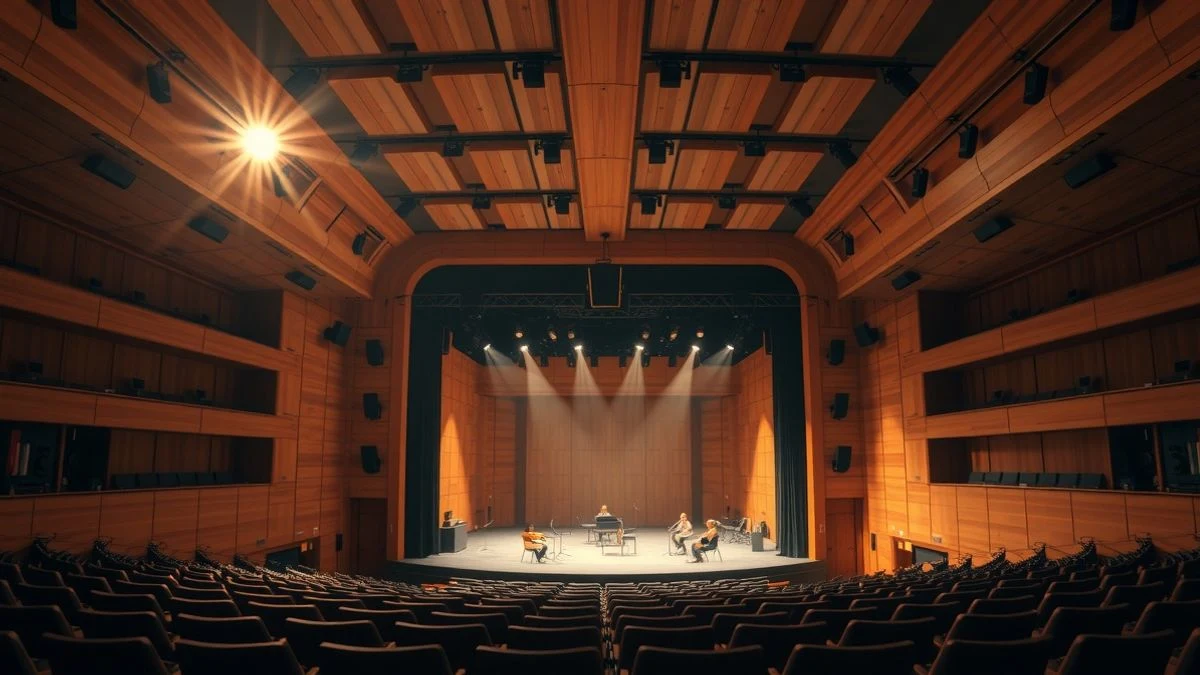
The Committee of the Málaga Philharmonic Orchestra has sent a letter to Mayor Francisco de la Torre demanding that the promises regarding the cultural use of the future Auditorium be put in writing and not rely on verbal statements.
The Committee of the Málaga Philharmonic Orchestra (OFM) has sent a letter to the mayor of the capital, Francisco de la Torre, asking him to put in writing the guarantees regarding the cultural use of the future Auditorium. The musicians believe that the mayor's statements are not sufficient to ensure that the building, with a budget of 209 million euros, fulfills its primary function: to be the home of the orchestra.
In the letter, the OFM workers remind De la Torre that he stated this week that cultural activities will occupy more than half of the year in the Auditorium, but they emphasize that "a building that will serve Málaga for a century or more cannot depend on verbal statements." Therefore, they demand that the management agreement include specific clauses that safeguard the musical use of the space.
The risk of perpetuating the deficiency
One of the most critical points of the letter is the warning that sizing the future house with the figures of the current deficiency "guarantees that the deficiency will continue within the new building." The OFM has been without its own hall for 35 years and currently rehearses and performs at the Teatro Cervantes, a 19th-century space that, according to the musicians, does not allow the orchestra to sound as it should.
"The acoustics are not a decoration: they are the largest instrument of the orchestra, and that is exactly what the 209 million buy," they state in the letter. The professors insist that the orchestra must rehearse in the same room where it plays, something that has never happened in Málaga. "Málaga has not yet truly heard its own orchestra," they assert.
Congress adaptation and ProMálaga management
Another point of friction is the adaptation of the Auditorium for congress use, which the musicians believe could detract from the rehearsal rooms, teaching classrooms, and chamber music halls. The committee demands that the building's usage programme be made public before tendering and that it be guaranteed that none of these spaces lose their original function.
The musicians also question that the management of the future Opera House will fall to ProMálaga, a municipal company without experience in culture. "It makes no sense that if the predominant and main activity is going to be cultural, it will be managed by an entity with no connection to culture," they argue. They consider this decision to be "an unavoidable declaration of intentions" regarding the orientation of the facility.
The fee for space usage
Regarding the possible fee that ProMálaga would charge for each concert, the committee asks that the agreement "put in writing the total exemption from any payment for the use of the space between municipal societies for the cultural programming of the City Council." This would include the days of setup and rehearsal, with production costs budgeted transparently.
The musicians remind that each production assumes its own costs for scenery, costumes, and technical staff, so paying for occupying the hall during the weeks of preparation for an opera would be unfeasible. "The orchestra must rehearse in the room where it plays. Always," they insist.
The OFM awaits a response from the mayor that specifies in writing the promised guarantees. Meanwhile, the future of the Auditorium, which aspires to be a cultural reference in the province, remains uncertain for the musicians who have been waiting decades for a home worthy of their stature.

You may also like