The Provincial Court of Málaga revokes the initial acquittal and condemns Muelle Uno and its insurer to pay €28,470.04 to a 66-year-old man who suffered a kneecap fracture after stepping on a faulty rubber cover.
The Provincial Court of Málaga has ordered Muelle Uno and its insurer to compensate a 66-year-old man with €28,470.04 after he fell when a manhole cover gave way while walking through this port area. The ruling, dated 20 May and accessed by Diario Sur, overturns the decision of the lower court, which had absolved the company of responsibility, considering that the accident occurred in a loading and unloading area and that the pedestrian should have exercised greater caution.
The events date back to 4 January 2021, shortly before 19:00 hours. The man was walking with two friends at Muelle Uno when, upon reaching a watering hole, he stepped on the cover and it gave way. His foot sank into the hole and he collapsed. His companions turned to help him. He was in pain and struggled to walk. Shortly after, he was treated in A&E, where the diagnosis confirmed a comminuted and displaced fracture of the left kneecap that required two surgical interventions.
The ruling from the Sixth Section of the Court states that the loading and unloading area was not marked in any way. The white beacons that delineated it prevented vehicle access but not pedestrian access, and there was no indication prohibiting entry to pedestrians. The judges highlight that this is an area adjacent to a promenade, shops, and restaurants, near La Farola and frequented by visitors. In fact, the video provided by Muelle Uno shows "various and numerous pedestrians" entering normally.
"Had the area been marked, warning of the danger, or had the watering hole been properly covered, the fall would not have occurred"
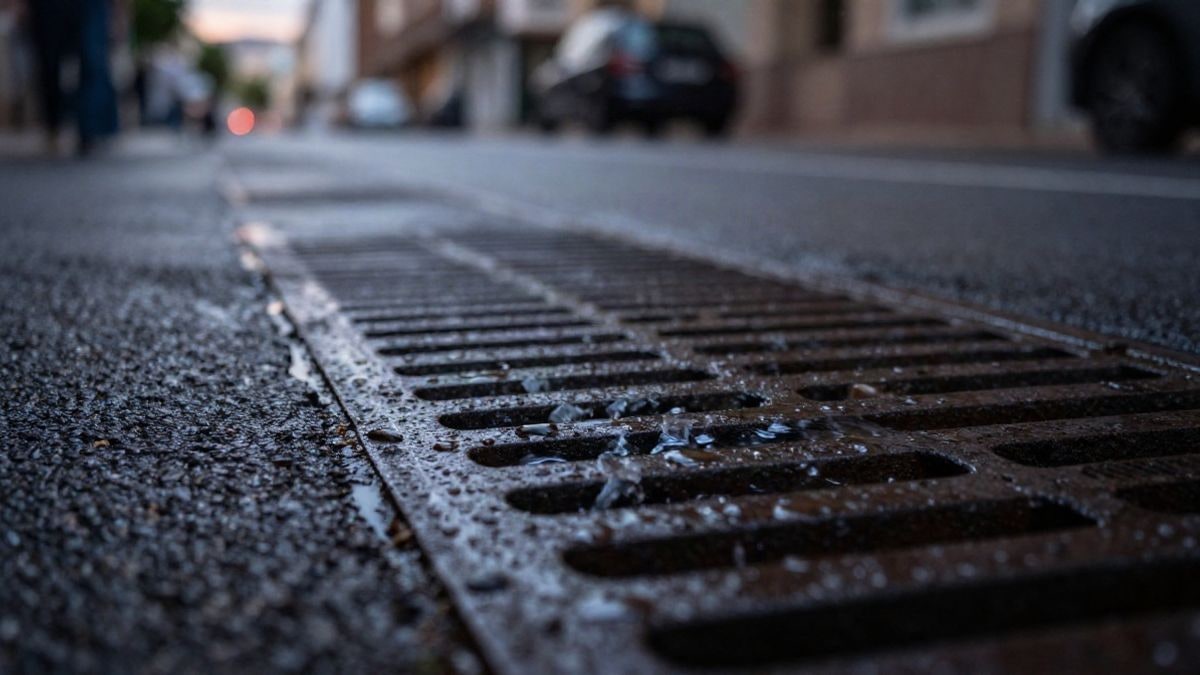
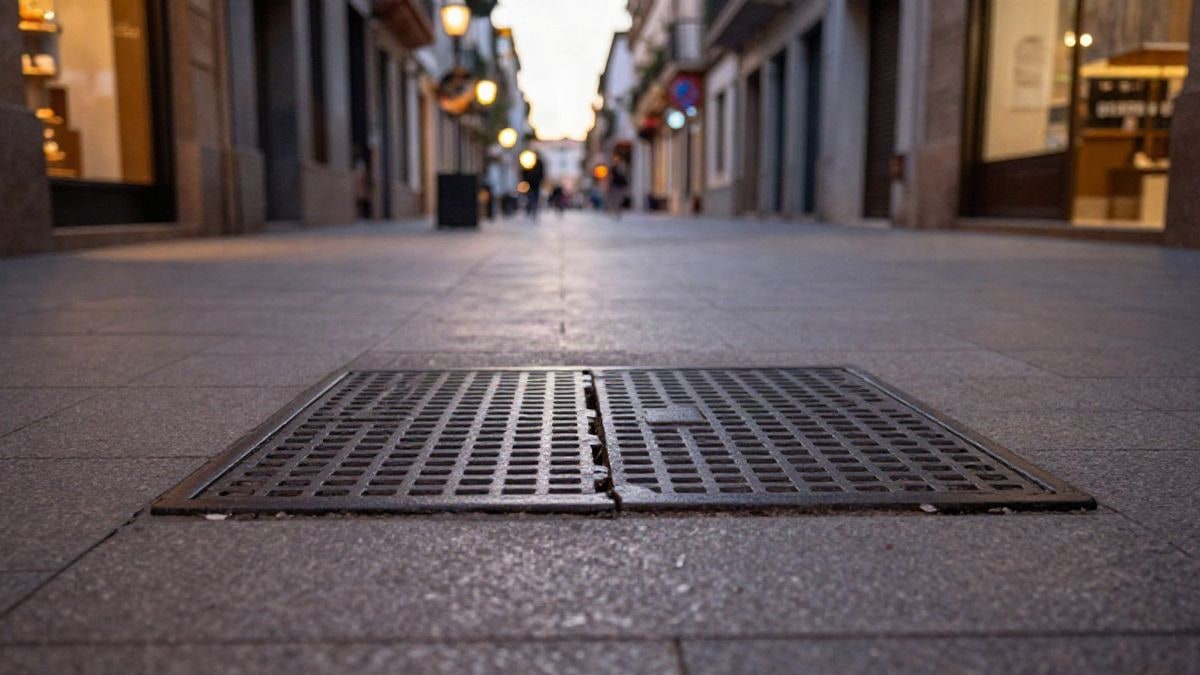
The ruling focuses on the condition of the manhole. The report from the Port Police indicated that the watering hole was not covered by a solid iron lid or other material, but by rubber. The Court qualifies this as "an unusual obstacle on the road," as the cover lacked the necessary strength to support the weight of a person. Furthermore, there was no sign warning of the risk. The ruling notes that the Port Police had already issued other reports related to that same manhole and the danger it posed, a fact that the Court considers to conclude that the risk was known.
The images of the accident were used to reconstruct what happened. They show the man walking calmly with his two friends and falling just as he reaches the manhole. The distance of the camera does not allow for distinguishing whether he tripped or if the cover gave way initially, but one of his companions easily removes it afterwards. The photographs submitted with the claim are, according to the Court, "eloquent" regarding the giving way of the cover.
The court also dismisses the idea that the affected individual could be blamed for walking there at night. The area was "perfectly lit" and there was no indication requiring him to avoid it. For the judges, the fall occurred when he stepped on the manhole, the cover gave way, and he put his foot inside. Hence, they establish a direct relationship between the defect and the injuries and attribute the damage to the "lack of diligence" of the operating company of Muelle Uno, responsible for the management and maintenance of the area.
The law firm Cremades & Calvo-Sotelo, which handled the case, states that the defence of their client's interests "was forged on a belief in the viability of the matter that, at first instance, did not yield results." They indicate that they obtained a ruling that overturned their claims to later obtain a decision from the Court "that fully confirmed our initial claim." In their opinion, the viability of the action rested at all times on solid evidence, a "detailed" assessment of bodily harm, and continuous monitoring of the client's progress. "The result: a fair ruling that we hope sets precedents for the safety of users," they emphasise.
The consequences for the affected individual lasted for months. After the kneecap fracture, he underwent surgery and was discharged from the hospital on 7 January 2021. On 11 February, he had to return to the operating room due to the fracture and the osteosynthesis material having shifted. Recovery required 576 days until the injuries were stabilised.

You may also like