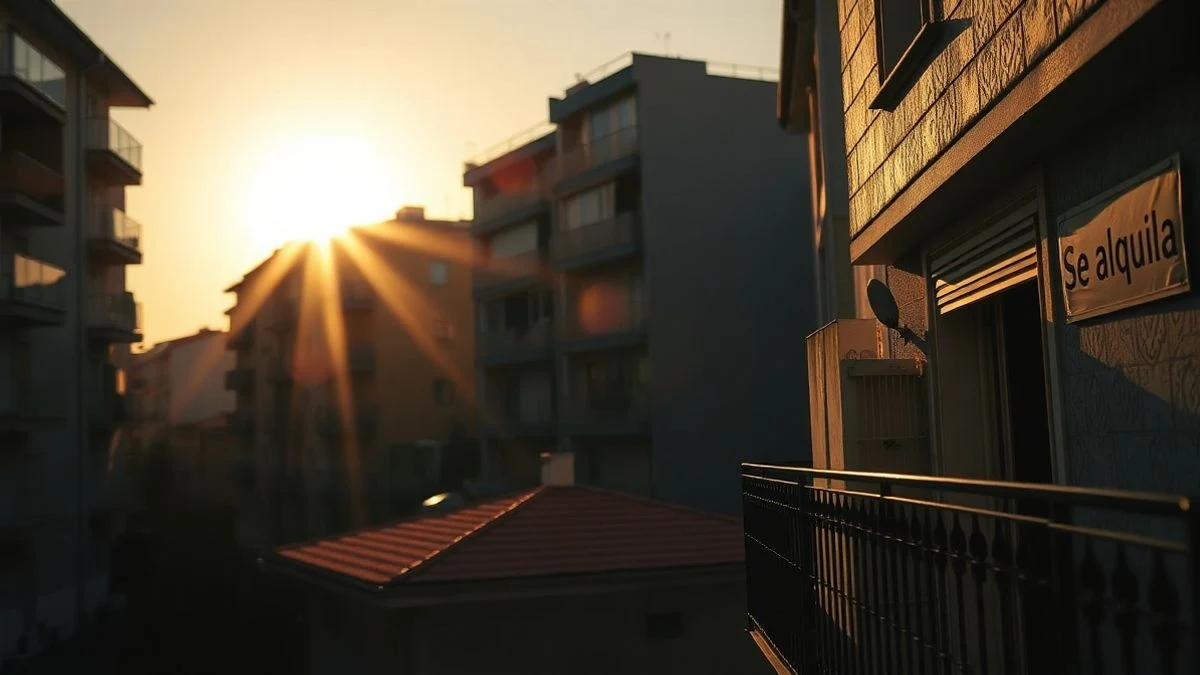
The Plenary of Málaga City Council approved on Thursday the urban planning modification that suspends for three years new licenses for tourist apartments, hostels, pensions, and hotels in all residential areas of the city. The measure aims to curb tourist pressure and protect land for permanent housing.
The Málaga City Council has taken a decisive step to contain the unchecked growth of tourist accommodation. The modification of the General Urban Planning Plan (PGOU), known as detailed number 28, makes the use of accommodation incompatible with residential in all housing ordinances of the city. In practice, no new hotels or tourist apartments can be opened on plots or buildings designated for housing over the next three years.
The mayor, Francisco de la Torre, has defended the measure as a tool to "defend residential land" and ensure that it is used "only" for housing. The suspension affects all categories of accommodation, from hostels and pensions to luxury hotels, although the City Council clarifies that it will not apply to projects that already have a license requested or with planning in process before the publication of the agreement in the Official Bulletin of the Province.
Affected areas and exceptions
The moratorium applies in all areas regulated by residential ordinances, including the Historic City, Closed Block, Open Planning, Garden City, Detached Single-Family, Attached Single-Family, and Traditional Popular Colony. In these areas, no type of tourist accommodation can be established either as an alternative or compatible use. The City Council has left the door open to halt applications submitted in recent days to avoid a call effect, as De la Torre explained: "Urbanism will judge and determine which could proceed and which could not."
The measure does not affect existing accommodations, which can continue to operate normally. Hotels located on non-residential land, such as those in the Golden Mile area or the Fair Palace, are also not included, as they are governed by other ordinances. The suspension is temporary, for a period of three years, during which the City Council will review the PGOU to structurally address the regulation of tourism in the city.
End to the conversion of premises into tourist housing
In addition to the hotel moratorium, the modification of the PGOU tightens the conditions for converting commercial premises into housing, a practice that has skyrocketed in Málaga with about five transformations daily. From now on, changing the use to housing in premises located on first and second-order streets, as well as those facing squares, is prohibited. Premises that wish to be reconverted must meet new habitability requirements, such as having a depth of less than double the width of the façade to ensure proper lighting.
The regulations for lofts or mezzanines are also more precisely defined, which must have a minimum height and cannot be designated for independent housing. The aim is to prevent the proliferation of tiny apartments without conditions that increase population density in pressured areas. The Neighbourhood Association of the Centre has applauded the measure, although it warns that rigorous control will be necessary to prevent fraud.
"We have been denouncing the touristification of the historic centre and the loss of residents for years. This moratorium is a first step, but we must ensure that it is enforced and that alternative routes are not sought," said a neighbourhood spokesperson.
Impact on the housing market
The moratorium comes at a time when Málaga capital records one of the highest rental prices in Andalucía, with an 18% increase in the last year, according to data from the Idealista portal. Tourist saturation has reduced the supply of housing for residents, especially in the centre and in neighbourhoods like La Malagueta or El Perchel. The measure aims to halt the exodus of apartments from the residential market to the tourist market, although consulted experts warn that the short-term effect will be limited.
"The moratorium does not solve the underlying problem, which is the lack of public housing and real estate speculation. But at least it provides a breather and sends a clear signal to investors," explains a spokesperson for the consumer association Facua. The City Council expects that in the coming months a new urban plan will be developed to comprehensively address the coexistence of tourism and residence.
The measure has been approved with votes in favour from the PP government team and abstention from the opposition, which has criticized that the moratorium comes too late and is insufficient. The socialist spokesperson has announced that they will present objections to include a limitation on the number of tourist housing units per building, something that the City Council has ruled out for now. The modification will come into effect next week, after its publication in the Official Bulletin of the Province.
For the residents of Málaga capital, the measure represents a relief in the fight to reclaim their neighbourhoods. "We hope it will help bring back the traditional shops and not just 'souvenirs' and 'for rent' signs," comments a resident of the Centre. The City Council has announced that it will strengthen inspections to prevent illegal openings and will study new measures if tourist pressure does not ease.

You may also like