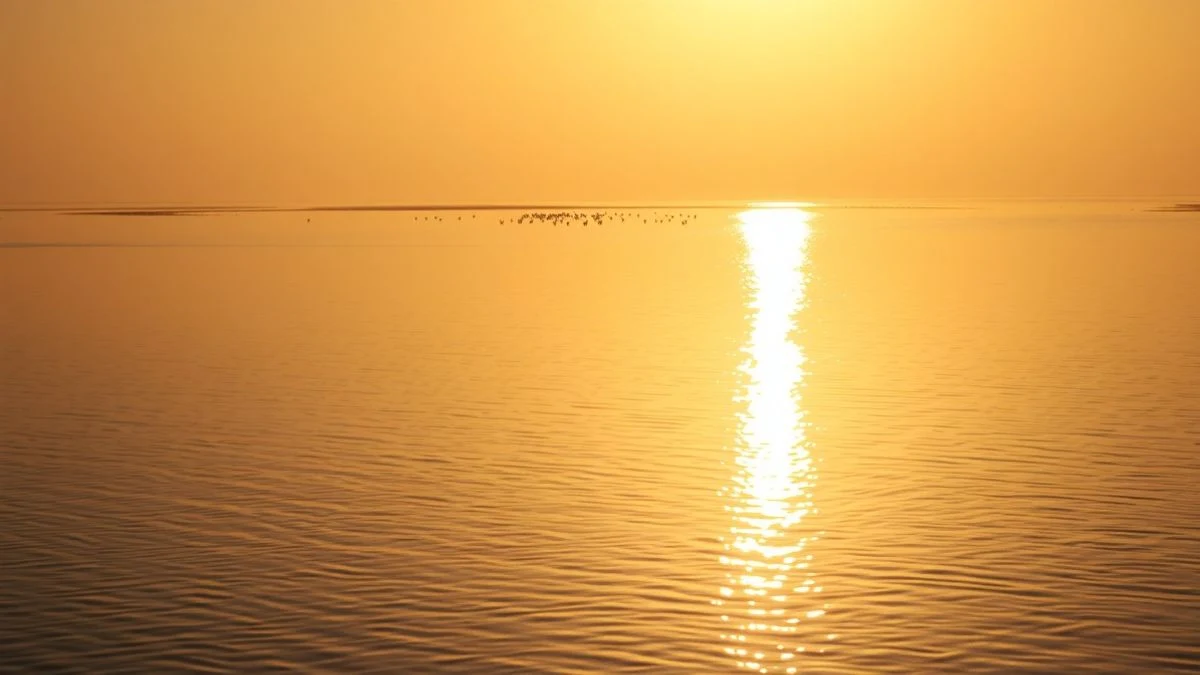
The rains at the beginning of the year have raised the water level to exceed one metre in depth, a milestone that has allowed the breeding of over 30,000 pairs of flamingos. The nature reserve is preparing for the traditional ringing on August 8.
Fuente de Piedra Lagoon, in the Antequera region, has once again surpassed its own records. The abundant rainfall recorded between January and March has raised the water level to exceed one metre in depth during the past spring, an exceptional figure considering that the usual level at this time of year is around 50 centimetres. As of today, the wetland still maintains a level of 40 centimetres, sufficient to ward off the spectre of summer drought that is so concerning in dry years.
Flamingo Colony on the Brink of a Record
The good health of the lagoon translates into an exceptional breeding season for the common flamingo. According to data provided by the management of the Nature Reserve, it is estimated that the breeding colony is around 30,000 pairs, a figure very similar to that of 2025, when the historical record of 33,900 pairs was reached. However, the productivity of chicks may be slightly reduced this year.
The reason, as explained by the reserve's director, África Lupión, is that some of the torrential rains in spring flooded several of the breeding islets where the flamingos had built their nests. Since each pair lays only one egg, the loss of some of them has reduced the number of chicks born compared to last year. Nevertheless, the colony remains one of the largest in the western Mediterranean.
“Each pair of flamingos only lays one egg, so losing it means a decrease in reproduction for that year,” África Lupión stated in an interview with Cadena SER.
Ringing, an Unmissable Event for Locals
Next Saturday, August 8, the nature reserve will celebrate its most emblematic event: the ringing of flamingo chicks. The activity will begin at dawn, around five in the morning, and will mobilise a large team of specialists and volunteers, in collaboration with the Doñana Biological Station. The aim is to mark the young specimens to monitor their movements and health status.
The event is not open to the general public, but residents of Fuente de Piedra will have reserved spots to attend as observers. Others interested must request a paid spot through the José Antonio Valverde Visitor Centre, which manages the limited capacity. This event has become a major tourist and scientific attraction for the Antequera region.
Other Species Return to the Wetland
The rains have not only benefited the flamingos. The decrease in water salinity, caused by the abundant rainfall, has favoured the appearance of freshwater species that had not been seen in the lagoon for years. The most notable is the marsh harrier, an endangered duck that has bred for the first time within the wetland thanks, in part, to conservation efforts carried out in recent years.
The common moorhen, a waterbird with striking blue plumage and a red beak, has also returned to breed, having not been seen in the area for several years. The recovery of these species provides an additional incentive for nature lovers visiting the lagoon, an endorheic ecosystem that responds differently to rainfall each year and has shown its most spectacular version in 2026.
For those wishing to experience this phenomenon up close, the nature reserve offers guided tours throughout the summer, with schedules adapted to the cooler hours. Entry is free, but it is recommended to book in advance at the visitor centre to ensure access.

You may also like