With fewer than 300 inhabitants, Parauta has been included in 2024 in the list of the Most Beautiful Villages in Spain. Its Arab quarter, elf chairs, and an enchanted forest with gnomes and fairies make it a unique destination in the Serranía de Ronda.
Parauta, a small white village in the Genal Valley nestled in the Sierra de las Nieves National Park, has become one of the most unique destinations in the province of Málaga. With barely 300 registered residents, this corner of the Serranía de Ronda has managed to remain aloof from the tourist bustle of the Costa del Sol, yet without giving up a charm that has attracted travelers from all over the country.
A stroll through the Arab quarter of Parauta
The visit begins at the Fuente de la Alquería, a semi-oval brick arch that barely lets water flow from its two spouts. Its name recalls the Andalusian past of the place: it is believed that Omar Ben Hafsun, the general who challenged the Caliphate of Córdoba in the 9th century, was born here. From the fountain, the traveler enters a labyrinth of narrow streets where silence is the only sound.
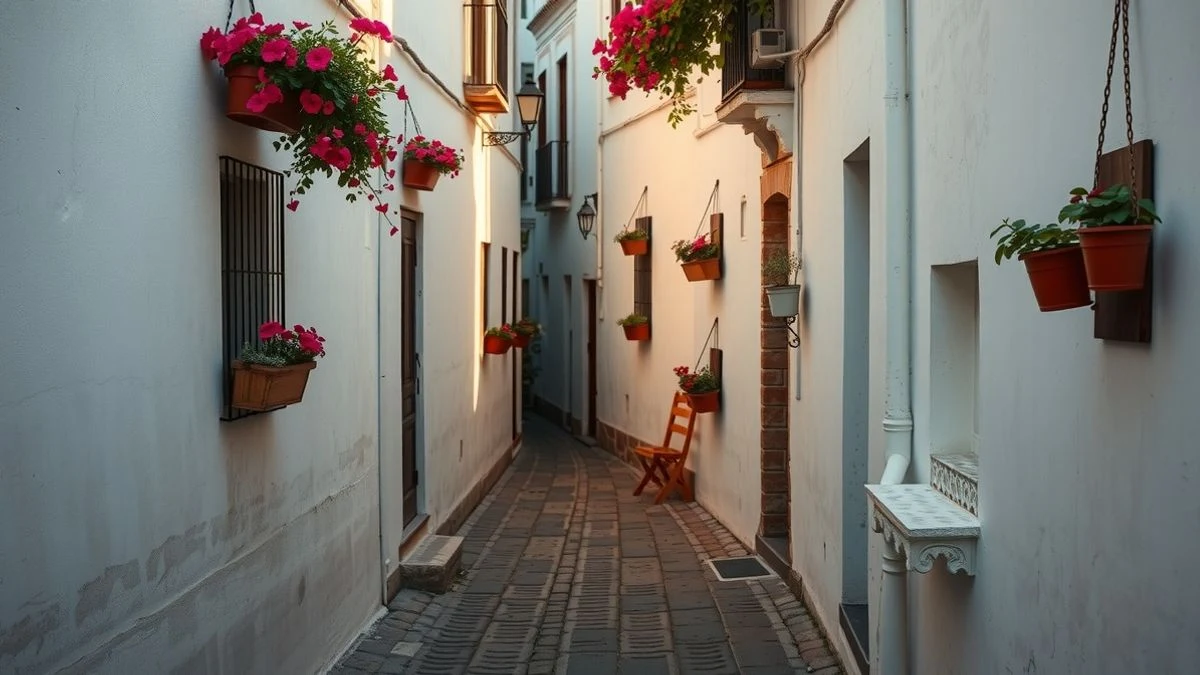
The white facades are decorated with handcrafted ceramic plaques that narrate the history of the village. In many windows, overflowing flower pots hang from wrought iron brackets. But what surprises the most are the colourful wooden chairs that appear hanging from the facades. According to local tradition, they are there for the forest elves to rest. Local artist Diego Guerrero is responsible for much of this ornamentation, which includes everything from heart-shaped benches to wooden figures.
One of the most photographed spots is the arch of Calle Altillo, built in 1516 by the Muslims who remained after the Christian conquest. Made of solid bricks and lime and sand mortar, it has survived five centuries without the need for restoration. Nearby, a small square houses a wooden bench with the slogan “Kiss in Parauta”, surrounded by palm trees and geraniums, where visitors take photos and, as they say, have shared thousands of kisses.
The enchanted forest: elves, gnomes, and a Pegasus
Following a path that leads out of the village, one arrives at the enchanted forest, a fantasy attraction that, despite being only four years old, has become a viral phenomenon on social media. As you descend, the trees come to life: some have bearded faces, while others are the homes of elves and gnomes who have left the door closed to keep anyone out. A wishing well, guarded by a smiling frog, invites you to toss in a coin.
Between spring and summer, sunlight filters through the leaves of the chestnut trees, tinting the forest a vibrant green. In this setting, a blue fairy, a satyr playing the flute on a mushroom, and a yellow wooden house where the dwarfs reside appear. The path ends at a figure of Pegasus with its wings spread, ready to take flight. A little further on, the Granados Stream and the so-called Copper Forest complete the route.
A recognition that changes everything
In 2024, Parauta was included in the list of the Most Beautiful Villages in Spain, a label that has skyrocketed visits. For the people of Málaga, this village offers a perfect getaway less than two hours from the capital. The best time to visit is in spring, when the flowers are in full bloom and the enchanted forest displays its most vibrant colours. Don't forget your camera: every corner is a postcard.
“In Parauta, haste is impolite,” say the locals. And they are not wrong.
To get there, from Málaga capital, take the A-357 to Ronda and then the MA-536 road. The village has no tourist accommodation, but rural houses can be found in the surrounding area. The visit can be completed in half a day, although the enchanted forest deserves at least a couple of hours of leisurely walking.

You may also like