The city installed the first 'iron cubicles' at corners in the centre in 1853 to address the lack of public urinals. A century later, 'urinal kiosks' and 'necessity chalets' defined urban furniture.
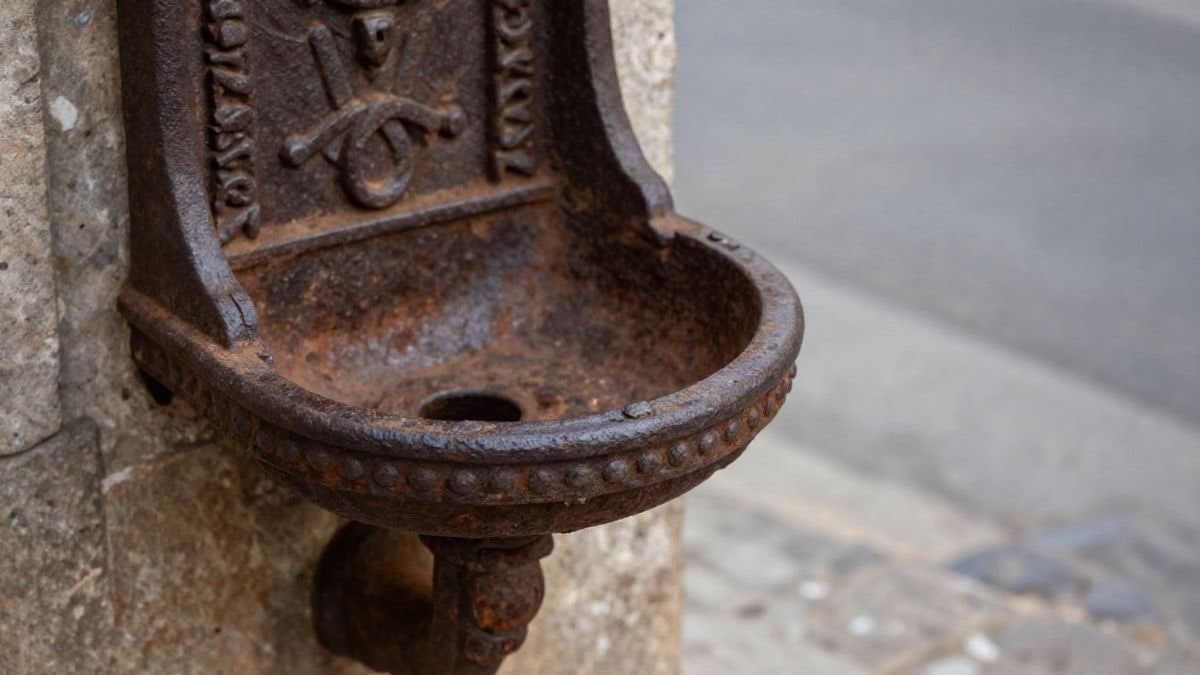
The lack of public urinals in the centre of Málaga was a constant demand in the local press since the mid-19th century. The solution came in January 1853 with the installation of the first 'cubicle or iron receptacle' on Cobertizo de los Mártires street, as reported by Diario Sur in a feature on the history of these devices.
Others followed the first in various corners of the urban area, but their functionality left much to be desired. By June of that same year, El Avisador Malagueño was already warning that most were not only useless but harmful, as they soiled those who approached and forced them to adopt indecent postures.
In light of the failure, the Málaga City Council published an edict in May 1854 that expressly prohibited urinating in squares and streets outside of the 'established urinals'. Offenders faced detention and a fine of one to four duros.
It was not until April 1910 that the Council planned to equip the city with the so-called 'necessity chalets and urinal kiosks'. Their installation was put out to public tender, and rules were established to accommodate daytime and nighttime advertising, both outside and inside, as well as allowing the sale of newspapers, books, and small items.
The Official Guide of the Málaga Initiative and Propaganda Union of 1920 noted the existence of these 'necessity chalets' in the Park, the Alameda, and the Plaza de la Merced, and assured that all hygiene prescriptions were observed in them.
Photographs from the time show three locations of those urinal kiosks: one next to the fence of the Civil Hospital, another in front of the Salamanca market, and a third in the Constitution Square. In the latter, the advertising top announced 'Agua de Vilajüiga', a naturally carbonated mineral water from Ampurdán.
The kiosks were only accessible to men, while the necessity chalets aimed to partially avoid this discrimination and mainly cater to 'greater needs', according to the regulations that created them. The photographic typography of yesterday's Málaga shows a greater number of kiosks than chalets.
The chalets were more solidly constructed and initially adopted a somewhat regionalist style. After the war, the Regime imposed a design that eliminated the distinctive local features. Additionally, small industries could be attached to these facilities, as seen in one of the images.

You may also like