José Antonio Satué reflects on his first year leading the diocese and calls for processions outside the usual calendar to respond to real reasons. He confirms that the diocese has already paid compensation to the victims of Father Fran.
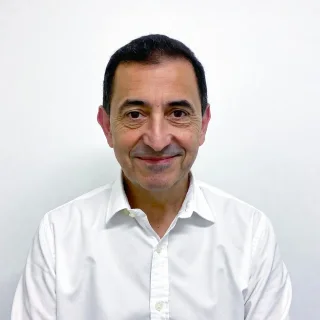
The Bishop of Málaga, José Antonio Satué, has requested this Friday that extraordinary processions respond to reasons that truly justify them and not to excuses for bringing images out onto the streets. He made this statement during the review of his first year at the helm of the diocese, a press conference where, according to Diario Sur, he answered all questions, including the most controversial ones.
Regarding the proliferation of processions outside of Holy Week and other religious festivities, Satué has been clear:
“What has been conveyed to me and seems normal is that the extraordinary must be extraordinary. And in that sense, if they are extraordinary outings, let them truly be so, not looking for excuses to bring the saints out onto the streets, but discerning those situations that really deserve an extraordinary procession.”
The prelate explained that in the bishopric they have the task of “shaping or maturing those types of initiatives, and sometimes we have to play the bad guys to say: 'now is not the time'.” In his opinion, this work does not respond to a negative criterion, but to a positive one: that extraordinary processions are perceived as such and valued as such. “Good things, when multiplied, are devalued, and we certainly do not want them to be devalued,” he concluded.
Regarding the works on the roof of the Catedral de Málaga, the bishop assured that they are progressing well and are visible from different points in the city, which allows them to be monitored. On the possibility of undertaking the second tower, he noted that “a cathedral is never completely finished,” but added that if Malagan society, through its institutions, wants the “manquita” to cease being so, “they will find a collaborator in me.”
However, he warned that resources for the restoration of churches are limited. The priority of the Bishopric, he said, is to ensure that the parishes in the smaller towns are in perfect condition, and that is where the balance lies.
Regarding the church of the Sagrario, which has structural problems with cracks that have persisted for years, stabilization works have recently begun and consist of the infiltration of mortars in certain points to respect the ruins underneath as much as possible. “We hope that this church, which is one of the most beautiful in Málaga, can be reopened to the public, although the works have just begun and we will still have to wait,” he declared.
When asked about the case of Father Fran, the former priest Francisco Javier Cuenca who was sentenced last July to 52 years in prison for sedating, sexually assaulting, and recording four women, Satué informed that the diocese immediately made the amounts set by the court for compensation available to the tribunal. The amount exceeds €400,000 distributed among the four victims.
The Diocese learned on Friday afternoon, through its lawyers, that this compensation has already been transferred to each of the victims. The bishop reiterated that the payment has been made “irrevocably, regardless of what other instances may say in the future.”
Regarding the appeal filed by the diocese, Satué explained that he follows the advice of his lawyers: “We maintain that we do not have that subsidiary civil responsibility, and since we believe that, we have defended it in court.” In his view, one thing is for a priest to commit certain crimes, something “absolutely regrettable” due to the suffering it causes, and another is for there to be an automatic transfer of responsibility to the Church. “I think we need to put each person in their place and discover what the responsibility of the individual is, whether they are a priest, politician, journalist, or whatever, and the responsibility of the institution to which they belong.”
Regarding personal contact with the victims, the bishop has assured that it has not yet occurred. “I wrote a letter to each of them and so far they have not reached out. I understand that the situation they have experienced is so complicated and so intense that talking about the same topic again must be very painful for them,” he noted.
During his review, Satué summarised his first year in the diocese with three words: welcome from the local community, listening, both structured and spontaneous in the streets, and a work of adaptation, balanced with his tasks at the Holy See. As an anecdote, he recounted a recent case of a person he met while both were cycling along the promenade, who asked to accompany him for a few minutes to express his concerns about the work of Cáritas.
You may also like