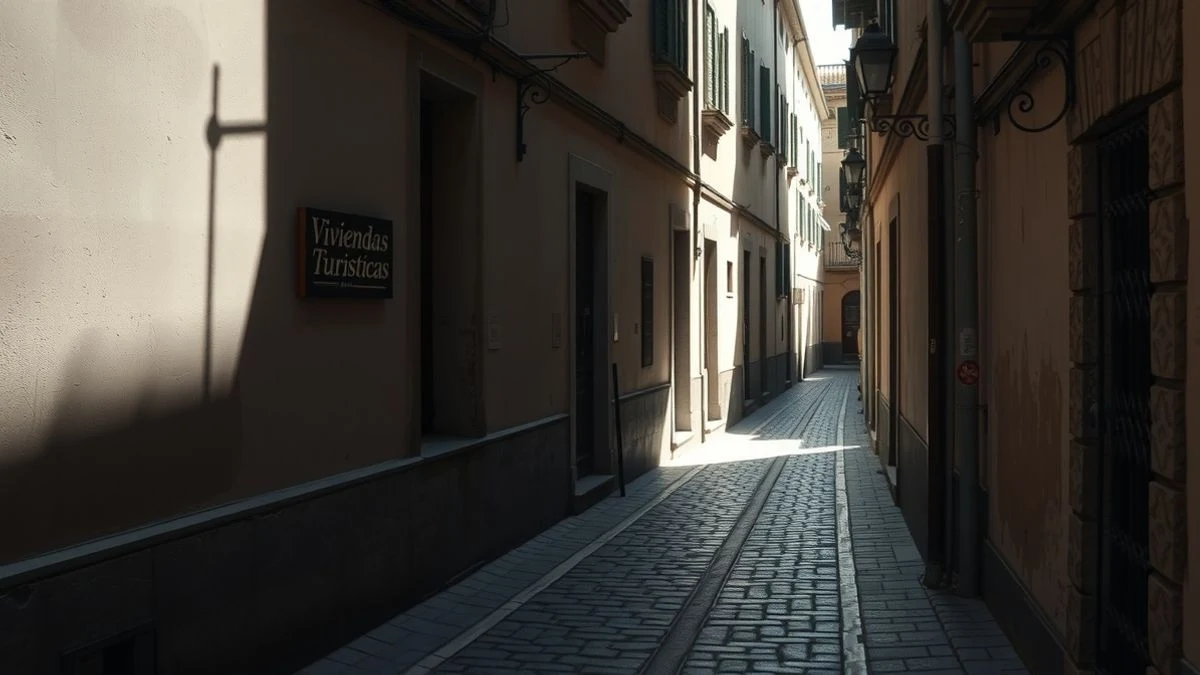
The Centro Antiguo Residents' Association of Málaga has filed a contentious-administrative appeal against the City Council for allowing the proliferation of tourist apartments that violate the 2011 PGOU.
The residents' battle against tourist apartments in Central Málaga has reached the courts. The Centro Antiguo Residents' Association has submitted a contentious-administrative appeal against the City Council of the capital for failing to control the activity of these apartments. In the lawsuit, they request the judge to declare the municipal inaction illegal and compel the City Council to restore urban legality.
According to the residents, the General Urban Planning Plan of 2011 already established that activities in residential buildings must have independent access and facilities. However, they claim that the City Council allowed tourist apartments to share entrances, staircases, and utilities with residents, violating the rule. "The City Council had the authority and the obligation to enforce the law, but it did not do so," they assert.
A Legal Battle That Began in 2024
This is not an improvised movement. In November 2024, the association already filed a public urban action with the Municipal Urban Planning Management, denouncing the inaction of the City Council. After not receiving a response within the legal timeframe, they took the next step: the contentious-administrative appeal in 2025 and the lawsuit in 2026. The procedure is now pending judgment.
"We cannot continue to look the other way while residents are being expelled from their homes," they denounce. For them, the problem is clear: tourist apartments have driven up rental prices, deteriorated coexistence, and "adulterated the community character" of the historic centre. Their slogan, repeated time and again, is emphatic:
"Houses are not hotels"
The Risk of Misconduct
The residents do not mince words. In their document, they warn that the City Council could incur a crime of misconduct (Article 320 of the Penal Code) if it does not act. They remind that the administration "is obliged to comply with and enforce the rules." Underlying this is a recurring complaint: that for years it has been normalised what should never have been, turning communities of neighbours into covert hotels.
The association insists that their goal is to "defend legal security and the right to live in homes without residential buildings becoming tourist accommodations." Meanwhile, the residents of Central Málaga hope that justice will restore order in a conflict that has been festering for years and directly affects their daily lives: noise, overcrowding, and the loss of basic services in the neighbourhoods.
The ruling, expected in the coming months, will mark a turning point in the regulation of tourist apartments in Málaga capital. For now, the City Council has not commented on the appeal.

You may also like