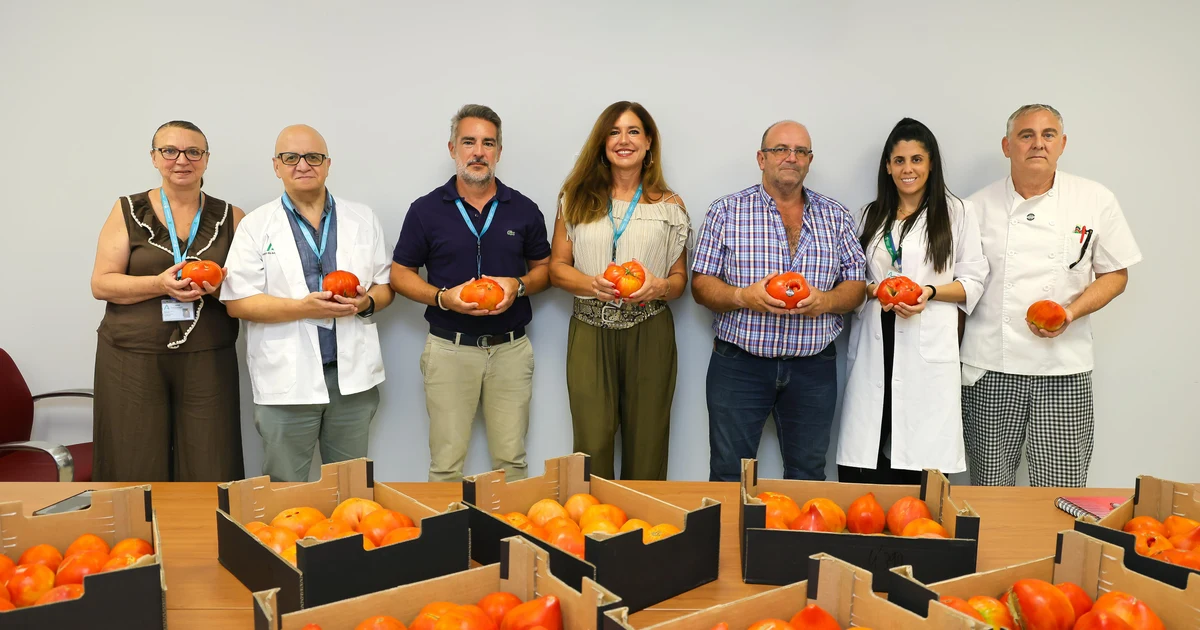
The Málaga Regional University Hospital, part of the Andalusian Health Service (SAS), has offered a tasting of Huevo de Toro tomato to over 600 patients and their companions. This initiative promotes the consumption of local and seasonal products and reaffirms the centre's commitment to healthy eating.
Initiative with local products
The tasting was made possible thanks to the collaboration of the Huevo de Toro Tomato Association, Fruits and Vegetables of Guadalhorce, which donated around 120 kilos of this variety grown in the Guadalhorce Valley. The tomatoes were served as a salad dressed with organic extra virgin olive oil, accompanied by an informational leaflet about their nutritional properties.
This event is part of the hospital's catering model. Daily, up to 25 therapeutic diets are prepared tailored to the clinical needs of the patients. These diets are key for recovery, avoiding overloads on organs such as the stomach, liver, or kidneys when necessary.
Commitment to quality and health
The hospital's kitchen prepares 14 different menus daily for lunch and dinner, crafted by professionals specialised in collective catering. This allows for a varied diet, preventing most patients from repeating a menu during their stay.
The initiative involved careful technical and care work supervised by the Hospital Catering Service and the Clinical Management Unit of Endocrinology and Nutrition. From reception to distribution, exhaustive quality control procedures have been followed to ensure food safety.
José Fernández, deputy director of General Services at the hospital, emphasised that “incorporating local and seasonal products into hospital food allows for the provision of nutritionally high-quality foods and supports the local agri-food sector.”
The Huevo de Toro tomato, which is exclusively grown during the summer months in the Guadalhorce Valley, is renowned for its flavour and high content of vitamins and antioxidants. Its promotion and preservation have made it a symbol of Málaga's gastronomy.
This initiative is part of an annual promotional campaign for the Huevo de Toro tomato, driven by the Huevo de Toro Tomato Association and the Guadalhorce Valley Rural Development Group, which values proximity agriculture and the agri-food richness of the province.

You may also like