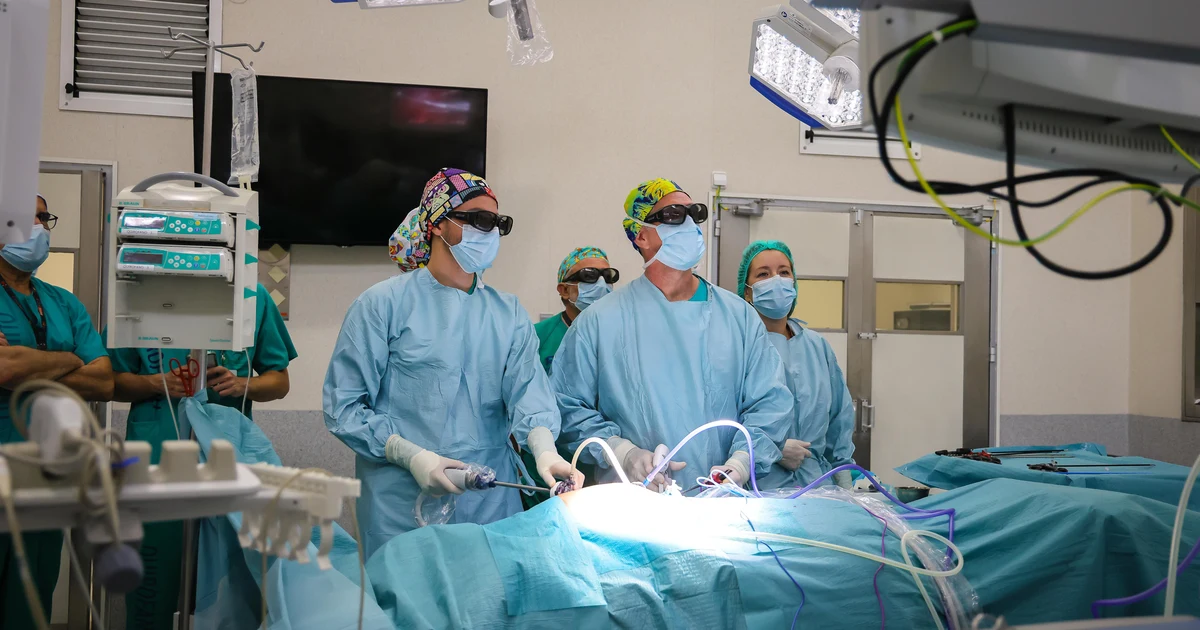
The Málaga Maternal and Child Hospital, part of the Regional University Hospital of the city, has taken an important step in paediatric surgery with the introduction of a new 3D laparoscopy tower. This advancement is aimed at improving precision in minimally invasive interventions, benefiting paediatric patients.
New Capabilities in Paediatric Surgery
With this technology, surgeons obtain high-definition three-dimensional images of the inside of the body. This type of visualization allows for a depth perception closer to natural vision, facilitating the identification of small anatomical structures and the execution of complex maneuvers.
Paediatric surgery is characterised by the reduced dimensions of both anatomical structures and the surgical field, making precision crucial in these procedures. The 3D vision enhances coordination between the view and the manual movements of surgeons, improving spatial orientation during operations.
Benefits for Patients
The new laparoscopy tower will be used in procedures that require access through small incisions, reducing the surgical impact on tissues. This translates into a series of benefits for patients, including less postoperative pain, reduced blood loss, and a lower risk of complications, as well as faster recovery and a potential decrease in hospital stay.
In addition to its clinical application, the 3D technology will also serve as a tool for training and educating medical staff, as it provides a more natural view of the surgical field and facilitates the learning of more complex procedures.
Nuria García, head of the Paediatric Surgery department, has highlighted that with the incorporation of this tower, the precision and anatomical perception in interventions will be improved, especially in children with complex pathologies, thus reaffirming the commitment to provide safer and less invasive surgery.

You may also like