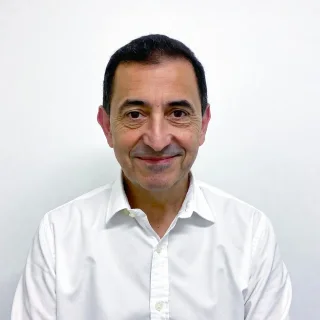
Pedro Serrano Castro, head of the Neurology Service at the Regional University Hospital of Málaga, claims it is "a great mistake" that the new Alzheimer's medications are not funded and calls for their inclusion in public healthcare.
The head of the Neurology Service at the Regional University Hospital of Málaga, Pedro Serrano Castro, has advocated for public funding of the new Alzheimer's drugs, lecanemab and donanemab, which are currently not covered by the healthcare system. In an interview, the doctor described it as a "great mistake" that these treatments do not receive funding, as they "open a treatment door to a disease that until now was absolutely orphaned."
Serrano, who is also a specialist researcher in epilepsy, explained that these drugs act on the "basic mechanisms" of the disease, specifically by preventing the deposition of the beta-amyloid protein. Although they are not curative, "they are starting to show efficacy" and their use will allow progress in the research of derivative molecules that "will probably be more effective."
"This is the beginning of a chain that we must not interrupt, because the use of these first drugs will lead to the research of derivative molecules that will likely be more effective," he pointed out.
The doctor highlighted that the future of Alzheimer's treatment will involve a combination of strategies: anti-beta-amyloid drugs, anti-tau drugs, and anti-neuroinflammatory drugs. "This combination of drugs is likely to have a relevant efficacy in the natural deterioration of the disease," he noted.
Serrano also emphasised the importance of biomarkers, which allow for the detection of alterations in cerebrospinal fluid or plasma "before the first symptoms appear." He explained that the pathological processes that precede Alzheimer's "start almost a decade before symptoms appear," meaning therapies will be more effective in patients who have not yet developed symptoms.
The Regional Hospital of Málaga achieved CSUR accreditation for refractory epilepsy in adults this summer and renewed its accreditation for multiple sclerosis, consolidating it as a national reference centre for both conditions. Regarding multiple sclerosis, the doctor stated that "its natural history has changed radically" thanks to the latest approved drugs.
You may also like