Isabel Torres has spent seven years watching the cracks in her house in Carranque reappear. She lives next to the Domingo Lozano school, which has been closed for three years due to structural damage. The Málaga City Council has rejected a motion for a comprehensive diagnosis of the subsoil in committee.
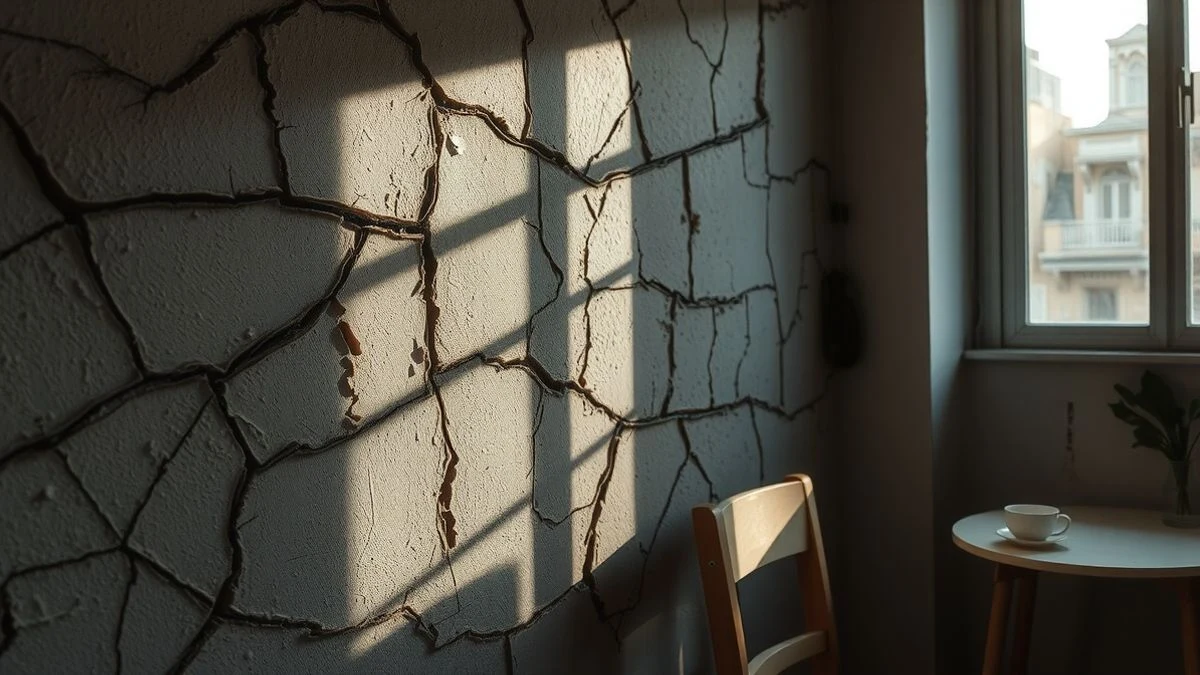
Isabel Torres, a resident of the Málaga neighbourhood of Carranque, recounted this Thursday in the Full Urban Planning Commission of the Málaga City Council how she has been seeing the cracks in her house reappear for seven years. She lives right next to the Domingo Lozano school, which has been closed for three years due to structural damage. "I keep fixing my house, but I fix it and the cracks come back in the same place," she explained. She has stated that she spends entire nights awake due to the noises from the structure: "It's hellish. And in the morning I get up and look at the cracks again, and they are in the same place, but bigger."
A widow with a pension of 620 euros who cannot afford repairs
Torres has been a widow for three and a half years. Until then, it was her husband who repaired the cracks every time they appeared. Since his death, she survives on a pension of 620 euros a month, which is not enough to cover the repairs her house needs. She has requested quotes, but cannot afford them. She claims that her requests for help have been rejected for administrative reasons, such as lack of a digital signature or submission after the deadline, while the cracks continue to grow.
Her case is not isolated. The president of the Proyecto Carranque Association, Juan Carlos Campoy, has pointed out that there are "two zero zones" in the neighbourhood: the area around the Domingo Lozano school and a municipal building closed on Avenida de Andalucía. He has called for an investigation into what is happening beneath the neighbourhood's soil: "We know that the ground is clayey, but for it to be dangerous it needs water, and we don't know where that water is coming from." Campoy suggests that buildings not connected to the public sewage network could be leaking water into the ground.
Motion for a comprehensive diagnosis rejected
Campoy has been critical of the actions of the Municipal Housing Institute and the Andalusian Government, which he has described as mere "patches": "If you don't know what the real problem is, the measures you take are likely not to work." He reminded that Carranque has grade 1 heritage protection, which obliges administrations to preserve it, and has denounced the state of the walls in the Pío XII square, "completely cracked" and, in his opinion, a danger that should not be the responsibility of the residents to fix.
He has also called for a solution for the old Cine Carranque, fearing that the loss of heritage protection for some buildings could facilitate their demolition. "Look, there are cracks that start in one building and end in the building across the street. This is not a maintenance problem; it's a structural problem," he emphasised.
These community demands were included in the motion presented by the Socialist Municipal Group, which requested a comprehensive diagnosis of the subsoil in Carranque. The proposal was rejected in the Full Urban Planning Commission with votes against from the PP government team. The Urban Planning councillor, Francisco Cantos, defended that geotechnical studies are already being conducted and that 2.5 million euros will be allocated for the rehabilitation of homes in the neighbourhood, but the residents consider this measure insufficient as it does not address the root of the problem.
Meanwhile, Isabel Torres continues to see the cracks grow larger. "I don't know what will happen to my house. I don't have money to fix it, and no one is helping me," she laments. The residents' association has announced that they will continue to mobilise for a thorough study of the subsoil, convinced that only in this way can a problem that has been entrenched in the heart of Málaga for years be resolved.

You may also like