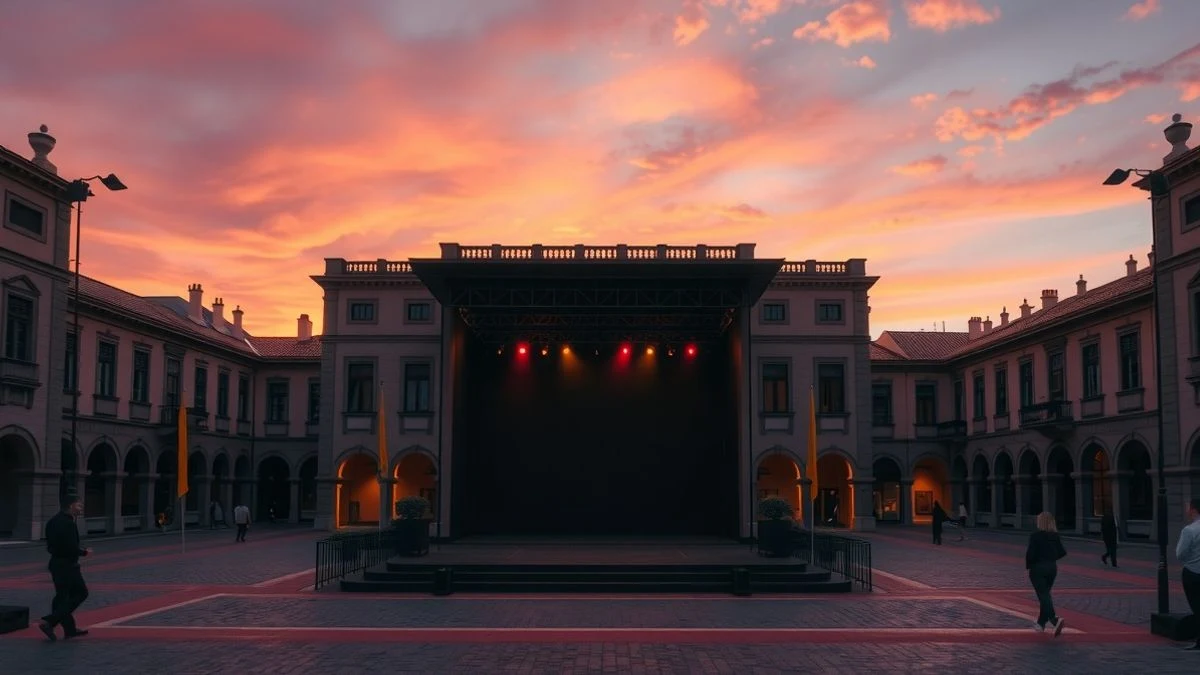
Orquesta Marbella, one of the most beloved groups in the Galician fiesta scene, has reinvented itself by betting on a cutting-edge stage and a repertoire that connects with all kinds of audiences. Its owner, Víctor Antón Rodríguez, reviews the metamorphosis of the group.
Orquesta Marbella is not just a name that evokes the south: it is one of the most cherished formations in the Galician fiesta scene. Its owner and former vocalist, Víctor Antón Rodríguez, reviews in an interview the metamorphosis of this musical brand that has managed to read each audience it encounters. From the risky bet on a cutting-edge stage to the defence of a commercial repertoire, the orchestra asserts itself as a family that offers "a symbolic key" to its followers to enter its world of joy and tradition.
The birth of a giant in the fiesta scene
The current success of Orquesta Marbella is not a matter of chance, but rather a key decision that marked a turning point in its trajectory. Víctor Antón recounts that the cornerstone was the partnership with his associate: while the latter took care of all the technical complexities, Antón assumed the artistic direction and his role as a singer.
Together, and under a premise of constant sacrifice, they bet on always going "bigger", investing in the best musicians and vocalists to position themselves among the elite of the show in Galicia. "We always bet on going bigger: by bringing in the best musicians, the best singers, and investing in a better stage, within our possibilities," comments Antón Rodríguez.
"We always bet on going bigger: by bringing in the best musicians, the best singers, and investing in a better stage, within our possibilities"
The evolution that Orquesta Marbella underwent coincided with a structural change in the Galician fiesta sector. In the past, orchestras usually belonged to large corporate groups, but nowadays the model has shifted towards individual ownership: "Now each orchestra is owned by one person, one owner," explains the owner of the group, which forces each manager to "make their way", personally investing in technological innovation and technical means to keep up in an increasingly demanding market.
The dictatorship of the stage versus the "oblivion" of the musician
One of the most substantial changes that Antón Rodríguez observes in the last decades of orchestra history is the crucial importance that visual infrastructure has gained on stage. "Stages, screens, technical means, are important. To be able to work, you need to have a good stage. For me, it is the most significant change," he explains.
The technical effects are decisive for being able to work: "If you don’t have a big stage, you don’t count," points out Antón. However, this technological display has brought with it a consequence that Víctor Antón Rodríguez laments: the loss of relevance of the instrumental musician in the face of the visual impact of the "frontline".
For the orchestra director, today’s audience values the visual spectacle more than the musical quality. "Before, music was listened to more; now, the show is seen more," he states. This trend has led to background musicians, those who play the drums, bass, or guitar, being sidelined, while vocalists and dancers capture all the attention.
A repertoire that "reads" the audience
The key to the success of Orquesta Marbella lies in its ability to adapt to each audience. "We know how to read the people in front of us," assures Antón. The group has a broad repertoire that ranges from fiesta classics to the latest commercial hits, including traditional Galician songs. "We are not an orchestra that plays only one style; we are versatile," he adds.
This flexibility has allowed them to perform at all kinds of events, from the patron saint festivals of small towns to the most crowded fiestas in Galicia. "Each audience is a world, and we try to give them what they are looking for," concludes Antón. Orquesta Marbella has thus become a phenomenon that transcends generations, making both grandparents and grandchildren dance.
For the residents of the province of Málaga, knowing the story of this orchestra that bears the name of their city can be a source of pride. Although the group mainly performs in Galicia, its name is an ambassador of the Costa del Sol in the fiestas of the north. Who knows if one day Orquesta Marbella will land in its namesake land to offer a show that would undoubtedly make the entire province dance.

You may also like