The Andalusian Institute of Historical Heritage is intervening in the underwater site of Cabopino, in Marbella, from September 15 to 30. The work includes a 3D model of the remains and aims to confirm whether the ship sank in 1887.
The Andalusian Institute of Historical Heritage (IAPH), through its Centre for Underwater Archaeology (CAS), will begin an archaeological intervention at the wreck of Cabopino, off the coast of Marbella, on September 15. The work, dependent on the Ministry of Culture, Historical Heritage and Sport of the Junta de Andalucía, will continue until September 30, as reported by Diario Sur.
The regional minister, Patricia Del Pozo, has stated that the study of the site will advance the historical analysis of transoceanic trade during the 19th century, as the ship retains a significant part of its structure and the goods it was carrying when it sank.
“The study of the Cabopino wreck site will allow us to advance in the historical analysis of transoceanic trade during the 19th century”
Alongside the excavation, the team will generate a 3D model of the preserved remains. This digital replica will allow for a better understanding of the wreck without physically interacting with certain elements and will serve as an outreach resource, for example in virtual reconstructions for the public.
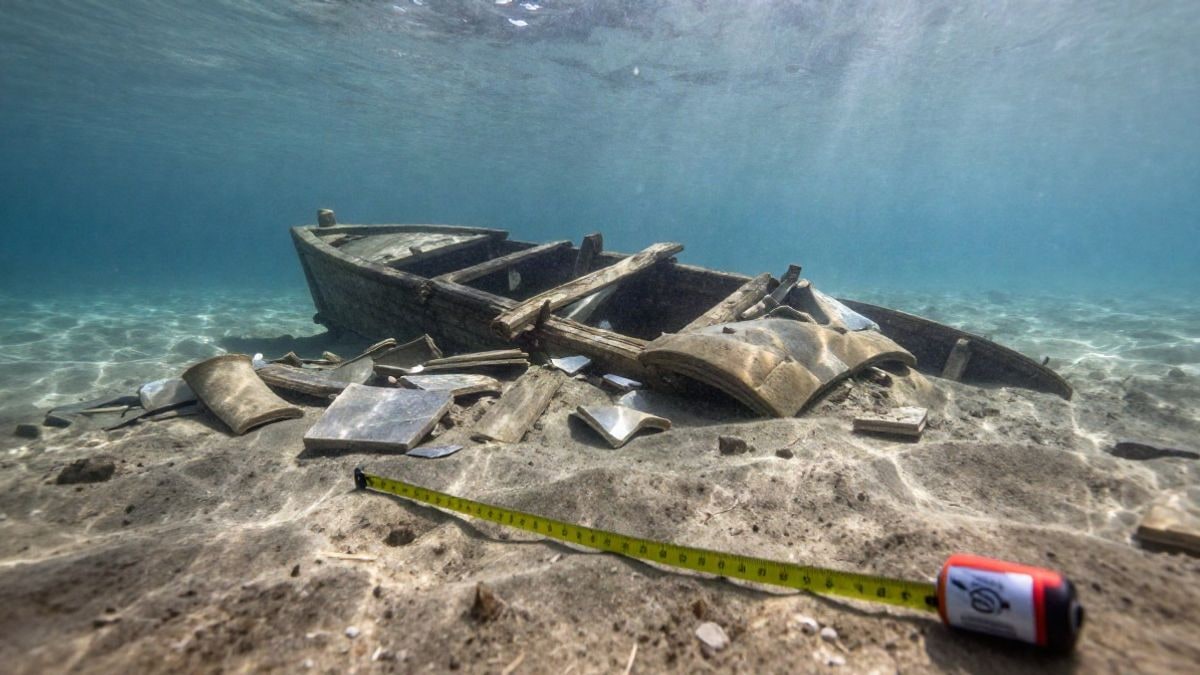
The CAS first intervened in this site in 2022, at the request of the Territorial Delegation of Culture in Málaga. That inspection confirmed a site of notable significance on sandy ground, at a depth of about six metres, with a visible structure that then measured approximately 39 metres in length and 15 in width.
The construction characteristics suggest a vessel of Mediterranean naval tradition, preliminarily dated to the contemporary era. Coastal dynamics have revealed new elements, so it is not ruled out that other parts of the ship, its cargo, and materials of life on board are preserved beneath the sediment.
Among the documented remains are parts of the inner and outer lining, frames and longitudinal pieces, a metal protective coating for the hull, and fastening elements made of copper alloy. From the cargo, still on the structure, barrels with remnants of wood and construction ceramics have been identified, mainly tiles and slabs of French manufacture with commercial marks from Marseille active between the late 19th and early 20th centuries.
The investigation has located historical press reports about the shipwreck, in November 1887, of an Italian brigantine referred to as Garegliano or Gagliano, which allegedly transported a cargo of construction materials from Marseille to Buenos Aires. The identification is not definitive, but the coincidence between the sources and the archaeological evidence is the main working hypothesis.

You may also like