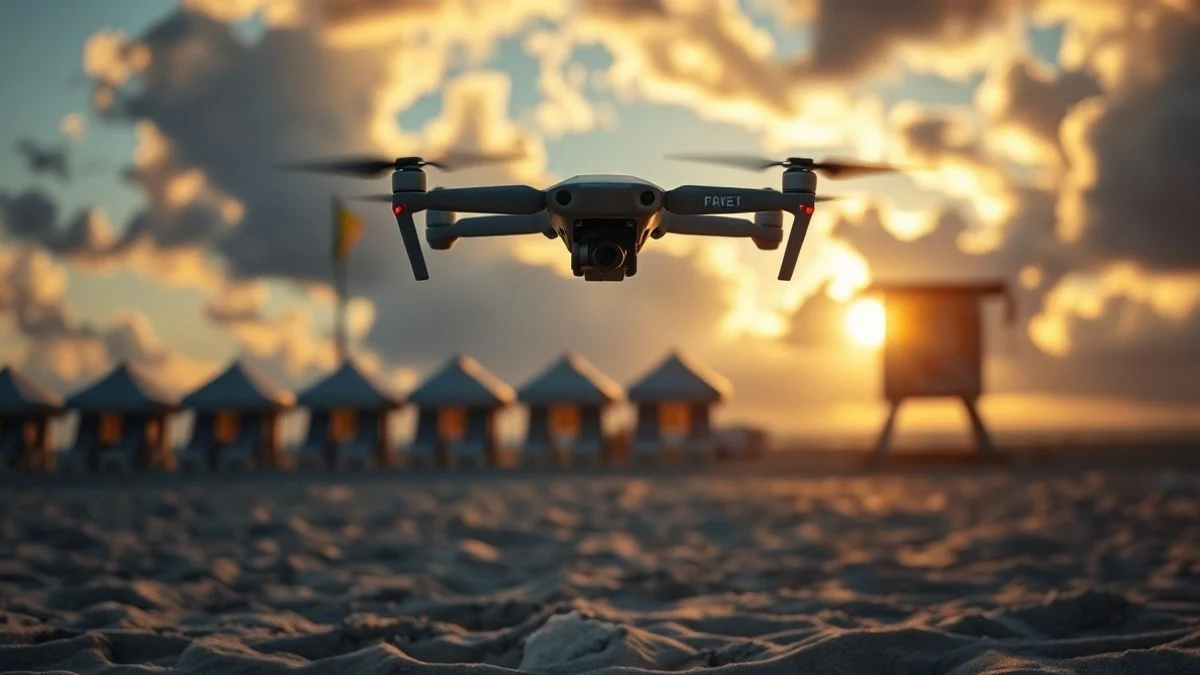
The drone surveillance service on the beaches of Fuengirola has conducted nine rescue missions during June and July. The four aircraft have accumulated 384 flight hours and 2,653 services.
The drone surveillance device deployed on the beaches of Fuengirola has intervened in nine rescue or assistance missions for bathers during the months of June and July. The four aircraft covering the Fuengirola coastline have added 384 flight hours and a total of 2,653 services during this period, according to data provided by the City Council.
The mayor, Ana Mula, visited one of the device's points accompanied by the Councillor for Beaches, José Sánchez, and highlighted that Fuengirola was a pioneer eight years ago in incorporating this technology into the Lifeguard and Rescue service. "Today, many towns use this technology, but Fuengirola remains a benchmark in an innovative system that is tremendously useful for saving lives in our sea," she noted.
The service, provided by the specialised company Aeromedia since June 1, operates at four points along the coast. About 85% of the actions corresponded to surveillance and control of bathing areas, while approximately 10% were preventive in nature.
In emergency situations, the drone allows for the quick location of a person in distress and can drop a life-saving device from the air for them to grab onto until help arrives. "These actions, which are mostly coordinated with the Lifeguard and Rescue service, are very useful for making quick and effective decisions and mobilising available water resources," the mayor explained.
Balance of Lifeguard and Rescue Services
The Lifeguard and Rescue service, active since June 1 from 11:00 to 20:00, has provided 686 medical assists, 3,390 preventive actions, 46 aquatic interventions, and 2,845 accessibility services during these first two months of the season.
Of the medical assists, 469 were for minor injuries; 148 for jellyfish stings; 13 for stonefish stings; 9 for fainting or dizziness; 6 for burns; 6 for heat strokes; 3 for dislocations, and another 3 for sprains. Cases of respiratory problems, bleeding, serious injuries, and allergic reactions were also attended to.
Regarding aquatic interventions, there were 31 water rescues, 9 search actions, 5 assists, and 1 extraction manoeuvre. Preventive actions included 1,092 warnings to bathers in marked currents, 1,213 warnings in dangerous areas, 325 warnings for swimming with a red flag, and 298 warnings to non-motorised vessels, among others.
The accessibility service provided 2,845 services across the four beaches in the municipality: 1,388 at Fuengirola beach, 1,272 at Los Boliches-Las Gaviotas, 163 at Castillo beach, and 52 at Carvajal beach. "These figures demonstrate the importance of having a professional, extensive, and well-prepared Lifeguard and Rescue service in Fuengirola," Ana Mula assessed.
The beach safety device is complemented by 55 professionals from Lifeguard and Rescue, local police officers from the special summer service, and 14 beach monitors. The City Council reminds that last year the Lifeguard and Rescue service received a special mention as the best service in Spain from the organisation responsible for the Blue Flags.

You may also like