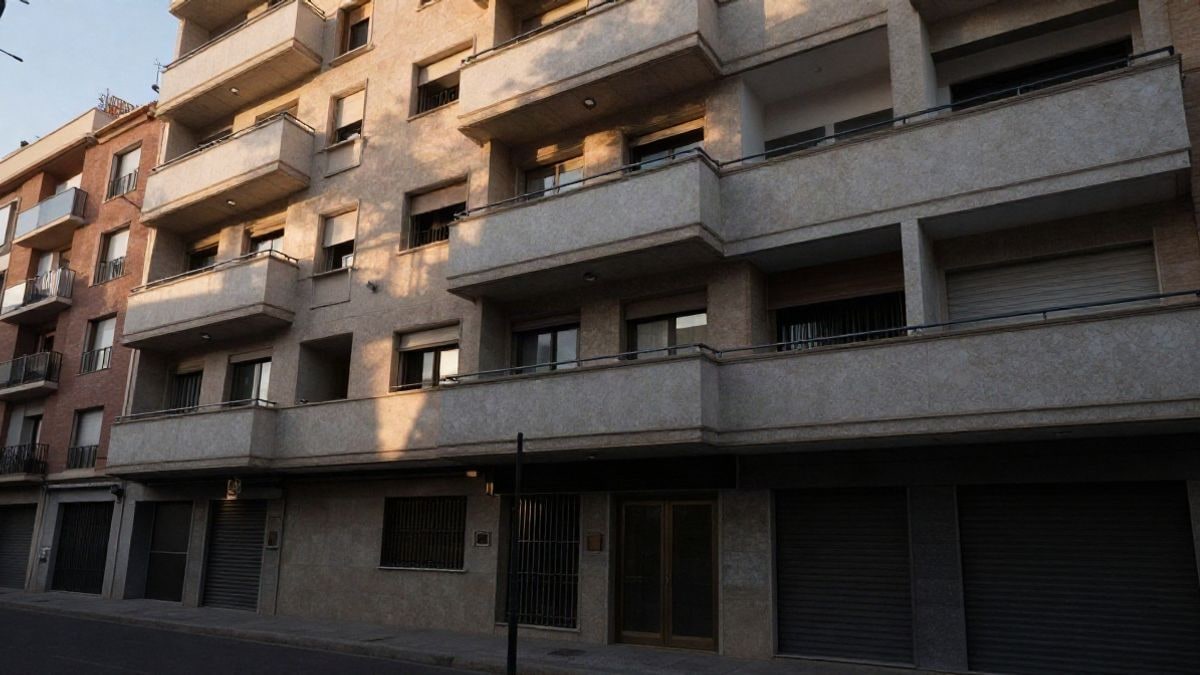
The Andalusian Competition Agency, the Secretariat for Market Unity, and the CNMC see legal gaps in the Instruction 1/2024 from the City Council, which requires independent access and ground or first floor for tourist homes. The reports are already in the hands of affected owners for use in lawsuits against the City Council.
Three reports from competition bodies have questioned the legality of the Instruction 1/2024 from the Málaga City Council, the regulation that imposed the first restrictions on tourist-use homes in the capital. The reports, as published by Diario Sur, come from the Agency for Competition and Economic Regulation of Andalusia, the Secretariat for Market Unity (Ministry of Economy), and the National Commission on Markets and Competition (CNMC), and they all point out legal gaps in the municipal text.
The instruction, approved in 2024, extended the urban planning requirements of accommodation to tourist homes: independent access, evacuation conditions, and facilities separate from the rest of the building. Furthermore, they could only be located on ground and first floors, retroactively. According to the sector, these measures have already affected around one thousand accommodations that were active at that time and which found themselves in a legal limbo after the City Council's request to the Junta to withdraw their licenses.
The reports were requested by the Association of Tourist Homes of Andalusia (AVVAPro), which has already made them available to the affected owners for use as evidence in the lawsuits they are pursuing against the City Council. Although they do not annul the municipal order by themselves, the documents are relevant for judicial purposes because they come from the competent public bodies in market matters.
The Competition Agency of the Junta de Andalucía states in its report:
“There is no sufficient motivation that allows verifying the necessity and proportionality of applying, generally, article 6.4.2.2 of the PGOU to tourist-use homes”. The document adds that it cannot be considered sufficiently proven that the general application of these conditions complies with article 5 of the Law on Guarantee of Market Unity (LGUM).
The CNMC is more direct about the chosen route:
“The introduction of restrictions on the economic activity of Tourist Use Homes (VUT) cannot be carried out through interpretative instruments of the regulation, as would be the case with Instruction 1/2024”. The agency concludes that these limitations should be carried out through the modification of the PGOU, and questions why the change has not been justified when the City Council has already modified planning on other occasions to regulate the VUT.
The Secretariat for Market Unity calls for more rigorous motivation:
“It would be advisable for the competent authority to justify the adopted regulation more exhaustively, through a detailed analysis of the affected areas”. Its report also criticises that no response or proposal for action has been received from the City Council during the procedure.
The general moratorium on new tourist uses approved last summer is based on the questioned instruction, so the reports would have a cascading effect on it. Since August 2025, no new tourist-use home can be registered in Málaga capital, a suspension that extends for a maximum of three years, until the summer of 2028, or until the modification of the PGOU is approved. Previous licenses continue to operate and the only legal avenue for new ones is medium-term stays, of more than two months. Since July 2026, no new accommodation can be registered on residential land.
AVVAPro and Aehcos have submitted a series of allegations demanding greater rigor in the data, transparency, and that the restrictions do not penalise the regulated sector compared to the residential or hotel sector. Both groups argue that the measure will not solve the problem of the lack of affordable housing in the capital.

You may also like