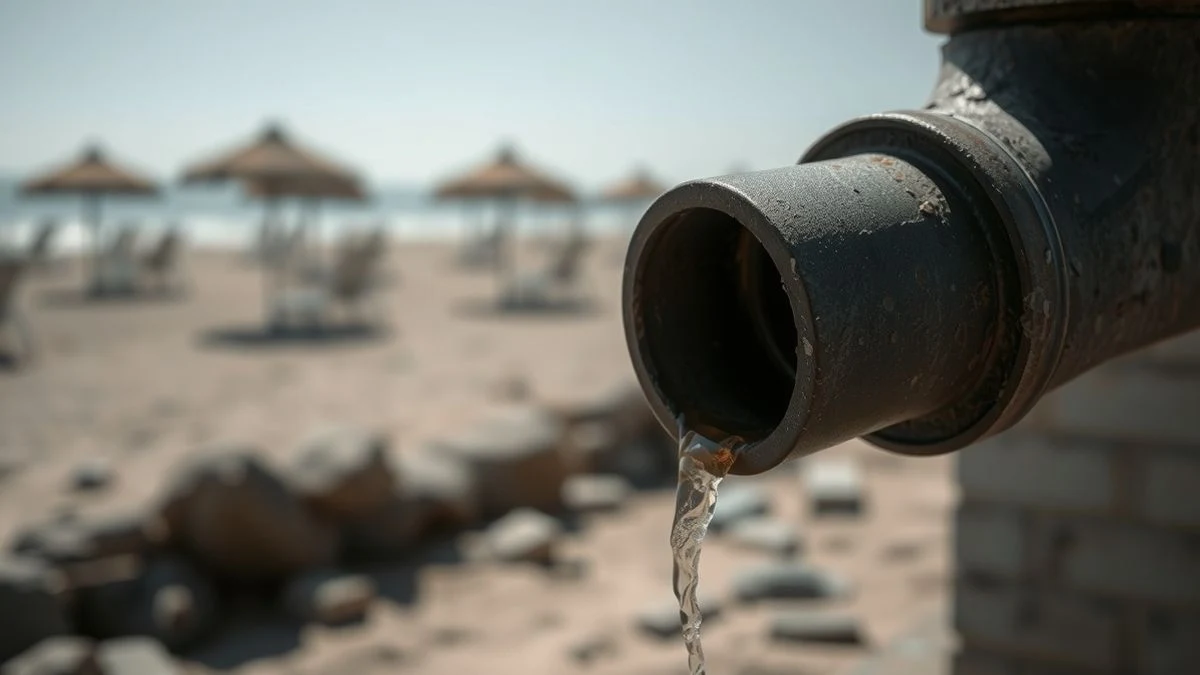
The spokesperson for Con Málaga, Nico Sguiglia, demands that the City Council explain the source of the E. coli contamination that forced the closure of the beaches of Pedregalejo and El Palo to bathers, and calls for a comprehensive audit of the sewage system.
The spokesperson for Con Málaga, Nico Sguiglia, has requested this Thursday that the City Council of the capital promote a comprehensive audit of the municipal sewage system, following the bathing ban declared on Tuesday at the beaches of Pedregalejo and El Palo due to the presence of elevated levels of the bacterium Escherichia coli (E. coli). The party believes that the City Council must immediately clarify the origin of the contamination and take measures to prevent a situation that, according to Sguiglia, "affects public health and generates uncertainty among residents and visitors".
Analyses conducted by the Junta de Andalucía detected a concentration of faecal bacteria above the permitted parameters, which led the City Council to close both beaches to bathers. However, Sguiglia has pointed out that "there are still too many unanswered questions" regarding the causes of the incident and the management of the administrations.
Among the issues that the spokesperson for Con Málaga considers a priority is to know "why some beaches are closed and not others nearby like Baños del Carmen or El Dedo, what is the origin of this high presence of E. coli, whether there is any malfunction in the sewage system or in any collector, and when exactly the analyses that detected the problem were carried out". He has also asked "if there could have been people bathing for days without knowing about this contamination".
Sguiglia has reminded that the beaches are "the most used public space by the people of Málaga during the summer and a fundamental element for the city's economy", which is why he has demanded "clear and complete information to the public" and "to act quickly when health risks are detected". In his opinion, "these types of situations cannot be managed without providing all the necessary explanations".
The spokesperson for Con Málaga has linked this incident to one that occurred just a few weeks ago, when it was necessary to temporarily close the beaches of Guadalmar and Los Álamos after a sewage pipe broke, causing a discharge of wastewater. "This once again highlights the need to strengthen monitoring of the state of the coastline," he stated.
Therefore, Sguiglia demands that the City Council immediately promote extraordinary controls of water quality at all beaches in Málaga, with greater frequency during the bathing season to detect any incidents more quickly and to take preventive measures before risk situations occur. He also requests the preparation of a comprehensive audit of the municipal sewage system, which would allow for an understanding of the condition of the collectors, pumping stations, and other infrastructures related to the water cycle, with the aim of identifying possible deficiencies and planning the necessary investments to prevent new episodes of contamination.
"It is essential to know what has happened and to act to prevent it from happening again. The protection of public health requires prevention, transparency, and a sewage system in good condition. Málaga cannot normalise the closure of beaches due to problems related to sewage," concluded the spokesperson for Con Málaga.
For the moment, the beaches of Pedregalejo and El Palo remain closed to bathers, awaiting new analyses to confirm the disappearance of the bacteria. The City Council has not yet specified when the next controls will take place or if they will be extended to other areas of the coastline.

You may also like