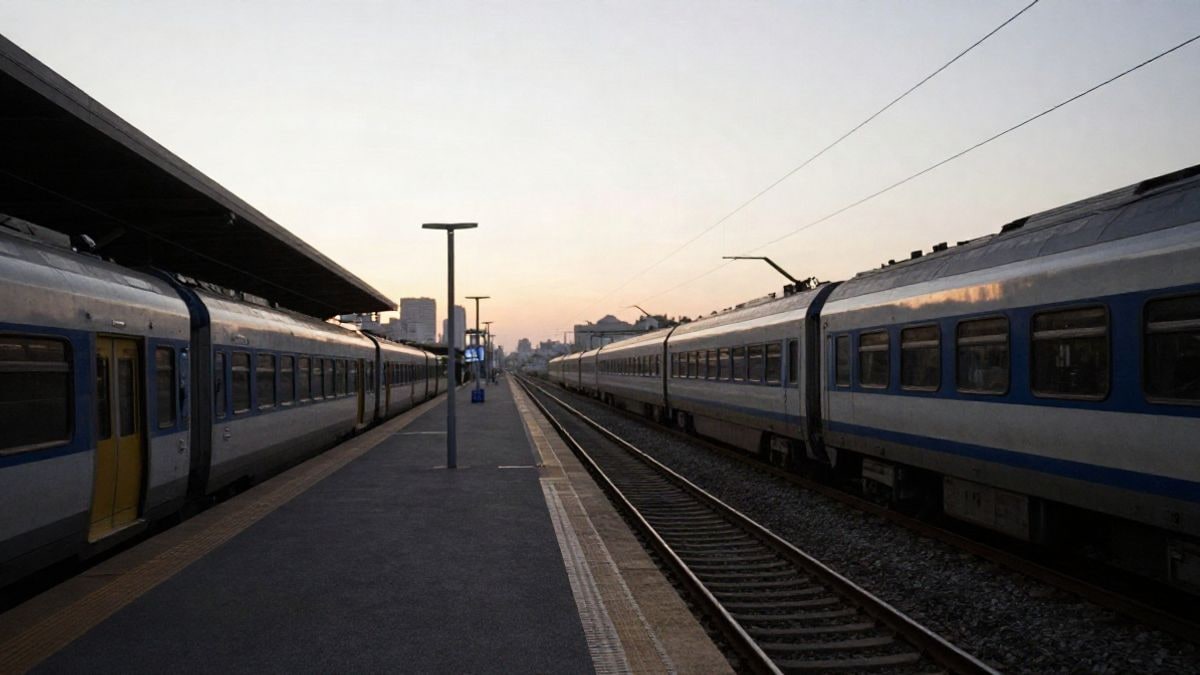
A report by CCOO in Málaga estimates that the average commuting time to work is about 40 minutes daily and the average cost is 15% of salary. From municipalities like Coín, Álora or Vélez-Málaga, the monthly cost reaches €450.
The time that Málaga workers spend commuting to and from work is around 40 minutes daily on average, which represents an increase of 15% of the working day. In addition, there is the economic cost: commuting takes another 15% of salary, according to the report presented by Comisiones Obreras de Málaga this Thursday, as reported by Diario Sur.
The union's general secretary, Fernando Cubillo, broke down the figures at the presentation event. "Going to work costs time: it increases the working day by 15%,” he stated, adding that it also “costs salary: an average of 15%." The leader emphasised that this is an average, as 42.5% of Málaga's salaried population (more than 314,000 people) earn wages that barely reach €620 per month, while another 38% (280,000 people) earn an average of €1,300 per month.
"When you earn €620 a month, we are talking about dedicating a third of the salary to mobility"
The cost of commuting varies depending on the municipality of residence. From Torremolinos, Alhaurín de la Torre, Benalmádena, Rincón de la Victoria or Cártama, the expense amounts to about €200 per month. If the journey starts from Fuengirola, Pizarra or Mijas, the figure rises to €350. In Coín, Álora or Vélez-Málaga, it reaches €450. And it can go up to €650 for those commuting daily from Antequera, Marbella, Archidona, Nerja or Campillos, or even €1,000 from Estepona or Ronda.
Cubillo explained that 82% of employment in the province is concentrated in the capital and the Costa del Sol, and that 79% of the jobs created last year were also located in that area. "There is significant mobility from the regions of Antequera and Guadalhorce, mainly, and to a lesser extent from Axarquía and Ronda," he noted. The union links these commutes to housing prices: many workers are forced to live in more distant municipalities and bear the cost of transport.
The report also addresses the labour consequences. According to data from the Junta de Andalucía, the province recorded 2,309 'in itinere' workplace accidents (those occurring on the way to work), with 85% in the capital and municipalities of the Costa del Sol. One in four of these incidents in Andalucía occurs in Málaga capital. "Going to work not only costs money, 15% of the salary, not only costs time, also 15% of the working day, but it also costs, in many cases, health," lamented Cubillo.
The union leader criticised that most collective agreements do not include transport allowances. "From the employers, we find serious difficulties in getting them included," he said. In the negotiation of the automotive agreement, CCOO demands €300 or €450 monthly depending on the worker's residence.
The secretary of Social Policies and the Environment of the union, Trinidad Salcedo, reminded that companies with more than 200 workers are required to develop mobility plans. Salcedo provided other data: Málaga Tech Park reached 29,018 workers in 2025; the A-357 supports about 74,000 vehicles daily accessing the capital; and the commuter network exceeded 15.5 million passengers in 2025, almost half on the C-1 Málaga-Fuengirola, which remains a single track.
"We need to think of short-term measures. We cannot tell workers they have to wait ten years for mobility to improve"
The union will request this year that the transport allowance be generalised in the province's agreements and demands immediate measures to reduce the cost and time of commuting to work.

You may also like