The Vélez-Málaga City Council and the Junta de Andalucía are studying a joint hydraulic solution for the Tecnoalimentario Park and the El Trapiche aerodrome. The new approach proposes to carry out the works in phases and leaves the tendering date unspecified.
The City Council of Vélez-Málaga and the Junta de Andalucía have opened a technical pathway to jointly address the flooding issues of the Tecnoalimentario Park and the Leoni Benabú aerodrome in El Trapiche. According to Diario Sur, the mayor, Jesús Lupiáñez (PP), held a meeting last Thursday with the territorial delegate for Agriculture, Fisheries, Water and Rural Development, Laura Soto, which was also attended by the councillors for Agriculture, Jesús María Claros, and Urban Planning, Celestino Rivas, both from the PP, along with technicians from both administrations.
The aim is to design a common hydraulic response and then establish different phases of execution. "The technicians inform us that both circumstances are directly related, and that is why we need to address a joint solution," Lupiáñez explained. The mayor asserts that the new approach should allow intervention both in the areas that condition the development of the park and in the surroundings of the aerodrome.
The City Council will now work with its technicians and the hired professionals to define this approach and set a phased timeline. The municipal intention is to first address the needs of the Tecnoalimentario Park without designing a project that would later prevent extending protection to the rest of the surroundings. "We have agreed to continue advancing with our technical team to be able to present a phased plan," the mayor stated.
The City Council considers this area strategic due to the companies located in the park and the aviation activity developed around El Trapiche. The bipartite municipal government, made up of PP and GIPMTM, highlights the presence of three pilot schools and the potential of the aerodrome for sports aviation. Aerodynamics Academy, for example, maintains facilities in the Tecnoalimentario Park and has developed part of its training and business activities there.
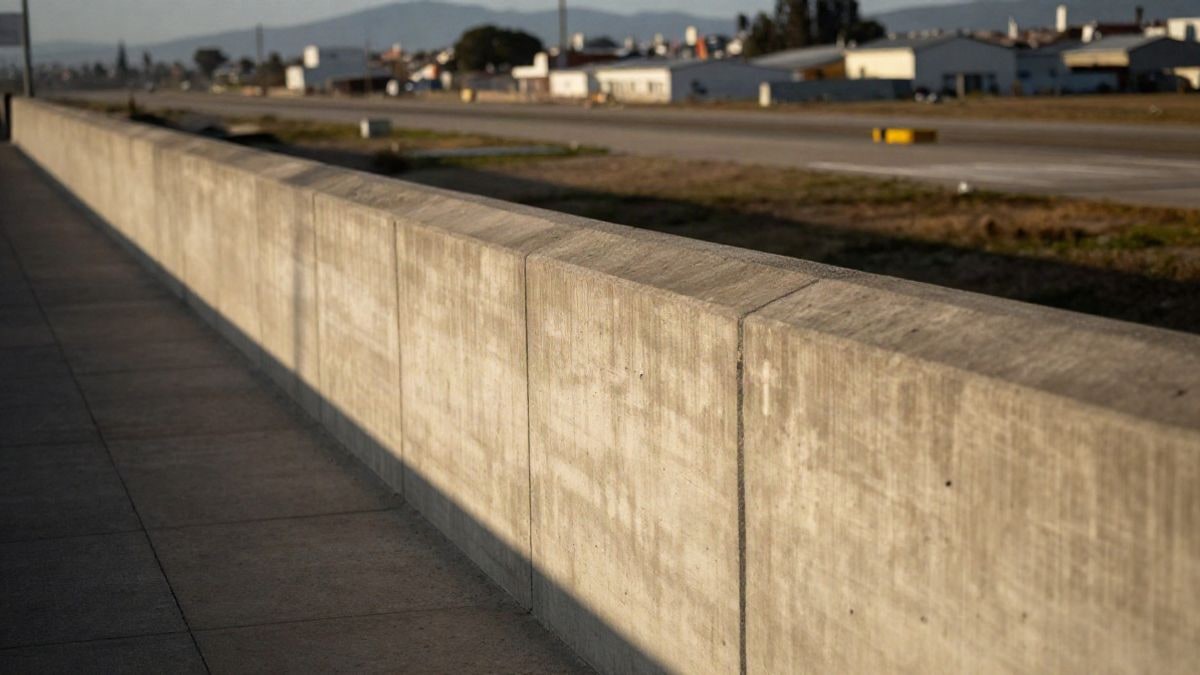
The history of the project goes back a long way. In 2020, the City Council initiated the process to build a defensive wall of 767 meters in length and at least 80 centimeters in height, with a budget of 394,706 euros and a projected timeline of three months. The infrastructure was to delimit the western and southwestern areas of the park to meet the requirements arising from its classification as a flood zone. The municipal hydraulic documentation already included the site within the areas exposed to flooding at that time.
That action was never executed. The contracting procedure ended without a viable offer after the consulted companies deemed the available budget insufficient, as explained by the councillor for Urban Planning. Subsequently, the City Council added another 200,000 euros, raising the planned investment to around 600,000 euros to reformulate the project.
The Dana of November 2024 again modified the plans. According to Rivas, the Tecnoalimentario Park did not flood at that time, while the aerodrome accumulated around half a meter of water. The local government considered, based on that experience, that it made more sense to study a broader intervention alongside the Junta rather than limiting itself to the wall initially designed for the business site.
The delay has consequences for the companies located in the park. The municipal spokesperson for Vox, Javier Herreros, denounced this month that some companies are having difficulties in formalising their properties, obtaining the first occupancy or securing licenses for new activities due to urban planning limitations arising from flooding. The group demanded that the City Council unblock an action pending for years.
The new working agreement with the Junta opens another stage, but still without a fixed timeline. The information provided by the City Council does not specify when the new project will be completed, when the work can be tendered, or what financial contribution the regional administration will ultimately assume.
You may also like