The project to expand Málaga-Costa del Sol Airport will begin around 2029 and will extend over seven years, with an investment of €830 million already committed and up to €1.5 billion expected. The work will multiply passport control space by six and double the security screening area.
The major transformation of Málaga-Costa del Sol Airport now has approximate dates. Groundwork will commence around 2029 and will last for about seven years, according to the timelines managed by the new airport director, Sergio Millanes, who took office last July. The information, reported by Diario Sur, places the initial investment at €830 million within the current Airport Regulation Document (DORA), although the total figure announced by Aena amounts to €1.5 billion, which will be distributed over the next five-year cycle.
The airport is operating this summer at record figures: 9,800 peak passengers per hour, up to 107,000 users per day, and 262 routes to 42 countries operated by 54 airlines. In August alone, 3,050,841 travellers passed through its facilities, a 6.6% increase compared to the previous year. Millanes faces the challenge with "tremendous enthusiasm, not only for what it is now but for what it will be in the short to medium term, because a significant transformation awaits us".
Sustained growth above 6% has led Aena to decide on the expansion before the airport becomes saturated. The historical capacity is set at 30 million passengers, although the director points out that, with the current configuration, it could reach 36.5 million theoretical. The project will touch on "all flows of the airport" to reduce the risk of saturation of several subsystems that are already operating near their limits.
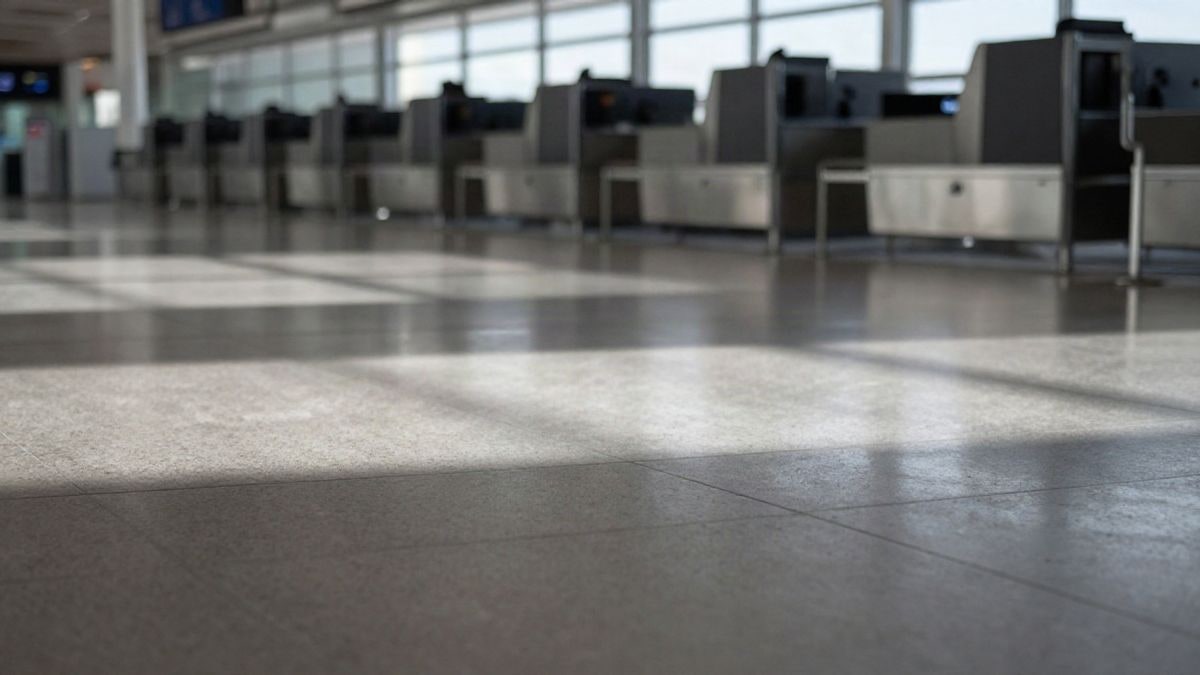
Current studies calculate the increase in square meters for each area. The space for passport control will be multiplied by six; the security screening area will more than double, with new scanning technology; and the arrivals subsystem will triple. Platforms and parking areas will also expand. The connection between the two runways will be split so that planes can cross.
The major engineering challenge will be to keep the airport fully operational during the works. The strategy is based on the principle of "build to destroy": first, new ancillary infrastructures will be erected, and once operational and passenger flow is transferred, the old structures will be intervened or demolished, dividing the project into multiple micro-phases. "We want to ensure that the airport will never be an obstacle to territorial plans; we cannot be a bottleneck for it to be where it wants to be," states Millanes.
The economic and social impact of the airport is measured in data: every three days, twice the population of Marbella passes through its facilities, or all of Mijas in a single day. There are about 10,000 accredited cards for direct and indirect workers. "Aena has identified the right moment to begin the major expansion, which is very focused on addressing the expected increase in traffic in the coming years, as it is closer to theoretical limits," adds the director.
The expansion will be designed with energy efficiency and sustainability criteria, prepared for more modern fleets and less polluting fuels. Millanes warns that the first actions could be carried out in areas "that are not visible", the technical ones and not those facing the public. The master plan reserves space for potential railway growth, with the future arrival of high-speed trains and the connection to Marbella. Regarding the North Access, Aena has already completed the part that falls on airport land, awaiting the Ministry of Transport to undertake the new road to the Second Ring Road.
This summer highlights the increase in passengers from the Middle East, despite the instability due to the war in Iran. The large hub of Istanbul concentrates the highest number of connections in the world. "We have grown significantly in routes and companies, connecting Málaga with the entire world," concludes Millanes.

You may also like