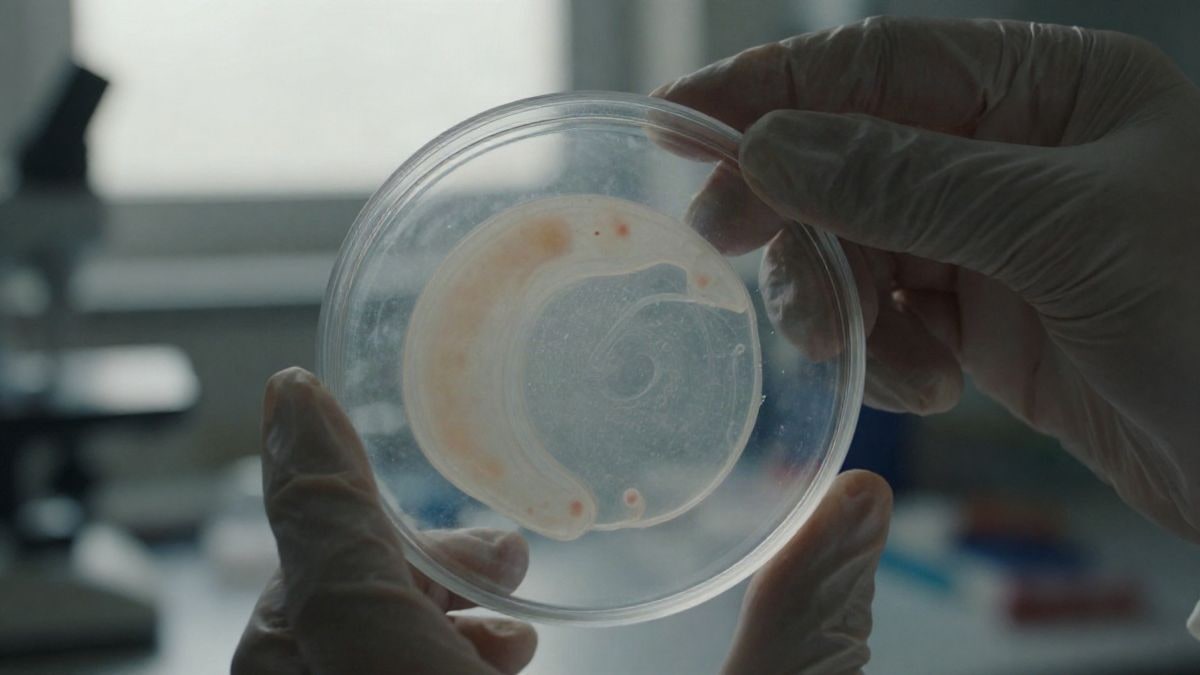
Professor Miguel Alaminos reviews in an interview the results of UGRSKIN, the first artificial skin approved as a medicine in Spain, which has already been implanted in major burn victims with an 80% survival rate in the first 15 cases.
The UGRSKIN artificial skin, developed by the Tissue Engineering Group of the University of Granada, has achieved an 80% survival rate in the first 15 major burn victims treated. This is affirmed by Dr. Miguel Alaminos, professor of Histology and head of the team, in an interview published by Diario Sur, where he reviews nearly three decades of work in regenerative medicine.
The product is the first medication consisting of an artificial tissue approved in Spain. The Spanish Agency of Medicines and Health Products gave the green light to UGRSKIN in 2024, although its use is limited to major burn patients and a single centre: the Burn Unit of Andalusia, at the Virgen del Rocío Hospital in Seville. The medication comes with a leaflet and can be administered in a Spanish hospital.
"In 2024 we managed to get the Medicines Agency to authorize it as a medication in Spain, meaning it can be used on a patient in a Spanish hospital and even has its leaflet"
Alaminos' team has provided patients with three artificial tissues: skin, cornea, and palatal mucosa for children with cleft palate. The artificial cornea is currently in clinical trial phase and has already 18 patients implanted or treated. In all cases, according to the researcher, improvements have been achieved in the transparency of the ocular surface and a reduction in symptoms such as chronic pain or the presence of blood vessels in the cornea. However, the trials must conclude within two to four years before the product can be registered as a medication.
Alaminos emphasizes that this therapy cannot resolve issues related to the retina, glaucoma, or nerve damage in the eye, as their work focuses exclusively on the cornea. "We cannot restore sight to all patients with blindness, but we can contribute to treating patients who have a severe problem in the cornea or a severe ulcer that is not healing with the artificial cornea," he explains.
"The change has come to stay, because artificial tissues are the medicine of the future"
The development of UGRSKIN has been supported by the University of Granada, the Virgen de las Nieves Hospital in Granada, the Virgen del Rocío Hospital in Seville, the IBS-Granada Research Institute, and the Andalusian Network for the Design and Translation of Artificial Tissues (RAdytTA), dependent on the Ministry of Health. The authorization process required demonstrating that the cells were not malignant and passing multiple evaluations in experimental animals before reaching the Medicines Agency.
The only model of artificial skin available in Spain is the one developed by this Granada group, which works in the Department of Histology at the Faculty of Medicine. The team is now researching new applications while the clinical trials of the cornea advance towards its possible registration as a medication.
You may also like