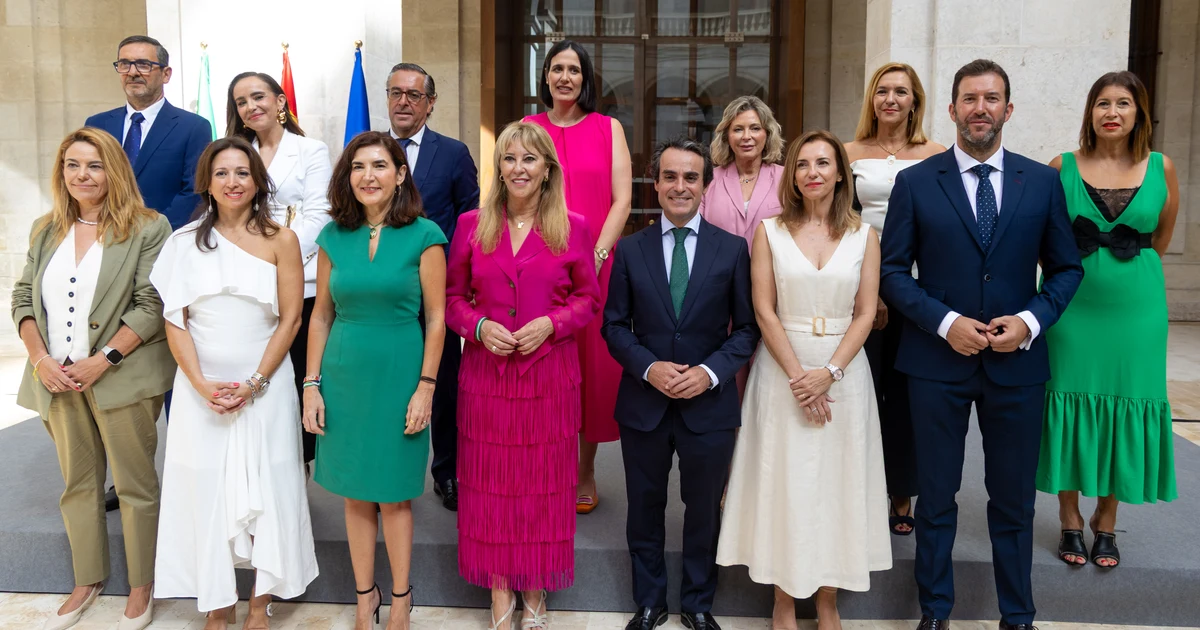
The Museo de Málaga was the setting for the swearing-in of the new territorial delegates of the Junta de Andalucía in the province, an event presided over last Friday by the third vice president and Minister of Economy, Carolina España. During her speech, España emphasised the need for a close and efficient administration, stressing that the delegates must be able to resolve any issues that arise.
Commitment of the Andalusian Government
España recalled the transformation that Andalucía has undergone in the last seven years, highlighting that under the leadership of President Juanma Moreno, the community has made progress in stability and trust. She stated that the goal of the Andalusian Government is to continue lowering taxes, reducing bureaucracy, and facilitating investment.
The vice president called on the new delegates for a firm commitment and conviction in their work, reminding them that their role is to represent the voice of the Andalusian Government in their respective areas of responsibility. In this context, she praised Patricia Navarro, the Government delegate in Málaga and her successor, highlighting her experience and work capacity.
Challenges and opportunities in Málaga
The current situation in Málaga, which faces both opportunities and challenges, was also a crucial point of the speech. España mentioned priority issues such as access to housing, job creation for young people, economic boost, and improvement of public services.
Patricia Navarro echoed España's words, urging the delegates to work with empathy and dialogue to resolve the problems of the people of Málaga. She highlighted that the province requires an effective and committed Government to bring resources and projects for its improvement. Since 2019, the Junta has mobilised over 4.3 billion euros for local development.
The new delegates took office after promising to work for the interests of the Málaga community. The new officials are Lucía Yeves Leal (Health and Consumption), Belén Rubio Gómez (Tourism and Justice), Antonio Jesús García Acedo (Economy and European Funds), Laura Soto García (Agriculture), Miguel Briones Acedo (Education), Carmen Sánchez Sierra (Employment and Digital Development), Laura Valle Carmona (Social Services), María Rosa Morales Serrano (Housing), and Carlos García Giménez (Culture and Sport).
You may also like