The guitarist Rafael Riqueni presents his new album 'Nerja', a conceptual work inspired by the discovery of the Cueva de Nerja in 1959, which fuses flamenco, impressionism, and Andalusian classical music.
The composer and guitarist Rafael Riqueni, one of the most prominent figures in contemporary flamenco, has just released 'Nerja', a conceptual album that pays tribute to the discovery of the Cueva de Nerja. The album, which went on sale this week, is now available on digital platforms and in physical format.
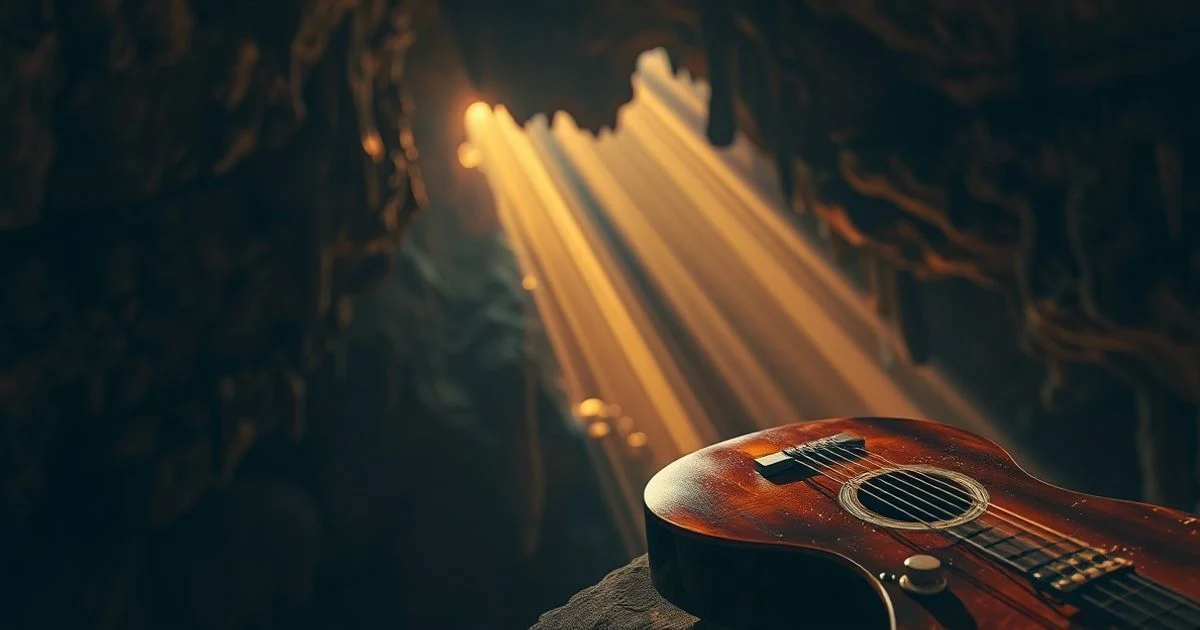
As the artist has explained in various interviews, the work arises from a “poetic and evocative vision” of the moment when a group of young people found the Málaga cave in 1959. Riqueni wanted to “translate into music the sensations of those young people upon entering the underground,” achieving an atmosphere that combines the telluric with the dreamlike.
An Andalusian trilogy that concludes with 'Nerja'
The album, composed of twelve pieces, concludes the Andalusian trilogy that Riqueni began with Suite Sevilla (1993) and continued with Parque de María Luisa (2020). On this occasion, the Sevillian guitarist integrates forms from the classical world with flamenco styles such as tangos, fandangos, and soleá, all infused with an impressionistic sensitivity reminiscent of Debussy or Ravel.
Riqueni himself defines his music as “Spanish in the line of Turina, Falla, or Albéniz, but with a strong flamenco imprint.” This duality between the cultured and the popular is a constant in his career and is evident in each of the tracks on the album.
Luxury collaborations and standout tracks
On this sonic journey, Riqueni is accompanied by guitarists Salvador Gutiérrez and Manuel de la Luz, percussionists Antonio Moreno and Agustín Jiménez, and cellist Gretchen Talbot. The presence of the cello adds a special lyricism, especially in tracks like Nana, which the artist describes as the “calling card” of the album.
Among the standout tracks are Jóvenes and El loco, presented before the release, showcasing the subtlety of a composer who plays with expressive contrasts. Also shining are Rumores and Paloma, performed solo, as well as Bulerías del alma, where the claps of Manuel de la Luz and Jairo Blanco set the rhythm. In Mareva, the voice of Olivia Molina stands out with her ayeos.
The album has already been presented on stages such as the Théâtre National de Chaillot in Paris and the Bienal de Flamenco de Sevilla, receiving excellent reviews. For the residents of Nerja and the Axarquía region, this album represents an additional pride, as it highlights one of the most important natural treasures of the province of Málaga.
The complete tracklist includes: Jóvenes, Mareva, Rumores, El Loco, Vagamundo, Bulería del Alma, Camino de la Curiosidad, Con la Luz de tus Ojos, Carrerilla, Nana, Domalavara, Paloma.
With 'Nerja', Rafael Riqueni once again demonstrates that flamenco can be a vehicle for cultured creation without losing its popular essence. As he himself states: “I am a flamenco guitarist, but what I do is also Andalusian classical music.” An album that will undoubtedly become a reference for understanding the evolution of Andalusian music in the 21st century.

You may also like