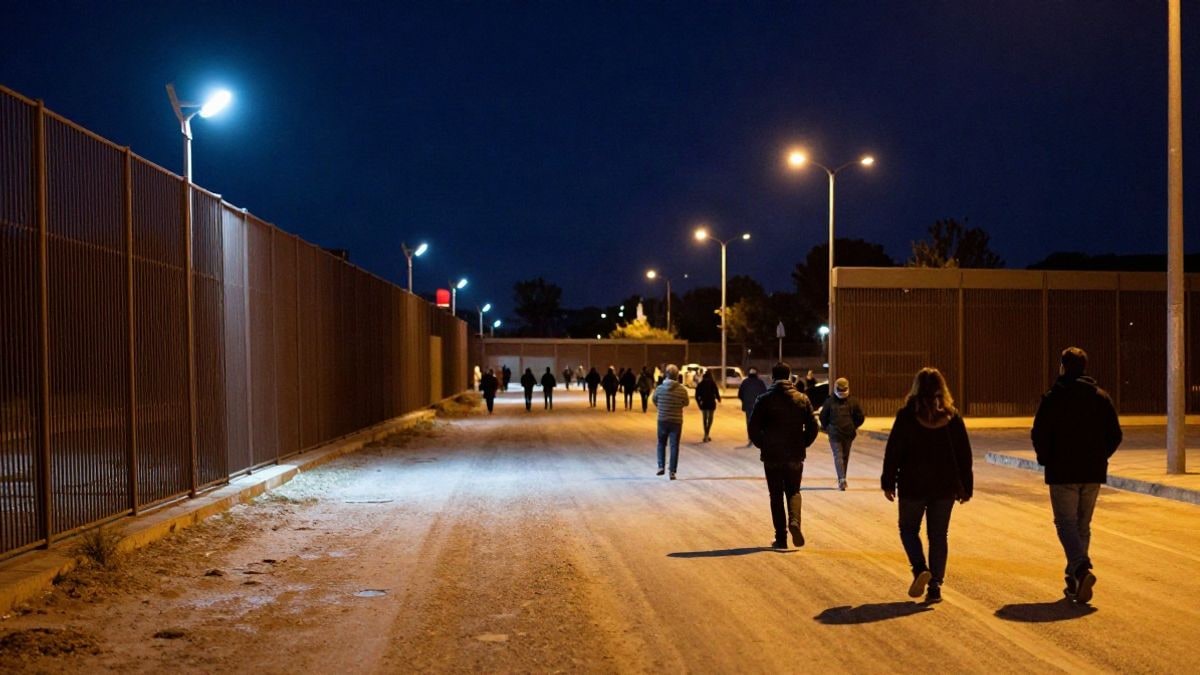
The leader of the Movement for Dignity and Citizenship warns that the migration crisis in Ceuta will have consequences for the entire country and criticises the lack of political will two months after the entry of more than 80,000 people.
The president of the Movement for Dignity and Citizenship (MDyC), Fátima Hamed Hossain, argues that the migration crisis that Ceuta has been experiencing since July 30 and 31, when more than 80,000 migrants entered, will have repercussions for all of Spain. She expressed this in an interview published by Diario Sur, where she warns that a sense of abandonment has settled in the autonomous city.
Hamed, a lawyer born in 1978 and the first Muslim woman to lead a political party in Spain, denounces that two months after the crisis began, responses are still lacking. Her party holds three seats in the Assembly of Ceuta, where she serves as the second vice president.
“People feel that there has been no empathy with the citizens and that Ceuta has been abandoned, and that is very dangerous, especially at a national level.”
Regarding management, the Ceuta leader criticises the central government for announcing an immediate return of those who entered irregularly, only for ordinary procedures to be followed, which prolongs the timelines. She also condemns the actions of the city council regarding minors: “How can it be allowed that two months later there are still children wandering the streets?” she asks.
Hamed believes that action was taken too late and that there was a lack of transparency. “I cannot conceive of a problem and go on holiday,” she states, adding that the lack of political will and the proximity of general elections have turned initial solidarity into a weapon.
The MDyC president also warns about the rising tension in the city. She recalls that a similar situation occurred in 2021 with the visit of Santiago Abascal, whom her party managed to declare a persona non grata. Now, she points out, there have been protests involving Muslims who have heard unpleasant comments.
“The tension, discomfort, and strain are causing even some people to show racist tendencies.”
In this regard, she denounces the far-right message that confuses religion with nationality and distinguishes between first-class and second-class Spaniards. “It is a very concerning message that is spreading like wildfire,” she emphasises.
When asked about the label of “Muslim left” attributed to her party, Hamed clarifies that it is not stated in the statutes that it is Muslim, although most of its members are. “They are Spanish,” she stresses, considering it a way of pejoratively categorising them.
Looking to the future, the Ceuta leader calls for greater involvement from Europe to unequivocally recognise that Ceuta and Melilla are Spanish territories. “This is the ideal moment for all of Europe to come to an agreement,” she concludes.

You may also like