On Thursday, the Centre and Real Cortijo de Torres were once again filled with thousands of people enjoying the final stretch of the fair. Visitors from other provinces filled the streets, while the fairgoers held on for one last push.
The Málaga Fair is in its final stretch, and on Thursday the atmosphere was once again one of true celebration. The plaza de la Constitución regained the liveliness that was missed on Wednesday, when the Centre felt like a normal August day. The constant flow along calle Larios was filled with tourists surprised by the verdiales performances and an initial wave of visitors arriving to enjoy the last days.
The locals are becoming increasingly scarce in the Centre, where fairgoers from other Spanish cities now dominate. Sandra, a young woman from Huétor-Tájar (Granada), arrived in the morning with a group of friends: "We come to Málaga for the fair every year," she explained to SUR. However, she did not hesitate to convey the difficulties in finding affordable accommodation: "It’s getting harder for us. What they charge for a night anywhere is crazy."
The San Miguel booth looked good, although there were gaps and plenty of space, something unimaginable during peak attendance days. "Long live the Málaga Fair!" shouted a young man who identified himself as Vicente Llamas when asked about the importance of the big week. "You won’t find this in any other city," he added before climbing onto one of the stools in the square and dancing with the clear field.
Encarni Navarro was once again the entertainer of the square. She went up on stage to dance with a couple formed by two men, a French citizen and a Catalan, who claimed to come to the Málaga Fair every year. Meanwhile, at the Real Cortijo de Torres, the scene was of thousands of people walking joyfully, some dangerously close to the horse-drawn carriages.
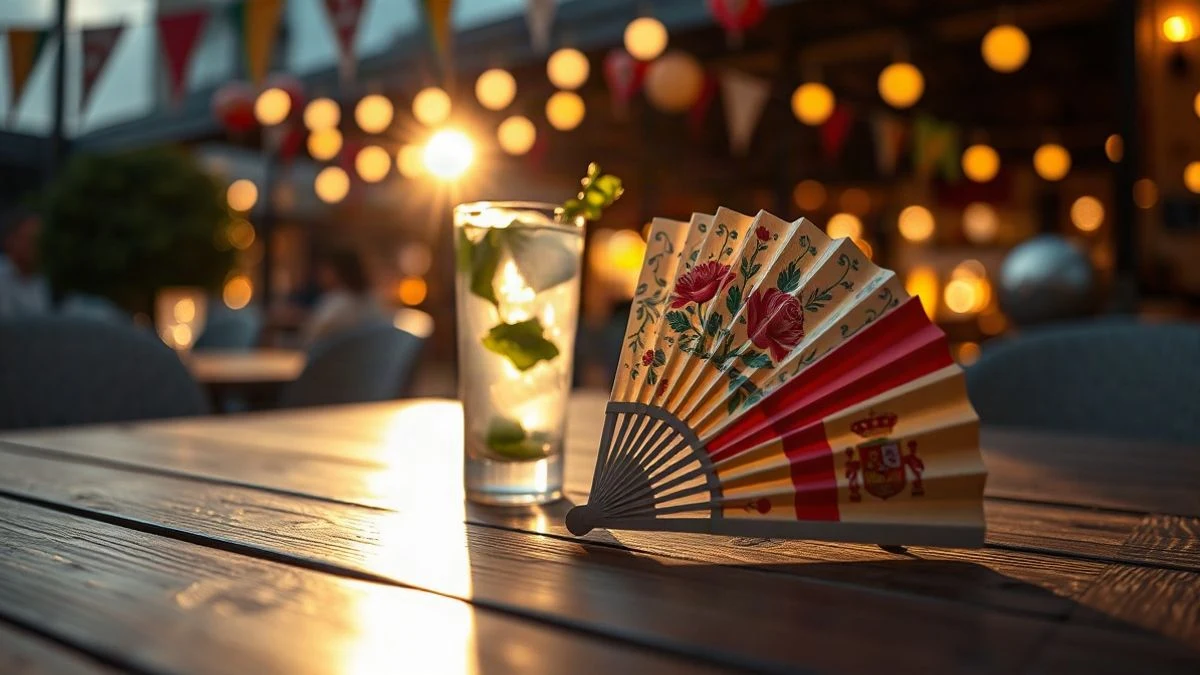
At the Rincón Cubano, the atmosphere was revolutionary. David Arrabalí, behind the bar, confirmed that the mojito remains the star product: "We sell about 1,000 a day and 3,000 on busy days." "This is the only place where you can see deputies and councillors, councillors working as waiters and sweating profusely," he assured.
The fair is also experiencing its own particular transition: the horse-drawn carriages are leaving, the music shifts from folk rhythms to pop, and families with children make way for groups of young people who gather under the imposing illuminated structure at the entrance. When night falls, the lighting of thousands of bulbs transforms the esplanade into a dazzling city.
The figures from the Real Cortijo de Torres are impressive: 20,000 square metres of awnings, equivalent to four football fields; 24 million watts of power, enough to supply a town like Algarrobo; 700,000 euros invested in renewing the cells of the transformation centres; and nine kilometres of garlands, 500 light arches, and more than 35,000 lanterns.
Although the fair can sometimes feel uphill, it is priceless to see the happiness on the faces of those who support it. "In Málaga, it’s well known that summer ends when the fair ends," recalled a fairgoer perched atop a stool. For those who have yet to go, the Real will remain open until Sunday, with booths and attractions operating at full capacity.

You may also like