Manuel Guillén, a resident of La Trinidad, walks through the centre of Málaga every day with a hundred biznagas made by his family. At 60 years old, he is the last generation of a tradition that started with his father and grandfather.
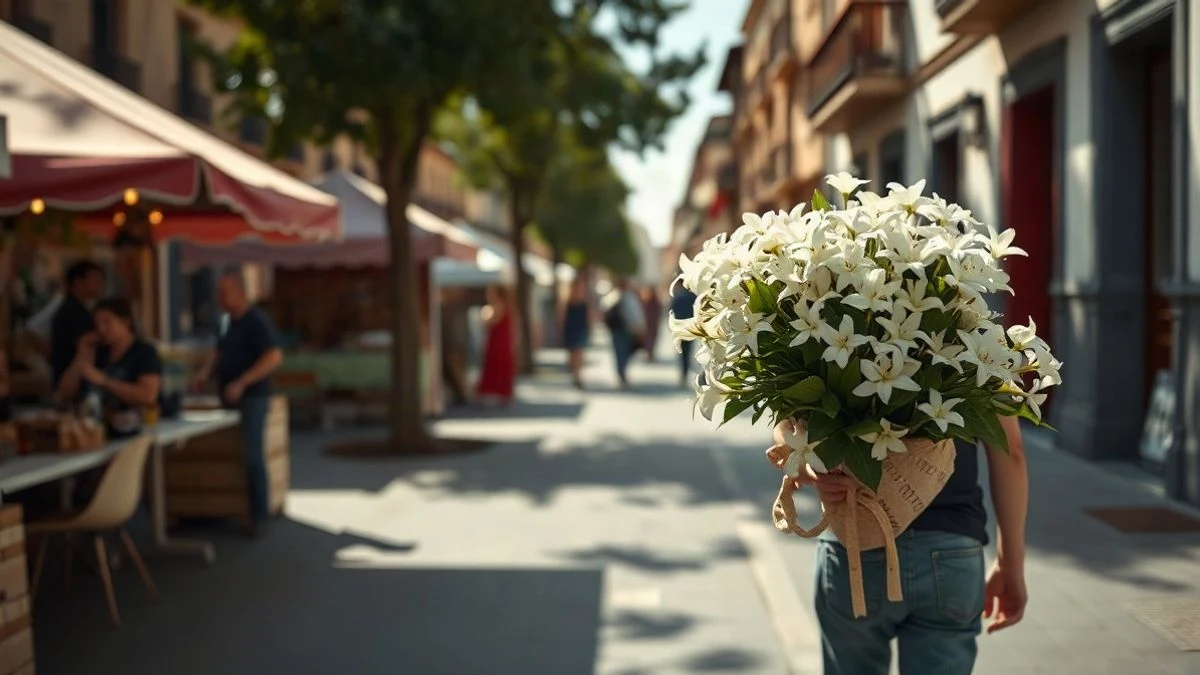
The voice of Manuel Guillén cuts through the bustle of the plaza de la Constitución: "I bring the flower of Málaga! The fragrant biznaga!" At 60 years old, this resident of La Trinidad repeats the scene he has witnessed since childhood, when he accompanied his father and grandfather through the same streets during the Feria de Málaga.
"This is my whole life. I've been coming since I was little with my father and now I continue with what he taught me. I've seen it all from him, since I was a child... As we say, it's what I've 'sucked in' at the Feria de Málaga," he explains to SUR while holding a stalk laden with jasmine.
The process of making the biznagas starts about 20 days before the fair begins. At his home, his wife, daughters, son-in-law, nephew, sister, and cousin all participate. "This doesn't belong to anyone, it belongs to everyone, because we've lived it since we were little," he emphasizes.
Each biznaga requires five minutes of work. He collects the jasmine from several houses whose families have been giving it to him for years, and the nerdo — the stick that holds the flower — is collected green in May and left to dry for about twenty days before inserting the jasmines into the prickly pear stalk.
Manuel sells each biznaga for four euros and encourages the locals to buy them: "They are the ones who buy the most, much more than foreigners, who don't know its meaning." His daily route includes brotherhoods, hotels, and iconic restaurants in the centre.
Although he now carries less weight, he assures that he has managed to carry a stalk weighing 7 kilos in addition to the biznagas. "And with how small I am, just imagine! I didn't know which arm to put it on! But this is more skill than strength," he jokes.
His regular profession is as a insurance agent, but during the fair and some weekends for weddings and events, he becomes a biznaguero. He also conducts workshops throughout the year to teach the trade: "Those who know understand that this involves a lot of work," he states.
Despite keeping the tradition alive, Manuel believes he will be the last in his family: "As far as I'm concerned, this is the last; I have no inheritance from another biznaguero... I have my daughter, but she is working and cannot continue with this." His nephew, however, is also selling in the centre these days.
Before continuing on his route, Manuel offers a piece of advice to his fellow townspeople: "I advise people who see a biznaguero on the street, especially our fellow citizens of Málaga, to feel encouraged to buy when they see us... This involves a lot of work." And he continues to raise his voice: "I bring the flower of Málaga!"

You may also like