The Cardiac Rehabilitation Unit at the Virgen de la Victoria Clínico Hospital has treated over 5,000 people since 2000. The programme combines exercise, psychology, and health education, reducing mortality by 30%.
The Cardiac Rehabilitation Unit at the Virgen de la Victoria University Clínico Hospital in Málaga has attended to over 5,000 people since its inception in 2000. The programme, as reported by Diario Sur, combines strength and aerobic exercises tailored to each patient, psychological consultations, health education, and adjustments to pharmacological treatment, along with monitoring cardiovascular risk factors.
The unit's coordinator and director of the UGC of Physical Medicine and Rehabilitation, Adela Gómez González, explains that this multidisciplinary strategy improves patient survival by up to 30%. "Studies concluded that physical exercise was the right approach: it is a multidisciplinary strategy that involves a thorough assessment of the patient to ensure the heart is in the best possible condition," Dr. Gómez states.
"The cardiac rehabilitation programme based on physical exercise reduces mortality by 30%"
The specialist adds that a single MET, the unit that measures functional capacity, increases survival by 12%. The programme is applied to 300 people over two months, with three sessions per week, and around 1,000 patients pass through the unit each year. Over 26 years, 10,000 have been seen in consultation. Depending on whether the risk is moderate, low, or high, follow-up is either in-person or through home rehabilitation.
Cardiologist Ángel Montilla highlights that exercise is used as part of the treatment for the disease, alongside psychological therapy and dietary therapy. "The programme is tailored to each patient to facilitate their reintegration into normal life and improve their quality of life. Patients often arrive with fear and uncertainty, but most end up very satisfied with the multidisciplinary approach," he asserts.
The team consists of cardiologists, rehabilitation doctors, physiotherapists, psychologists, nutritionists, endocrinologists, family doctors, nurses, and urologists. In addition to the Clínico, there is a unit in a health centre in Alhaurín el Grande. Eight out of ten patients improve their risk indicators after going through the unit: blood pressure, diet, smoking, or diabetes.
The typical profile is that of a patient who has suffered a heart attack and has been revascularised through angioplasty, aged 53, male, hypertensive, and dyslipidaemic. Dr. Gómez emphasises that 80% improve their functional capacity, normalise their blood pressure, and quit smoking, while around half adjust their diet to a healthy pattern, although 20% do not adhere to the treatment.
There is a gender bias: many women do not attend the unit because they prefer to continue caring for their families rather than themselves. To engage them, classes have been organised to fit their schedules. "On World Heart Day, we need to remind people that they must take care of themselves from the start, not just when they have had a heart attack," insists Dr. Gómez.
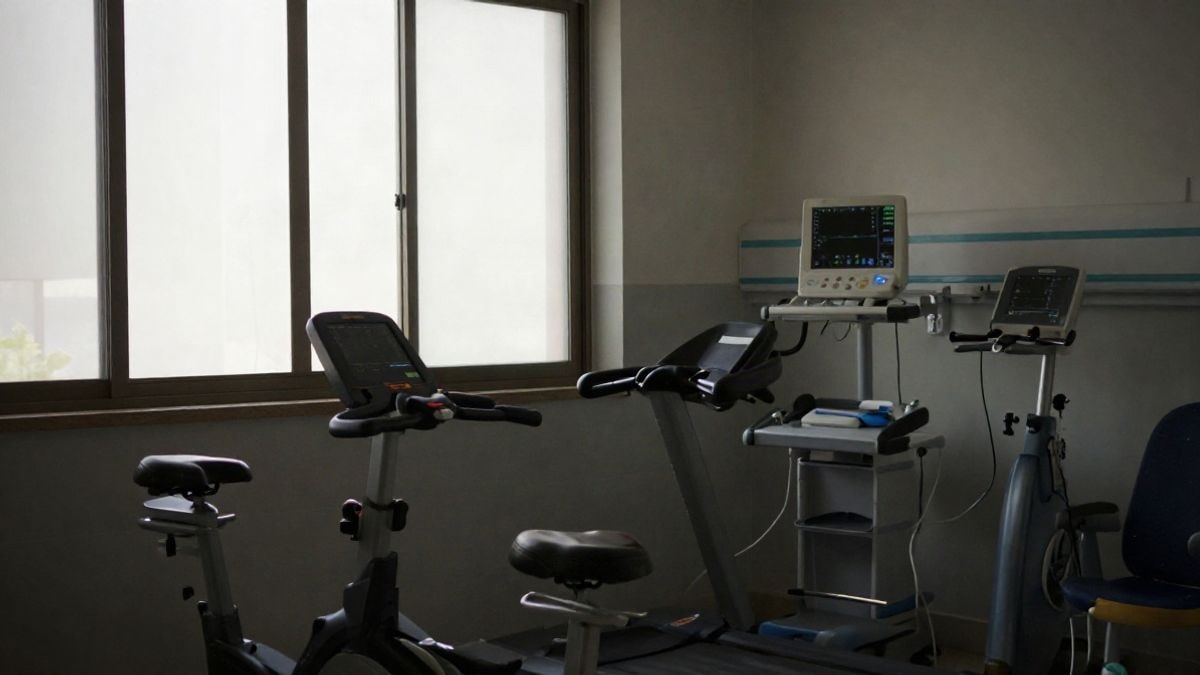
The physiotherapist Alberto Toval leads the sessions, which start with warm-up exercises using bands and light weights, followed by stationary cycling and half an hour on the treadmill, ending with relaxation exercises. A telemetry device measures vital signs and displays them to professionals on a computer, with a limit on heart rate per patient.
Sebastián Fuentes Álvarez, a 48-year-old from Málaga, has had a double bypass since February 23. "I am improving now. I know the limitations I have, the heart rates I can reach while exercising, 100, 102, no more," he recounts. Mari Nieves Hernández, a Madrid native residing in Málaga for 15 years, suffered a heart attack in March: "Now I don't get as fatigued when I walk and I feel more inclined to say: I get up and go for a walk." Salvador Peralta, 51, has heart failure and his heart was functioning at 36%.
You may also like