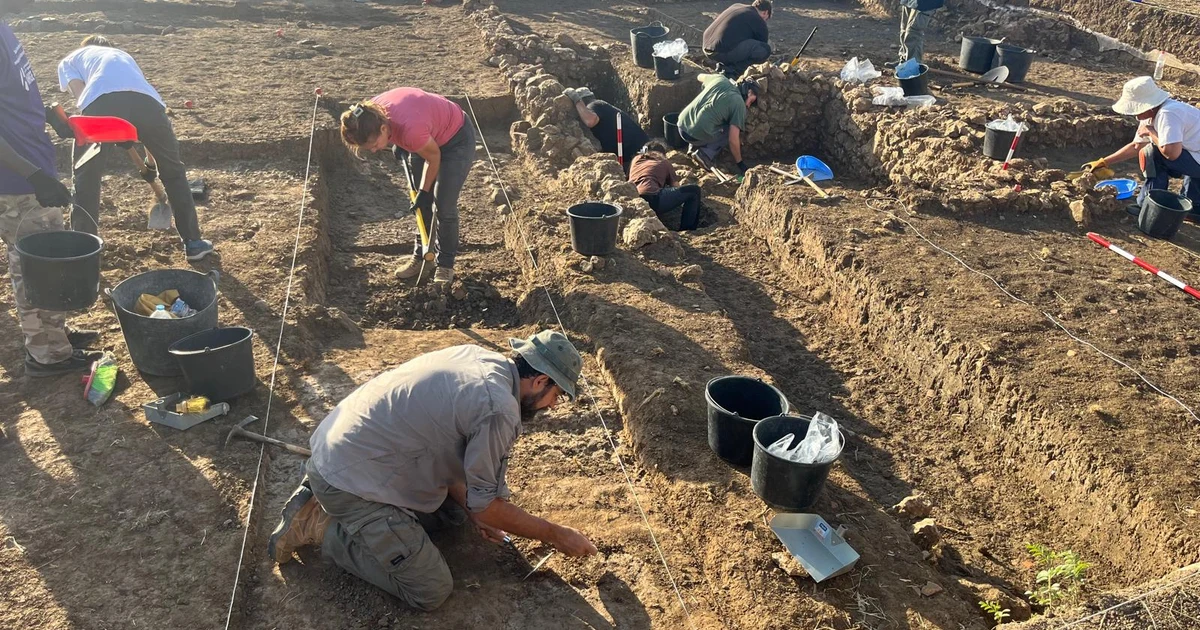
The province of Málaga will be the scene of the resumption of archaeological excavations at the Phoenician site of Cerro del Villar. This Monday, August 24, the fifth phase of the project will commence and will run until mid-September.
The work at Cerro del Villar aims to deepen the understanding of one of the best-preserved Phoenician settlements in the western Mediterranean. The research is framed within the project 'Cerro del Villar: nature and temporality of the archaic Phoenician territorial project in the Bay of Málaga.'
Development of the Excavation
The excavations will be led by José Suárez, a professor of Prehistory in the Department of Historical Sciences, along with a team of researchers from various Andalusian and international universities. It is expected to document the foundation levels of the settlement, as well as continue the study of the Punic pottery sector and excavations related to a Roman fish-salting factory.
Funding and Collaboration
This phase of excavation has a budget of over 80,000 euros, funded by the Ministry of Culture, Historical Heritage, and Sport of the Junta de Andalucía in collaboration with the University of Málaga. The research also receives support from local institutions, including the Urban Planning Management of the City Council of Málaga and the provincial council.
Carlos García, territorial delegate for Culture in Málaga, has highlighted the importance of this collaboration between administrations for the protection and understanding of the region's archaeological heritage. For its part, the University of Málaga has emphasized the significance of research in the field of Humanities and its impact on understanding the city's past.
The current phase of excavation will also have the support of specialists from the CSIC and students from various universities, consolidating a team of nearly one hundred people who will participate in activities related to the excavation and analysis of the recovered materials.
The Cerro del Villar project is currently the only one of its kind in Spain dedicated to studying the Phoenician presence in the far west of the peninsula and has already led to significant discoveries, including a pottery kiln and various pieces of great archaeological value.

You may also like