The City Council of Antequera announces the imminent start of restoration works on the façades and roofs of the Royal Collegiate Church of Santa María la Mayor. The work will last twelve months and the monument will remain open to the public.
The mayor of Antequera, Manolo Barón, announced this Tuesday the imminent start of the restoration works on the façades and roofs of the Royal Collegiate Church of Santa María la Mayor. The installation of scaffolding will begin in the coming days, once the acts of replanning and commencement of work have been signed.
The project has been drafted by the Antequera architect Marcos Sánchez, who will also oversee the work, and it will be executed by the company Actúa Infraestructuras, whose general director, Mauricio Delgado, was present at the announcement. Also in attendance were the deputy mayor for Tourism, Commerce and World Heritage, Ana Cebrián, and the councillor for Culture and Historical Heritage, José Medina Galeote.
The work will last for twelve months and will take place without closing the monument. To coordinate the works with visits, the City Council, the technical direction, the construction company, and the Fundación Ciudades Medias del Centro de Andalucía, which manages tourist visits, will coordinate the placement of scaffolding and access.
“It is a responsibility and an honour to be able to restore a heritage jewel like the Royal Collegiate Church of Santa María,” the mayor stated.
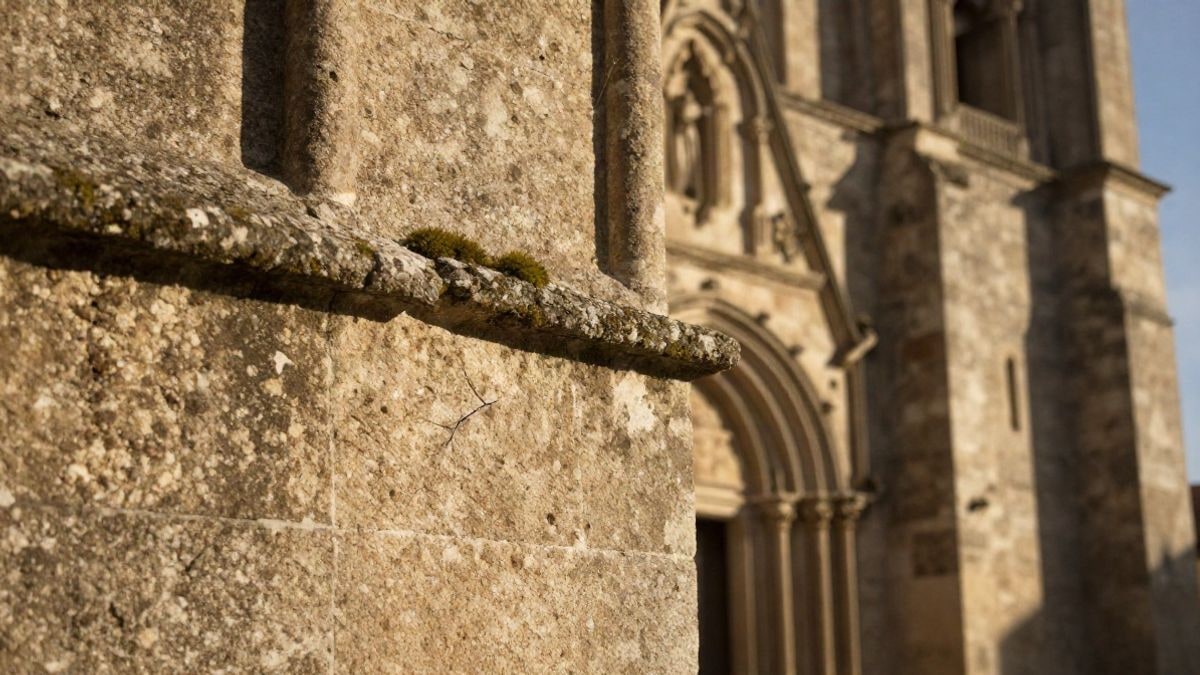
The project encompasses the restoration of all the façades of the temple and its roofs. It is based on previous analyses and a photogrammetric survey that has documented the condition of the stone to define the treatments for each element. The actions include surface cleaning, treatments against vegetation and fungi, and stone consolidation. Replacements will be made selectively, with specific mortars or stone according to the needs of each area.
One of the most visible works will be the recovery of the pinnacles that crowned the building. Of the 41 originals, 30 are preserved, with varying degrees of deterioration, while the other eleven have disappeared. The intervention on the balustrade will complete the restoration of the architectural profile.
For the roofs, the goal is to ensure waterproofing and resolve leaks. Studies have detected the disintegration of the mortar under the tiles, so these pieces will be removed and the lower layers will be sanitised. A new layer of regularisation with lime mortar will then be applied, and it will be waterproofed before re-laying the tiles. It is estimated that around 70 percent of the existing tiles can be reused, while the remaining 30 percent will be replaced due to breakages or losses. The project manager has specified that lime mortars will be used, without cement.
Delgado has thanked the City Council for their trust and described the project as “a challenge and an honour.” The company has experience in interventions on 16th-century Renaissance buildings and will need to plan the work considering the continuity of visits and weather conditions.

You may also like