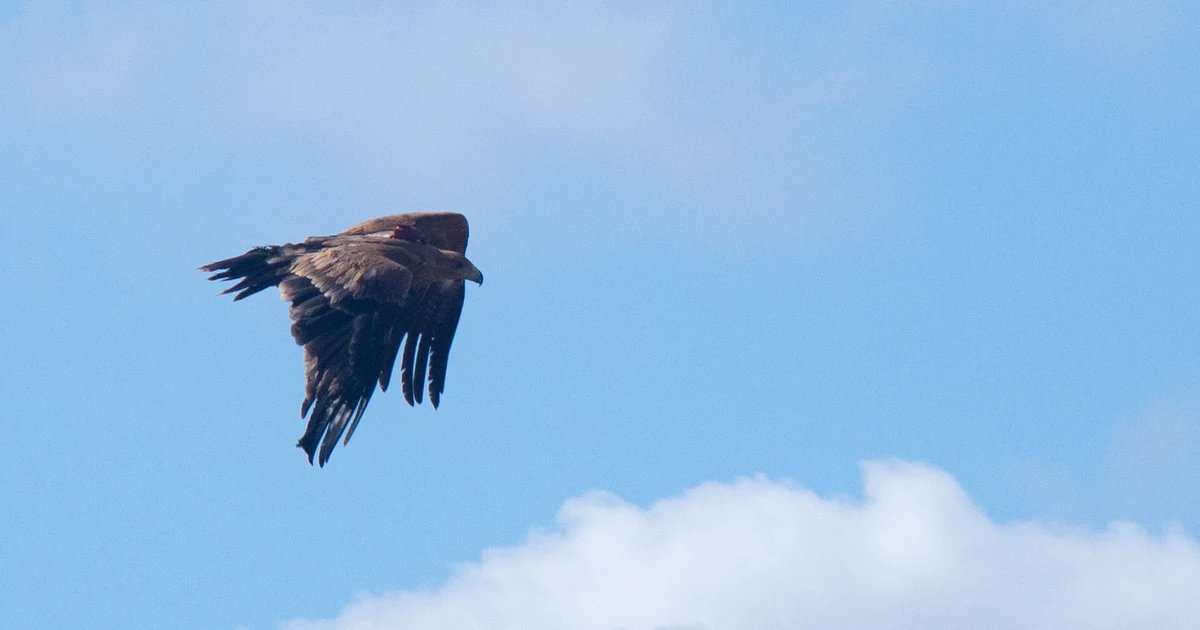
On 19 November 2026, a juvenile imperial eagle was released in the La Camorra mountains, in Málaga. This event is significant as the province is the only one in Andalucía that has not yet been colonised by this species.
Details about the release
The Council of Sustainability and Environment of the Junta de Andalucía carried out this release after rescuing the bird in Sevilla. When it was a chick, the eagle fell from its nest during a heatwave and was cared for at the Centres for the Recovery of Threatened Species (CREA). After receiving care and training, it is now in optimal condition to reintegrate into its habitat.
Andalucía has experienced significant growth in the imperial eagle population, increasing from fewer than 30 breeding pairs at the beginning of the century to 191 pairs today. This increase is due to the expansion of breeding nuclei and the recovery of new nesting areas.
Conservation efforts and future monitoring
The Recovery Plan for the Iberian Imperial Eagle in Andalucía promotes conservation activities to establish pairs in Málaga. Studies are being conducted to improve the species' safety by correcting power lines, which are one of the main causes of mortality. In the future, more individuals equipped with GPS transmitters are expected to be released to track their movements.
The Iberian imperial eagle was on the brink of extinction in the past, with fewer than 50 pairs in the 1970s. Now, its population has increased to over 1,000 pairs in the Iberian Peninsula. It is characterised by its dark brown plumage with white spots on the wings, and it primarily feeds on rabbits.
Andalucía plays a crucial role in the recovery of this threatened species. In 2026, the community reached 191 breeding pairs, distributed across five population nuclei. The implemented measures have allowed the population to double in less than a decade.
However, non-natural mortality caused by electrocution and shooting remains a threat. Numerous power lines have been corrected to protect these birds, but the issue persists with illegal hunting.

You may also like