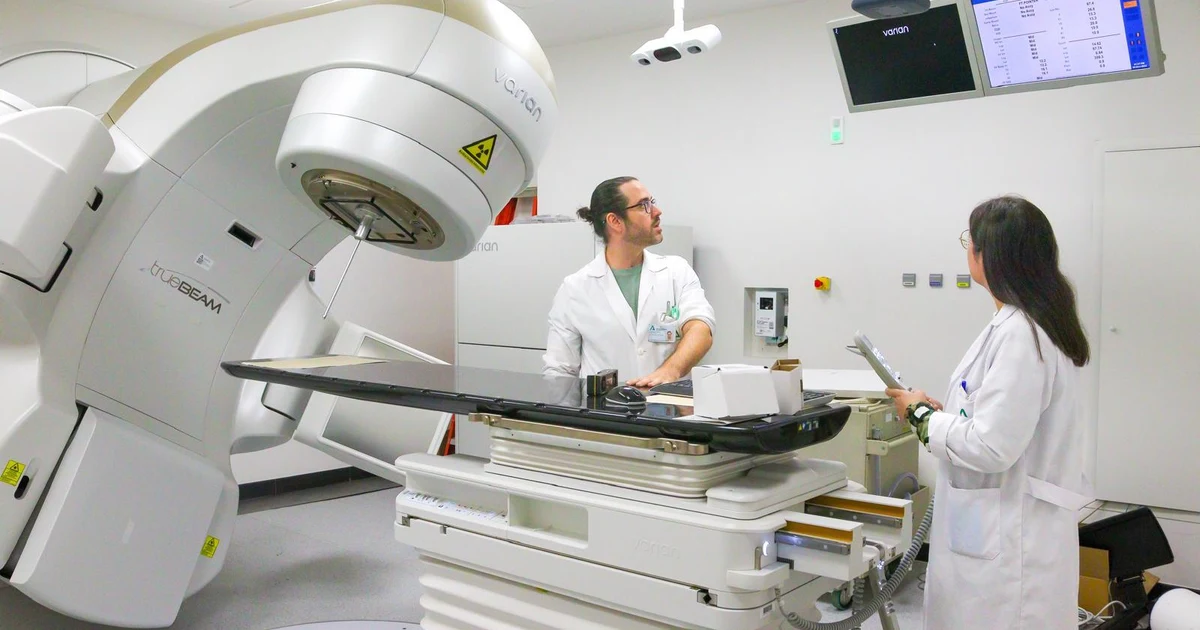
Málaga Regional University Hospital, managed by the Andalusian Health Service (SAS), has incorporated a new high-performance linear accelerator for the treatment of oncology patients. This installation represents a significant advance in the accessibility to faster and more precise radiotherapy and radiosurgery therapies.
Details of the new equipment
The accelerator, located in Pavilion A of the general hospital, required an investment of €2,649,900, funded by the European Union through the NextGeneration EU Recovery and Resilience Mechanism. Additionally, €130,000 has been allocated for the adaptation works of the space.
This state-of-the-art equipment allows for advanced treatments such as cranial and body radiosurgery, intensity-modulated radiotherapy, and image-guided radiotherapy. Thanks to these techniques, higher doses can be administered with greater precision, which in certain cases reduces the number of necessary sessions, thus facilitating the care process.
Benefits for patients
With this new technology, it is estimated that the hospital will be able to treat around 550 patients annually, of which nearly a hundred will benefit from high-precision radiosurgery treatments. This not only helps to reduce waiting times but also expands access to complex treatments.
The managing director of Málaga Regional University Hospital, José Antonio Ortega, has stated that this incorporation is an important step towards improving oncological care. His goal is to provide more precise treatments and reduce the number of sessions, positively impacting patients' quality of life.
For his part, Jorge Contreras, head of the Radiotherapy Oncology Service, has highlighted that this technology improves therapeutic possibilities and allows for the treatment of tumours with millimetric precision, better protecting healthy tissues.
Furthermore, improvements have been implemented in the departmental radiotherapy network and in the therapeutic planning system, thus optimizing the workflows of the service and consolidating Málaga Regional University Hospital as a benchmark in high-complexity oncological treatment.

You may also like