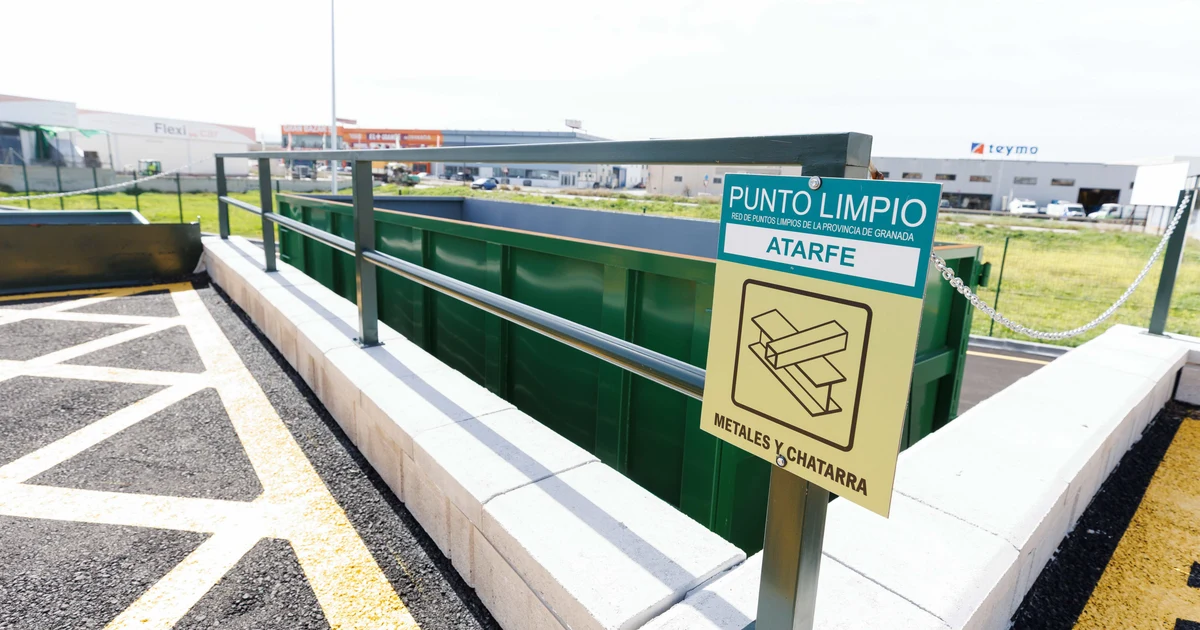
The capital of Málaga has inaugurated a new clean point, thanks to the initiative of the Junta de Andalucía to improve waste management. This action is part of a broader set of measures aimed at advancing towards a circular economy and more sustainable waste management.
Progress in waste management infrastructure
Since 2019, the Junta has been working on the construction of 35 clean points, with an investment exceeding 17 million euros as part of the Comprehensive Waste Plan of Andalucía 2030 (PIRec 2030). This plan aims to provide all Andalusian municipalities with more than 2,000 inhabitants access to suitable facilities for the proper separation and treatment of waste.
Prior to this initiative, Málaga had around 230 clean points across Andalucía, but with this new facility, the network becomes more accessible and adapted to current environmental regulations.
Sustainability goals and environmental awareness
The Junta de Andalucía emphasizes that clean points are crucial for facilitating the proper separation of household waste, in order to reduce the amount of waste that ends up in landfills. These spaces allow for more efficient and safe handling of recyclable materials, promoting recovery and reintegration into productive cycles.
Furthermore, these new centres serve as platforms for education and environmental awareness. By facilitating access to well-equipped facilities, the aim is to increase citizen involvement in recycling and reuse practices, thereby reinforcing the importance of responsible waste management.
The creation of these clean points responds to a regulatory framework that establishes ambitious recycling targets, requiring that a significant percentage of municipal waste be allocated for reuse by 2025, 2030, and 2035. To achieve this, citizen collaboration is essential.
The Junta de Andalucía's commitment to modernising waste management is not limited to the construction of new facilities, but also includes significant investment in various projects. This joint effort with municipalities aims to tailor solutions to local needs, thereby strengthening public infrastructure for progress towards more sustainable management.

You may also like